




Similar Content: 5 Tips for Growth as a Fleet Manager
Breaking Down Silos to Create a More Efficient Operation
Communication is key when it comes to sharing best practices that will make every facet of maintaining a fleet run smoother.

Lexi Tucker・Senior Editor
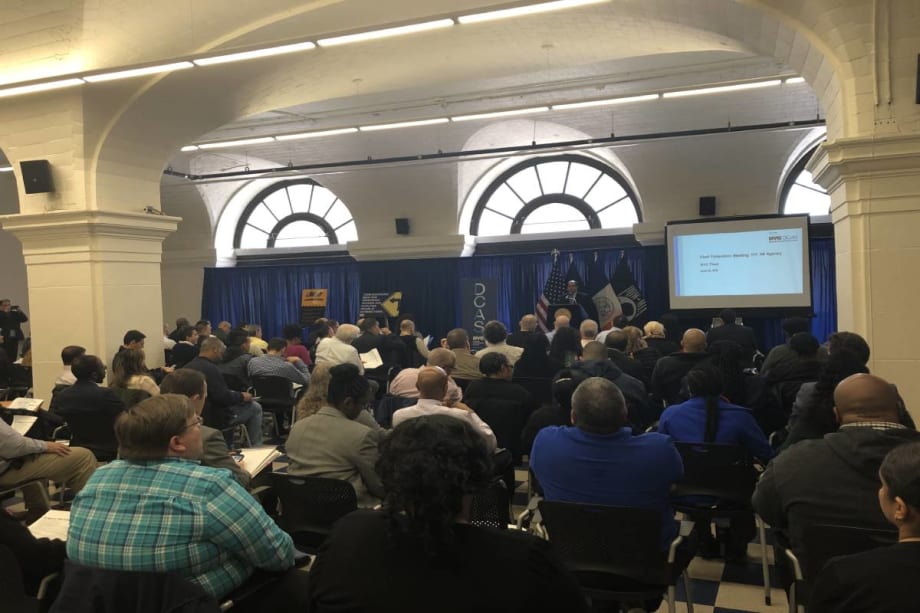
A meeting of the Fleet Federation group.
Photo: NYC Department of Citywide Administrative Services
3 min to read
Whether you manage a small-town fleet or one as large as New York City, one fact remains true: communication is everything. Keith Kerman, NYC chief fleet officer and deputy commissioner, Department of Citywide Administrative Services (DCAS), knows the more you cooperate with other agencies, the better off and more effective you’ll be.
NYC’s fleet was operated independently by powerful and hugely important agencies like the Police Department, Fire Department, Department of Sanitation, Department of Transportation, Department of Environmental Protection, and Parks. According to Kerman, there are over 50 agencies with fleet operations in city government. One of the biggest challenges he came across as a fleet manager was getting them all to see that sharing best practices and breaking down silos would only make them stronger.
“Agencies tend to do things their own way; they keep their resources close and oversight as far away as they can. My role was to disband the silos, introduce shared servicing, set common strategies and initiatives, and create a single fleet program,” he said.
To do this, he created a Fleet Federation group and set up meetings to get the agencies working together. Up to 17 agencies participate in every meeting, tackling topics like relationship management, building stronger relationships between agencies, and pushing initiatives that will benefit each entity.
By relying on data, Kerman has been able to reduce the role of culture and personality and focus on performance and achievement.
“Every day, agencies now service directly thousands of vehicles for other agencies. This type of in-government shared servicing was once seen as a bridge way too far,” he said.
Other efficiencies have emerged, including:
Specifying fleet units to be more multi-functional: The Parks Department used to rely on seasonal water and leaf vacuum trucks, and dedicated dump trucks used mostly for ballfield seasons to transport clay. To get better use of the fleet, Kerman has shifted to multi-purpose general work trucks, buying plows, portable water tanks, portable salt spreaders, and lift-gates on all pickups and small dumps. The Parks shops developed ways to collect leaves with multi-purpose dump trucks and got rid of stand-alone leaf vacuums.
Implementing an innovative strategic parts partnership: Fleet has established a contract for a company to manage its parts rooms, supply all parts under strict performance guidelines, and take all inventory risk. Parts procurement and inventory management was one of the biggest challenges in Kerman’s first decade in fleet management.
“One full hour of our two-hour weekly management meeting was spent hunting down late parts for out-of-service vehicles,” he explained. “Real-time auto parts delivery makes sense in the current age where we can all go online, order just about anything, and have it delivered immediately. We are also eliminating waste, loss, and potential theft of parts in large storehouses. We re-assigned all the staff to other roles within fleet. We have over 800,000 parts delivered a year through this program. Out-of-service numbers have declined, and inventory risk has been eliminated.”
Subscribe to Our Newsletter
More Operations

Could Your Next Fleet Technician Start as an Intern?
What if your next technician hasn’t worked in a fleet shop yet? What fleets are doing to free up time.
Read More →
What’s Slowing Your Fleet Down?
Could a change in how work gets done help your fleet return vehicles to service sooner?
Read More →
Can Public Fleets Trust the Data Driving Their Decisions?
Public fleets have more data than ever, but inconsistent records and missing information can still undermine maintenance, replacement, and cost decisions.
Read More →
How Phoenix Is Building Its Next Generation of Fleet Technicians
With more than 8,000 vehicles and pieces of equipment to maintain, the City of Phoenix could not afford to wait for fully trained technicians to walk through the door. Instead, they revamped their entire workforce strategy and showed how public fleets can create their own talent pipeline while preparing existing employees for increasingly complex vehicles.
Read More →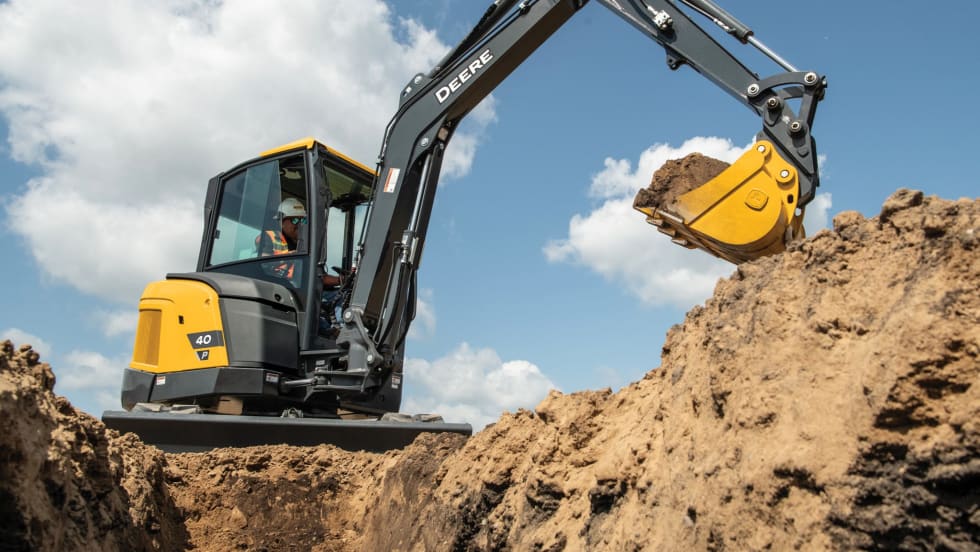
John Deere Introduces 40 P-Tier Compact Excavator
John Deere is adding a compact excavator designed for crews that need to move equipment between jobsites and handle multiple types of work with one machine. The 40 P-Tier weighs less than 10,000 pounds and offers configurable hydraulics, attachment options, and connected fleet-management capabilities.
Read More →
How Leading Fleets Improve and Why Business Plans Matter
This week, we look at what past Leading Fleet winners can teach us about making progress, plus how to build a business plan your fleet will actually use.
Read More →
Nominate a Fleet Leader for the 2027 Public Fleet Hall of Fame
Do you know a fleet leader who has made a lasting impact on the industry? Nominate this fleet professional for the 2027 Public Fleet Hall of Fame.
Read More →
Why Fleet Business Plans Need Three Perspectives
A fleet business plan should help agency leaders understand the fleet’s value, give the organization a clear direction, and establish shared expectations with customer departments.
Read More →
How Oil Analysis, Safety Technology, and Fleet Awards Drive Improvement
What happens when fleets let measured results guide their next decision?
Read More →
Emergency Response, Fleet Sales and New Technology
This week’s fleet news covers emergency preparedness, shifting vehicle sales, electric truck investments, and new tools for monitoring road conditions.
Read More →