





Similar Content: A Virtual Tour of Madison's New $33M Facility
Better Service, Lower Costs: How Madison Used Data to Improve Its Fleet Operation
In the past four years, the City of Madison, Wisconsin, fleet operation reduced vehicle out-of-service levels by a factor of four.
March 18, 2021
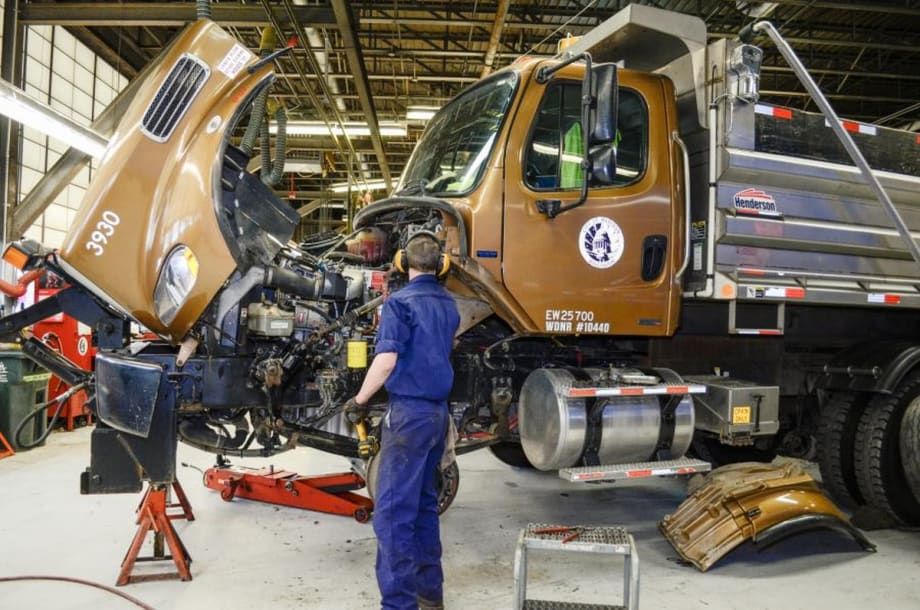
Madison fleet technicians have been trained on data entry so that correct information is entered into the fleet management system.
Photo: City of Madison
2 min to read
When Mahanth Joishy started as the fleet superintendent for the City of Madison, Wisconsin, in 2017, the fleet operation didn’t effectively use data to track its maintenance operation. Without data, it couldn’t tell how well it was doing or set measurable goals. In the past four years, the fleet operation has stepped up its data use and improved its operation as a result.
One of its most impressive improvements is reducing vehicle out-of-service levels by a factor of four. Joishy receives daily report on out-of-service vehicles at 3:30 p.m. every weekday — like at New York City, his former employer. When he first set this up, he was seeing about 140 vehicles out of service every day; this number has decreased to 30-40.
He first started with learning how to use the Faster fleet management system and setting up the right reports, with free help from Rahul Kamath, a cousin in the private sector. Coming from a much larger fleet where on-site consultants handled this work and which used a different fleet software, he had a lot to learn, and it took a couple of months.
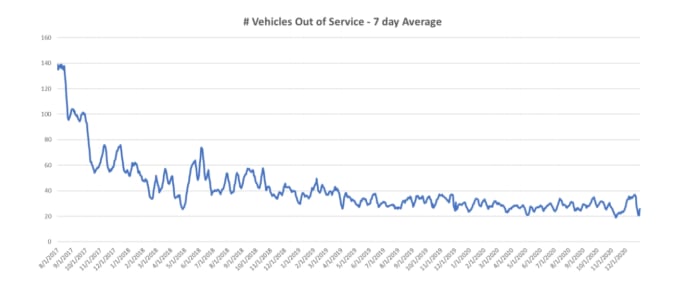
The number of vehicles out of service has reduced significantly in the past four years.
Graph: City of Madison
The second step was to train technicians and supervisors how to use the system correctly and reiterate the importance of correct data entry. Statuses — such as active, waiting parts, waiting mechanic, etc. — had to be input correctly. Supervisors had to close out work orders correctly.
“It was the Wild West,” Joishy said in describing how data entry was handled previously. “We had standard operating procedures in place; we trained every technician on how to enter everything properly in the system. That's where a lot of fleets have trouble. The data entry might not be what mechanics are the best at, or the parts technicians are best at.”
Other things that helped include hiring David Coy. a full-time data analyst; making sure shop supervisors assigned the right jobs to the right people; and improving parts availability.
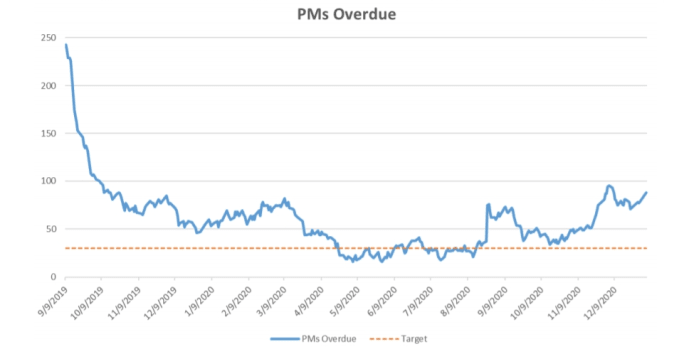
Vehicles overude for preventive maintenance has also decreased.
Graph: City of Madison
Finally, Joishy said he tries to gamify the process of making improvements to motivate technicians. They try to reach quarterly goals.
“The out of service number, the PM [preventive maintenance] overdue number, technician direct time, it's like a game for us to try to win to achieve it. And that makes us all feel like we're part of a team,” he said.
Subscribe to Our Newsletter
More Maintenance

Freeing Technicians for Higher-Priority Repairs
Could paid interns help public fleets free up experienced technicians for more complex repairs?
Read More →
Sponsored•September 18, 2026
Stay ready, set and safer with verified fleet inspections
When fleet inspections aren’t verifiable, missed defects can quickly become downtime, safety risks, and service delays. This white paper shows government and municipal fleet leaders how digital inspections can improve accountability, catch issues earlier, and keep vehicles ready when they’re needed most.
Read More →
Using Oil Analysis to Help with Engine Losses
How a Texas city changed its lubrication practices and began tailoring preventive maintenance intervals after test results showed oil degradation and fuel dilution.
Read More →
Sponsored•August 10, 2026
Hidden in Plain Sight: Fleet Compliance Risks
Fleet compliance isn't just about having policies — it's about consistently enforcing them. This practical guide reveals six hidden compliance risks common in public sector and shared fleet operations and outlines proven strategies to improve visibility, accountability, and audit readiness.
Read More →
Is Your Fleet Garage Holding Back Your Operation? | The Fleet Breakroom
Norman Barrientos of Barrientos Design & Consulting explains how agencies can use operational data to show decision-makers why a replacement or major renovation is needed.
Read More →
Reducing Long-Term Maintenance Costs and Downtime
Downtime is rarely caused by a single surprise failure but rather by an issue that builds over time through setbacks ranging from deferred maintenance to poor replacement planning. So what's the fix?
Read More →
The Future of Government Fleet Technicians with Mike Cleary
Insight on preparing for hybrid and electric vehicle service, what fleets need to know about recruiting technicians in a competitive market, and how to make the most of limited training budgets.
Read More →
Work Orders Are More Than Records. They're a Roadmap to Fleet Availability
What if your work orders could predict failures, uncover hidden costs, and boost fleet availability? Here's how leading fleets are using the data.
Read More →
Drive More Profit with Greater Fleet Uptime
Fleet downtime costs money. JASPER helps keep vehicles on the road with quality remanufactured components, fast nationwide delivery, and reliable solutions that boost uptime and profitability.
Read More →
Smart Seasonal Maintenance Tips for Government Fleets
Government fleets carry extra weight, and routes, schedules, and public trust depend on reliability. A systematic spring checklist keeps vehicles in service when agencies need them most.
Read More →