





Keep Reading: Lessons Learned and Future-Proofing Strategies for Public Fleets with Facundo Tassara
Work Orders Are More Than Records. They're a Roadmap to Fleet Availability
What if your work orders could predict failures, uncover hidden costs, and boost fleet availability? Here's how leading fleets are using the data.
June 22, 2026

Work order data can help fleet managers identify trends, anticipate failures, reduce repeat repairs, and shift maintenance operations from reactive repairs to proactive planning.
Credit:
Government Fleet
12 min to read
- Work orders can be leveraged to predict equipment failures, enabling proactive maintenance strategies.
- Analyzing work order data helps in identifying hidden costs, offering insights for budget optimization.
- Effective use of work orders contributes to enhancing fleet availability by ensuring timely interventions and repairs.
*Summarized by AI
For many fleet organizations, work orders are viewed primarily as administrative records. They document labor, track parts usage, support billing, and provide a historical record of repairs. Once the vehicle leaves the shop, the work order is closed, and attention shifts to the next job waiting in line.
But according to Marc Canton, VP of Fleet Strategy for RTA: The Fleet Success Company and former fleet manager at Fordham University for 16 years, that's a missed opportunity. The most successful fleets don't view work orders as paperwork but instead as operational intelligence.
Every repair order contains information that can help fleet managers identify bottlenecks, improve technician productivity, reduce repeat repairs, recover warranty dollars, justify staffing and equipment requests, and ultimately increase one thing that matters more than anything else in fleet management: vehicle availability.
"If there's one thing I'd want every fleet manager to walk away with, it's this: the real product of a maintenance and repair operation isn't repairs, it's availability," Canton said. "Quality matters, anticipating the work matters, timeliness matters, and yes, doing it at a reasonable cost matters. But every one of those is in service of one thing, keeping assets available and on the road."
For public sector fleets facing growing service demands, staffing shortages, and budget constraints, that perspective matters. The challenge isn't whether fleets are collecting enough maintenance data, but whether they're capturing the right information and using it effectively.
Better Data Starts with Better Capture
Before fleet managers can use work order data to make better decisions, they need confidence in the data itself. Unfortunately, Canton said many fleets are still relying on processes that introduce inaccuracies from the very beginning.
"There are a lot of mistakes fleets make, but the biggest one, even today, is too much manual entry," he said.
In many organizations, technicians still perform repairs, estimate how long the work took, write the information on a paper work order, and hand it off to an administrator for entry into the fleet management system.
"The typical flow is still: print a work order, the mechanic estimates how much time he spent, writes it on the sheet, drops it in a tray or a mailbox, and eventually an administrator reads it and keys it into the system," Canton explained. "So, the data is estimated, it's easy to make errors, and it's not remotely real-time."
The consequences extend far beyond simple data-entry mistakes. When labor hours are estimated rather than measured, fleet managers lose visibility into actual shop performance. They also lose the ability to intervene while problems are occurring.
"The good news is it's an easy fix," Canton said. "Virtually any halfway-decent FMIS on the market has a time tracker, a stopwatch feature where the technician clicks a button when he starts and clicks again when he stops, so you're capturing real time instead of a guess. And you can adjust it when someone forgets to hit stop."
And, the benefits go beyond accuracy, with Canton adding: "When a job is running well past where it should be, a supervisor can step in while it's happening, not discover it days later when the time's already gone."
Another common issue involves opening work orders too early.
"A lot of shops create the order the minute they know work needs to happen, and then it sits there for hours, days, sometimes weeks before anyone touches the vehicle," Canton said.
That seemingly harmless practice can severely distort one of the industry's most important metrics: work order turnaround time, because, as Canton shared, turn time runs on calendar time, not technician labor time.
“Open it early, let it sit, and you've killed the KPI before you ever got to use it," he said.
Canton is also quick to point out that labor tracking and turnaround time measure different things. In short, turnaround time is the calendar clock for the whole order. Labor time is the wrench time on the line.
A third issue involves the level of detail fleets capture, particularly when outsourcing repairs, and most fleets will just note a lump sum, like “Sublet repair, $1,400,” and that's the entry. While that may save time initially, it eliminates information that can be valuable later.
"Best-in-class fleets, long before any AI showed up, took the time to enter sublet line-by-line: exactly what labor was performed, exactly what parts were replaced. That detail feeds everything downstream, warranty recovery, the vehicle's repair history, your insource-versus-outsource decisions, and the VMRS-based analysis," he said.
The Data Fleets Often Overlook
Even when fleets collect information consistently, Canton believes that some of the most valuable data points often go unused. One of the biggest is time itself.
"One of the oldest and best ways to improve a standard or PM routine is to literally stand somewhere above the floor, on a balcony or a mezzanine, and watch people work," he said.
By simply observing technicians' movements, fleet managers can uncover inefficiencies that reports may never reveal and quickly see whether they're following steps in the right order and whether parts and supplies are staged in the right places to optimize time.
Another blind spot involves work order statuses. Be sure your operation is not conflating work order status with asset status, as they're two very different things. An asset may be unavailable while it's in the shop, but the work order itself may move through numerous stages before repairs are complete.
"When an asset is in for repair, it's out of service and unavailable, full stop. But during that window, the work order itself can be in any number of states: in queue, waiting on parts, waiting on a bay, waiting on a vendor, ready for pickup, and everything in between," Canton explained.
And tracking those statuses can reveal operational bottlenecks that many fleets never quantify. Canton noted that “waiting on parts” is a perfect example. By tracking that metric, you can see how much time you're losing to parts on every work order. But that analysis can go much deeper.
"When was the part requested versus when was it actually fulfilled? If it had to be ordered, are you tracking from the point you ordered it from the vendor to the point you received it? That tells you how your parts operation is really performing," Canton said.
The same applies to facility constraints. Many fleets are convinced they need more bays and more space, but how often are they actually tracking that they're waiting on a bay?
“You can have enough bays but not the right bays. If it's a PM bay without the lift for a heavy-duty truck, waiting on a bay becomes very real," Canton explained.
Letting VMRS Tell the Story
For fleets looking to gain more value from their maintenance data, Canton points to VMRS coding as one of the most underutilized tools available. Many fleets either don't code at all, or they code and then never spend any time analyzing it. The value isn't simply organizing information. It's understanding what the data reveals about the operation.
Simply grouping repairs into their proper VMRS codes tells you a lot. The information can influence staffing decisions, technician training programs, outsourcing strategies, equipment purchases, and even recruiting efforts.
"It tells you what equipment you actually need, what your standard training should be because it's the work you do most, what experience to hire for, what you should be outsourcing because you do very little of it or it needs specialty equipment you don't have, and what your next capital equipment request should be because you do so much of it and you've got the skills in-house."
The data can even challenge long-held assumptions. "Maybe you're that rare fleet where it makes sense to do alignments yourself. The data will tell you," Canton added.
Using Work Orders to Catch Problems Earlier
Work order history can also serve as an early-warning system. According to Canton, one challenge many fleets face is identifying repeat repairs before they become recurring problems.
"A lot of shops don't have a service writer; someone whose actual job is to take the work in and note whether it's a repeat," he explained. Without that dedicated role, repeated failures often go unnoticed. "A technician is never going to volunteer that a job is a repeat, whether or not they even realize it is. That's just human nature."
In the absence of a service writer, data analysis becomes critical, allowing fleets to identify repeated work using VMRS codes. The key is to establish reasonable timeframes for different repair types.
"If you're doing brakes every two weeks, obviously something is wrong. But if you're in a snowy region in the dead of winter and you're topping off washer fluid every few weeks, that might be perfectly normal," Canton noted.
Diagnostic trouble codes and parts failure history provide another layer of insight. They can tell you which codes and sensors are tripping. Canton noted that most predictive-maintenance algorithms are built on the idea that once a given sensor pings a certain number of times, the probability of a larger problem in that component rises at a predictable rate.
Together, those tools can help fleets anticipate failures before they become breakdowns. Throughout the conversation, Canton returned to the same point. Fleet managers often focus on repairs, but repairs aren't the goal. Availability is. Work order data simply provides the visibility needed to improve it.
That philosophy becomes especially important when examining the difference between scheduled and reactive maintenance operations.
The Difference Between Scheduled and Reactive Shops
When discussing uptime, Canton repeatedly returned to one question: Is the shop operating proactively or reactively? "It starts with being honest about whether your shop is scheduled or reactive, because that's what drives both repeat work and uptime," he said.
Unscheduled work creates inefficiencies throughout the repair process.
"Picture this,” Canton said. “You get a truck up on the lift, figure out what's wrong, go for the part, it's not in the parts room, and now it's a two-day order. Do you leave it on the lift or button it back up, set it down, and pull the next vehicle in?"
Most shops will just pull the next vehicle in, creating a pile of wasted handling time. The solution, he said, is scheduling.
"The fix is to run a scheduled shop. Shoot for 80% scheduled work. Seventy percent is doing just fine. Most shops, especially in government, are still reactive," he said, but preventive maintenance is often where that transition begins.
Shops are still out there slapping a sticker on the windshield and depending on the operator or the department to remember the PM is due and call it in. Instead, fleets should use historical data to predict service needs and proactively schedule work.
"If you can predict when a PM is due based on miles per day or hours run, you can have the parts staged, the time blocked, and the right bay ready before the vehicle even shows up,” he said. Canton argued fleets should not wait for operators to take the first step. "Any decent FMIS produces out-of-the-box PM-due reports, and those should be going out to your customers on a regular cadence."
If a unit remains unscheduled as its service interval approaches, that’s the cue to contact the operator, their supervisor, and the fleet coordinator to get it on the calendar.

Marc Canton of RTA explains why leading fleet organizations use work order data as operational intelligence to improve vehicle availability, reduce downtime, and make more informed maintenance decisions.
Credit:
RTA: The Fleet Success Company | Government Fleet
The KPIs That Matter Most
When analyzing work order performance, Canton recommends starting with turnaround time. "You want 80% of your work orders turned in 24 hours or less and 90% in 48 hours or less,” adding that when fleets fail to meet those targets, the metric often points toward deeper operational issues.
"If you're not hitting that, something upstream is wrong, and turn time is the spotlight that tells you to go follow the crumbs."
Scheduled repair rate is another important measure. Fleets should be targeting 80% or better, even fleets without a lot of sophistication should be able to reach 70%. And remember, comebacks deserve close attention as well. Many fleets underestimate the issue.
"Aim for 1% or less. If you think you're at zero, you're simply not tracking it," he said. "Most fleets are sitting somewhere between 5% and 10% and don't know it. Under 2% is good."
Within individual work orders, Canton encouraged fleets to monitor status-based metrics such as time waiting on parts, bays, and technicians. Those measures often reveal opportunities for improvement that traditional reports overlook.
"When technicians are disciplined about hitting start and stop when they should, the quality of your data changes completely,” Canton noted, adding that the same principle applies throughout the organization. "It's not just technicians. Parts technicians acknowledging a request, then tracking it to issuance or, if it's ordered, tracking order time and delivery time, matters just as much."
The Future of Work Order Analytics
Artificial intelligence is poised to significantly change how fleets use maintenance data. However, Canton noted that right now, especially in government fleet, there's a shortage of both bandwidth and skill set for analytics, and specifically fleet analytics.
One challenge is that maintenance data requires context. "You can be the best fleet data analyst on the planet, but without the fleet context you'll misread what the numbers mean and reach the wrong conclusion," he noted.
AI has the potential to bridge that gap, but Canton believes analytics are only the beginning.
"The person who has the context and knows what they need can turn around sophisticated analysis in minutes,” he said. "The next wave is agentic AI, assistants that don't just analyze your data but actually take work off people's plates and do it alongside your team."
He points to parts management as one example. AI could help automate many of those administrative functions and return technicians to the work they were hired to do.
"A lot of government shops have no real parts technician, so mechanics and supervisors are sourcing, ordering, receiving, and logging parts themselves," Canton said. "For smaller and mid-size fleets that can't staff every role they'd like, parts tech, enough technicians, fleet manager, shop supervisor, service writer, fuel manager, agents built around each of those functions will make it far easier for one person to wear all those hats."
Building a Partnership Around Availability
While technology continues to evolve, Canton believes one of the most overlooked factors in fleet success remains the relationship between maintenance operations and their customers. He noted that a great maintenance program isn't just a great shop, but “a partnership with your customers, the departments and operators who actually run the vehicles."
Preventive maintenance compliance is one example. Fleets can try and predict when a unit's PM is due all day long, but if they just sit back and wait for the operator to remember and bring it in, they are right back to being reactive. Operators also serve as the eyes and ears of the fleet organization.
"In a real partnership, they're filing their DVIRs, submitting service requests, doing the interim checks and the pre- and post-trip inspections they're supposed to, getting the vehicle to you on time, and operating it properly," Canton shared.
When those relationships function well, problems are identified earlier, and downtime is reduced.
"So, there's a real stakeholder-satisfaction element to maintenance and repair that doesn't get talked about enough," Canton said. "You should be communicating with your customers, measuring how satisfied they are, and measuring your own team against their expectations."
Ultimately, the fleets that get the most value from work order data are not simply tracking repairs. They're using that information to improve the entire maintenance operation.
Once fleet leaders begin viewing work orders as operational intelligence rather than administrative paperwork, the conversation changes. The focus shifts from individual repairs to overall availability, from reactive responses to proactive planning, and from collecting data to using it. And for fleet organizations under increasing pressure to do more with less, that may be the most valuable insight hidden inside a work order.
Quick Answers
Work orders can predict equipment failures by analyzing historical data and identifying patterns or trends that precede failures, allowing fleet managers to perform proactive maintenance.
*Summarized by AI
Subscribe to Our Newsletter
More Maintenance

Freeing Technicians for Higher-Priority Repairs
Could paid interns help public fleets free up experienced technicians for more complex repairs?
Read More →
Sponsored•September 18, 2026
Stay ready, set and safer with verified fleet inspections
When fleet inspections aren’t verifiable, missed defects can quickly become downtime, safety risks, and service delays. This white paper shows government and municipal fleet leaders how digital inspections can improve accountability, catch issues earlier, and keep vehicles ready when they’re needed most.
Read More →
Using Oil Analysis to Help with Engine Losses
How a Texas city changed its lubrication practices and began tailoring preventive maintenance intervals after test results showed oil degradation and fuel dilution.
Read More →
Sponsored•August 10, 2026
Hidden in Plain Sight: Fleet Compliance Risks
Fleet compliance isn't just about having policies — it's about consistently enforcing them. This practical guide reveals six hidden compliance risks common in public sector and shared fleet operations and outlines proven strategies to improve visibility, accountability, and audit readiness.
Read More →
Is Your Fleet Garage Holding Back Your Operation? | The Fleet Breakroom
Norman Barrientos of Barrientos Design & Consulting explains how agencies can use operational data to show decision-makers why a replacement or major renovation is needed.
Read More →
Reducing Long-Term Maintenance Costs and Downtime
Downtime is rarely caused by a single surprise failure but rather by an issue that builds over time through setbacks ranging from deferred maintenance to poor replacement planning. So what's the fix?
Read More →
The Future of Government Fleet Technicians with Mike Cleary
Insight on preparing for hybrid and electric vehicle service, what fleets need to know about recruiting technicians in a competitive market, and how to make the most of limited training budgets.
Read More →
Drive More Profit with Greater Fleet Uptime
Fleet downtime costs money. JASPER helps keep vehicles on the road with quality remanufactured components, fast nationwide delivery, and reliable solutions that boost uptime and profitability.
Read More →
Smart Seasonal Maintenance Tips for Government Fleets
Government fleets carry extra weight, and routes, schedules, and public trust depend on reliability. A systematic spring checklist keeps vehicles in service when agencies need them most.
Read More →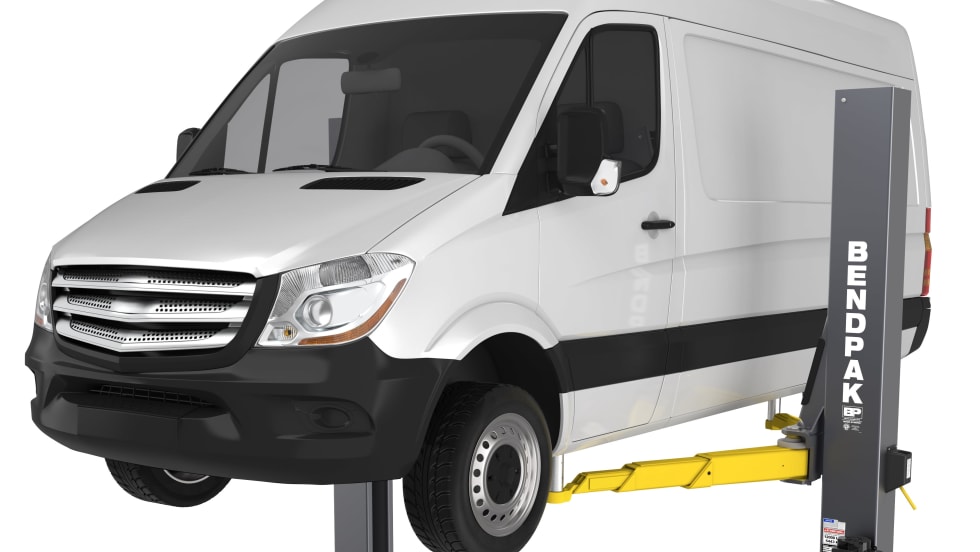
BendPak Debuts 12APF Two-Post Lift for Tall Vehicles in Low-Ceiling Shops
New 12,000-lb. open-top lift designed for commercial vans, trucks, SUVs, and fleet vehicles
Read More →