




2017 Ford Super Duty: More Capability, Less Weight
An aluminum-alloy body helps reduce the weight of Ford’s 2017 F-Series Super Duty by up to 350 lbs.
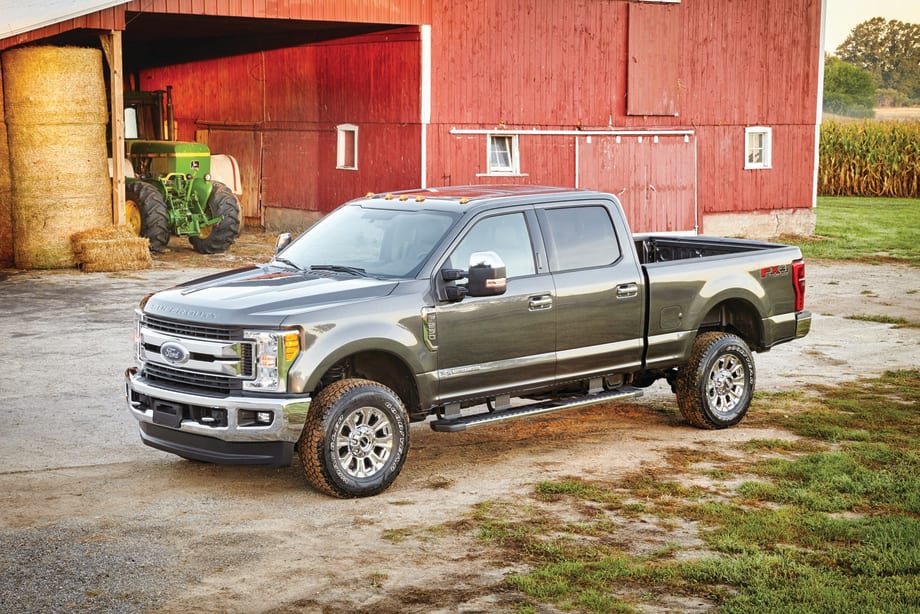
The 2017 Ford F-Series Super Duty features an all-new, high-strength steel fully-boxed frame, aluminum-alloy body and stronger axles, springs, and suspension. Pictured is the F-250 XLT Super Duty. Photo courtesy of Ford
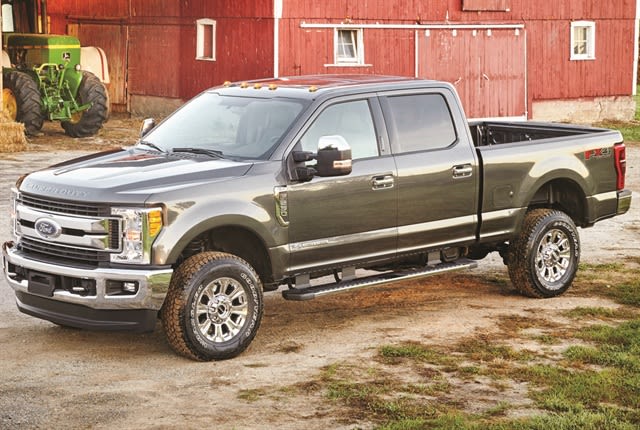
The 2017 Ford F-Series Super Duty features an all-new, high-strength steel fully-boxed frame, aluminum-alloy body and stronger axles, springs, and suspension. Pictured is the F-250 XLT Super Duty. Photo courtesy of Ford
A military-grade aluminum alloy body on Ford’s 2017 F-Series Super Duty helps reduce overall vehicle weight while allowing the company to add larger components for improved capability.
Ford will use the same alloys it used in its all-new F-150 trucks, which are more dent- and ding-resistant than the outgoing steel body and not subject to red rust corrosion, Ford said.
The 2017 vehicles also include a stronger, fully-boxed steel frame, improved axles/springs and suspension, class-exclusive features and technologies, and multiple gasoline and diesel engine and transmission combinations. The Super Duty frame is composed of more than 95% high-strength steel that offers up to 24 times more stiffness than the previous frame and is designed to improve towing and hauling capability, according to Ford.
“Like the F-150, when we go to advanced materials that help reduce weight, we can give that back to the customer in terms of improved capability: better payload, better towing, and more efficiency,” said Mike Levine, truck communications manager.
The aluminum body and steel frame combine to reduce the Super Duty’s weight by about 350 lbs. Some of the weight savings has been reinvested in bigger components, including bigger axles, brakes, and hitch, to help with improved capability, Levine explained. Ford also expects a minor improvement in fuel efficiency.
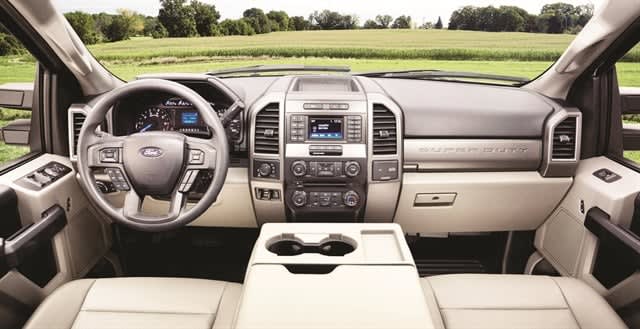
A new interior design includes a dual-compartment glove box and overhead console-mounted auxiliary switches to operate aftermarket equipment. Photo courtesy of Ford
Powertrain Options & Upfitting Ease
For powertrains, the 6.7L Power Stroke V-8 diesel engine is available for both pickup and chassis cab models. Available on the F-250 pickup is a 6.2L V-8 gasoline engine that is equipped with Ford’s new TorqShift-G transmission for improved capability. The Super Duty chassis-cab lineup includes a choice of 6.7L Power Stroke V-8 diesel, 6.8L V-10 gasoline, or 6.2L V-8 gasoline engines.
The F-Series Super Duty comes with several optional driver-assist technologies, including lane departure, blind spot, adaptive cruise control, and collision warning features. The truck also features lighting technology, including LED side-view mirror spotlights to light up a work site, LED cargo box lighting, and class-exclusive quad-beam LED headlamps and tail lamps.
Levine doesn’t anticipate any upfitting problems, stating that fleet managers just need to make sure they’re purchasing attachments that are compatible with the aluminum cargo box and work with knowledgeable upfitters.
Ford already provides guidance to upfitters for the aluminum-body F-150 and will provide the same for the Super Duty. “We provide guidance on what types of materials are suitable if they’re going to make modifications…what they need to do to keep aluminum and other materials, like steel, isolated from each other,” Levine said.
All three cabs — regular cab, SuperCab, and crew cab — are longer and include a new interior design. There are five models in the Super Duty lineup — XL, XLT, Lariat, King Ranch, and Platinum. The 2017 Super Duty will be built at Ford’s Kentucky truck plant and goes on sale late next year.
More Operations

Could Your Next Fleet Technician Start as an Intern?
What if your next technician hasn’t worked in a fleet shop yet? What fleets are doing to free up time.
Read More →
What’s Slowing Your Fleet Down?
Could a change in how work gets done help your fleet return vehicles to service sooner?
Read More →
Can Public Fleets Trust the Data Driving Their Decisions?
Public fleets have more data than ever, but inconsistent records and missing information can still undermine maintenance, replacement, and cost decisions.
Read More →
How Phoenix Is Building Its Next Generation of Fleet Technicians
With more than 8,000 vehicles and pieces of equipment to maintain, the City of Phoenix could not afford to wait for fully trained technicians to walk through the door. Instead, they revamped their entire workforce strategy and showed how public fleets can create their own talent pipeline while preparing existing employees for increasingly complex vehicles.
Read More →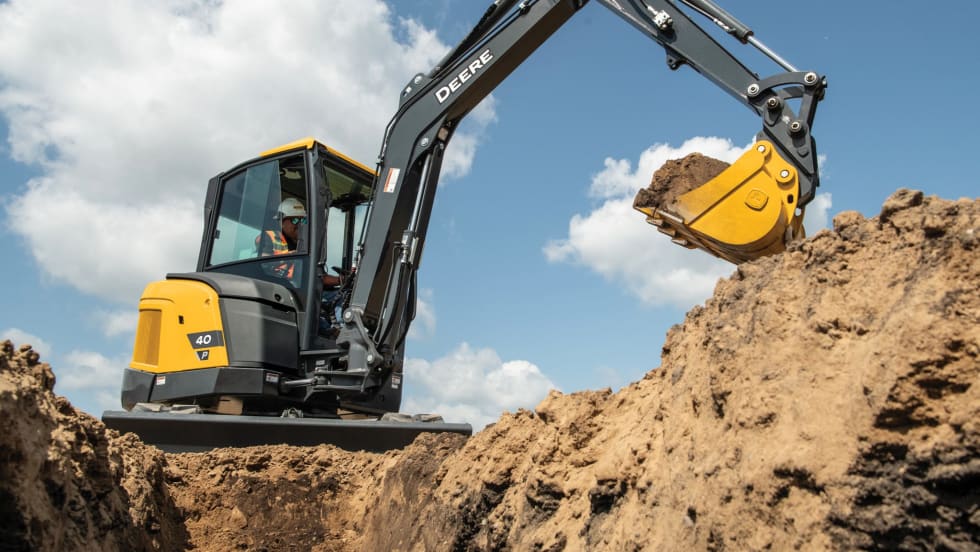
John Deere Introduces 40 P-Tier Compact Excavator
John Deere is adding a compact excavator designed for crews that need to move equipment between jobsites and handle multiple types of work with one machine. The 40 P-Tier weighs less than 10,000 pounds and offers configurable hydraulics, attachment options, and connected fleet-management capabilities.
Read More →
How Leading Fleets Improve and Why Business Plans Matter
This week, we look at what past Leading Fleet winners can teach us about making progress, plus how to build a business plan your fleet will actually use.
Read More →
Nominate a Fleet Leader for the 2027 Public Fleet Hall of Fame
Do you know a fleet leader who has made a lasting impact on the industry? Nominate this fleet professional for the 2027 Public Fleet Hall of Fame.
Read More →
Why Fleet Business Plans Need Three Perspectives
A fleet business plan should help agency leaders understand the fleet’s value, give the organization a clear direction, and establish shared expectations with customer departments.
Read More →
How Oil Analysis, Safety Technology, and Fleet Awards Drive Improvement
What happens when fleets let measured results guide their next decision?
Read More →
Emergency Response, Fleet Sales and New Technology
This week’s fleet news covers emergency preparedness, shifting vehicle sales, electric truck investments, and new tools for monitoring road conditions.
Read More →