





Related: NYC Ambulance Fleet Work Rises 137%
MEMA NorCal Survey: Many Fleet Employees Sheltering in Place
Public fleet operations in Northern California have experienced reduced workforces during the COVID-19 crisis, according to a recent survey.
April 24, 2020
2 min to read
Public fleet operations in Northern California have experienced reduced workforces during the COVID-19 crisis, according to a survey recently released by the Northern California chapter of the Municipal Equipment Maintenance Association (MEMA).
The survey had 15 respondents, all representing public fleets in Northern California.
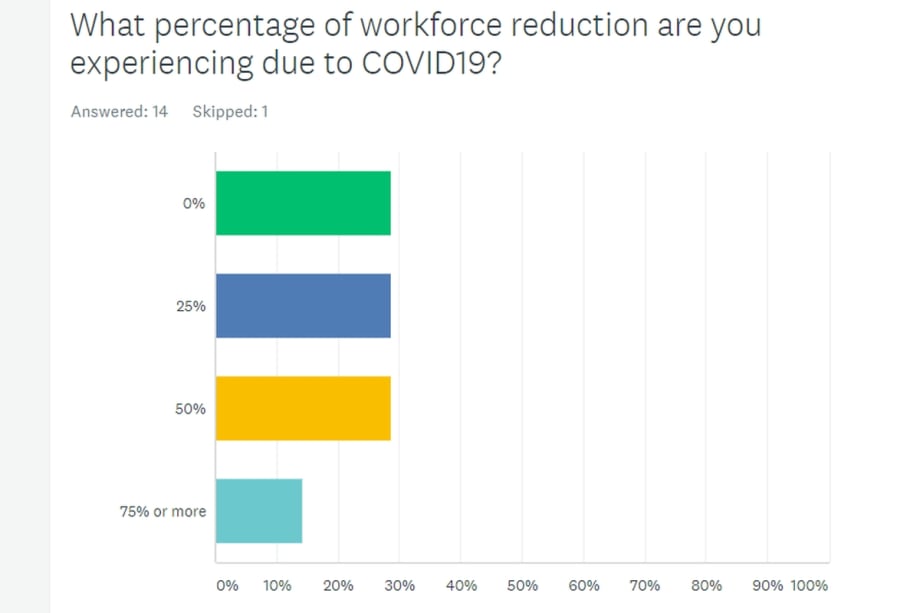
About 29% of respondents said they did not have workforce reductions, while the rest reported a significant reduction in workforce. About 14% of respondents said they had reductions of 75% or more of staff. All respondents said employees who are sheltering in place are paid, and most respondents (79%) said they were being paid through administrative leave pay, with fewer reporting that their employees are receiving vacation and sick leave pay.
Kevin Myose, fleet manager for San Joaquin County and MEMA NorCal secretary, explained that these results mainly refer to technicians.
“At San Joaquin County, we have been advised to split our crews in half and keep half sheltering at home in reserve. That will work until we run out of emergency paid sick leave. So we're looking at adding a swing shift or developing shop distancing and congregation reduction protocols that will pass the scrutiny of our public health officer,” he said.
Myose said the most surprising result was that some fleets have 75% of their staff sheltering at home.
To compensate for reduced technician staffing levels, fleet operations are outsourcing more work, including preventive maintenance (44%), emergency repairs (33%) and biennial inspection of terminals (11%).
Additionally, 80% of respondents said their employees (administrative) can work from home.
The availability of disinfectant and personal protective equipment (PPE) is varied, with 40% saying they have less than a week’s worth of supplies available, and 27% saying they have more than a month of supplies available.
One fleet (7%) reported performing temperature checks of employees, and 79% said they have a plan in place when a staff member tests positive for the virus.
To view the full survey results, click here.
More Operations
Is Keeping Older Fleet Vehicles Really Saving Money?
Is keeping vehicles longer saving money, and what happens when a diagnostic test points to the wrong fix?
Read More →
How Smart Fleet Strategy Can Help Local Government Agencies Do More with Less
Keeping a vehicle longer may ease this year’s budget, but what does it cost the next one? A closer look at fleet decisions can reveal opportunities to reduce spending while protecting essential services.
Read More →
Connect with Government Fleet on LinkedIn
From industry news and fleet management strategies to conversations with peers, Government Fleet's LinkedIn page offers public-sector fleet professionals another way to stay informed and connected.
Read More →
Town of Queen Creek Named Most Successful Fleet Award Winner of Inaugural RTA Fleet Success Awards
Five fleets were honored at RTA Connect 2026 in Chicago for excellence across resource efficiency, intentional culture, risk management, and stakeholder satisfaction.
Read More →
Sponsored•October 14, 2026
A buyer's guide to fleet management software in 2027
Buying fleet management software in 2027 means looking beyond features and price. As fleet operations, technology and expectations evolve, this guide explores what today’s fleet professionals should consider when choosing a system that can deliver value now and adapt to what comes next.
Read More →
Hazard Alerts, Fleet Car Sales Rise and a New Shuttle Concept
Fleet car sales doubled, but the bigger picture tells a different story in this week’s roundup.
Read More →
How St. Johns County Turned Fleet Data Into Better Replacement Decisions
St. Johns County, Florida, had fleet data, but turning it into reliable decision guidance was another matter. Instead of starting over with a new fleet management system, the county connected existing tools and built a scoring system that gives managers an objective look at fleet health.
Read More →
Fleet Forward Conference Introduces One-Day Passes for 2026
New one-day registration lets fleet professionals attend Tuesday, Wednesday, or Thursday, with passes available for $249.
Read More →
ENC Unveils its ZAVIR Medium-Duty Shuttle
Two variants of the concept shuttles were revealed: a low-floor configuration and a high-floor configuration.
Read More →
Could Your Next Fleet Technician Start as an Intern?
What if your next technician hasn’t worked in a fleet shop yet? What fleets are doing to free up time.
Read More →