





Related: 3 Ways Cities Are Improving Mobility
Uber and Lyft Awarded GSA Contract for Ride-Hailing
The General Services Administration (GSA) has awarded Uber and Lyft with contracts for rideshare/ride-hailing services.
April 24, 2020

Photo: Unsplash/Charles Deluvio
1 min to read
The General Services Administration (GSA) has awarded Uber and Lyft with contracts for rideshare/ride-hailing services. The five-year contracts are worth up to $810 million.
Federal agencies had been exploring the use of transportation network providers (TNCs) and innovative mobility technology companies (IMTCs) to reduce travel expenses and the related burdensome back office functions such as reports, analytics, and business improvement processes, according to the RFP.
GSA’s goal with awarding the contract is to consolidate federal spending in this subcategory of travel to obtain the most favorable terms, conditions, and discounts. GSA expects federal employees to use $162 million in rideshare/ride-hailing services annually, based on FY-18 vouchers processed.
In addition to on-demand transportation services, the contract winner is expected to provide data analytics to support the number of trips and savings, access to an online data portal to each participating agency and GSA, capabilities for reconciliation of consolidated invoices and travel voucher receipts, consolidated billing options, and more.
Federal employees can use the service while carrying out official duties in the contiguous United States, Alaska, Hawaii, and Puerto Rico.
GSA was able to negotiate discounts of 2-4% and waived technology fees charged to use back-office vendor data and reporting capabilities, according to a GSA blog post.
*This article was updated 4/28.
More Operations

How St. Johns County Turned Fleet Data Into Better Replacement Decisions
St. Johns County, Florida, had fleet data, but turning it into reliable decision guidance was another matter. Instead of starting over with a new fleet management system, the county connected existing tools and built a scoring system that gives managers an objective look at fleet health.
Read More →
Fleet Forward Conference Introduces One-Day Passes for 2026
New one-day registration lets fleet professionals attend Tuesday, Wednesday, or Thursday, with passes available for $249.
Read More →
ENC Unveils its ZAVIR Medium-Duty Shuttle
Two variants of the concept shuttles were revealed: a low-floor configuration and a high-floor configuration.
Read More →
Could Your Next Fleet Technician Start as an Intern?
What if your next technician hasn’t worked in a fleet shop yet? What fleets are doing to free up time.
Read More →
How Phoenix Is Building Its Next Generation of Fleet Technicians
With more than 8,000 vehicles and pieces of equipment to maintain, the City of Phoenix could not afford to wait for fully trained technicians to walk through the door. Instead, they revamped their entire workforce strategy and showed how public fleets can create their own talent pipeline while preparing existing employees for increasingly complex vehicles.
Read More →
What’s Slowing Your Fleet Down?
Could a change in how work gets done help your fleet return vehicles to service sooner?
Read More →
Can Public Fleets Trust the Data Driving Their Decisions?
Public fleets have more data than ever, but inconsistent records and missing information can still undermine maintenance, replacement, and cost decisions.
Read More →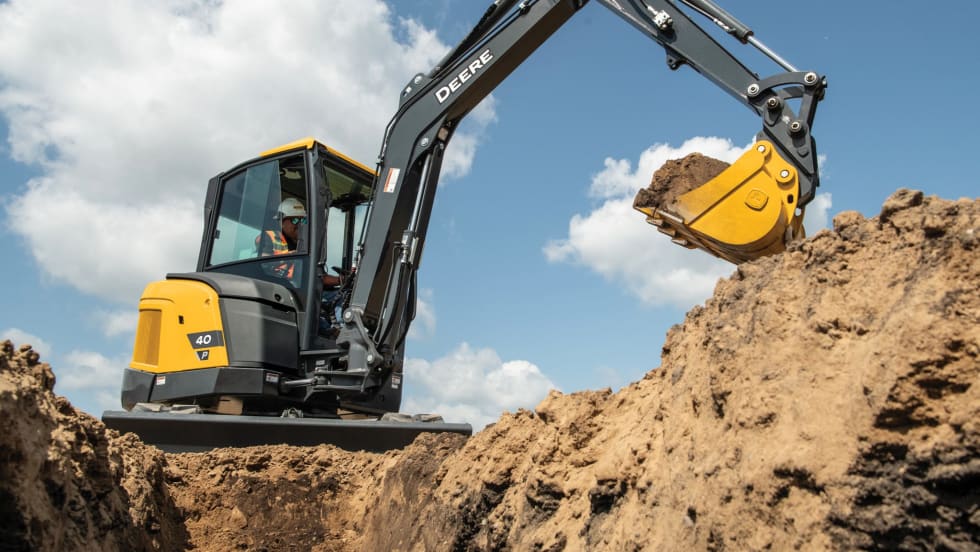
John Deere Introduces 40 P-Tier Compact Excavator
John Deere is adding a compact excavator designed for crews that need to move equipment between jobsites and handle multiple types of work with one machine. The 40 P-Tier weighs less than 10,000 pounds and offers configurable hydraulics, attachment options, and connected fleet-management capabilities.
Read More →
How Leading Fleets Improve and Why Business Plans Matter
This week, we look at what past Leading Fleet winners can teach us about making progress, plus how to build a business plan your fleet will actually use.
Read More →
Nominate a Fleet Leader for the 2027 Public Fleet Hall of Fame
Do you know a fleet leader who has made a lasting impact on the industry? Nominate this fleet professional for the 2027 Public Fleet Hall of Fame.
Read More →