





Related: Miami-Dade County: Planning for COVID-19 and Hurricanes
Calif. County’s FD Keeps Fleet Staff Safe During Pandemic
Here's how Riverside County, Calif., is keeping its fire fleet team safe and informed during the coronavirus crisis.
April 8, 2020
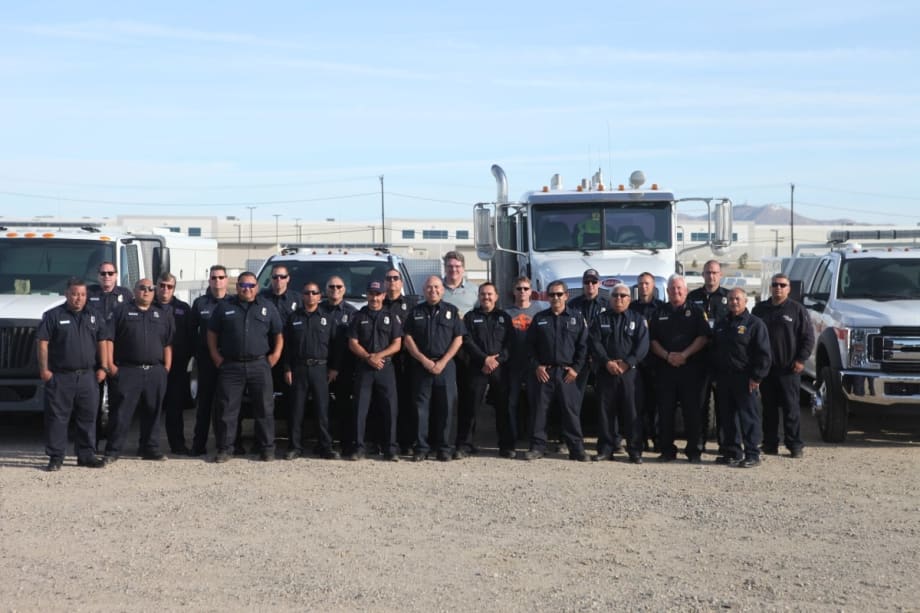
The Riverside County Fire Department Fleet Bureau is responsible for more than 600 vehicles, including apparatus, patrol vehicles, ambulances, and support vehicles.
Photo: Riverside County FD
2 min to read
California was one of the first states with cases of coronavirus, and many local jurisdictions took swift action to stop its spread. As of April 7, the state has 15,865 cases, with just over 1,000 confirmed cases in Riverside County.
Riverside County is the fourth largest county in California, and the Fire Department Fleet Bureau is responsible for more than 600 vehicles, including apparatus, patrol vehicles, ambulances, and support vehicles. The department runs 170,000 calls per year, and the fleet traveled more than 3 million miles in 2019, according to Jose Gallardo, Riverside County Fire Department fleet services manager.
“This heavy use of the fleet requires a strong maintenance program and professional fire apparatus technicians to service it,” Gallardo said.
He attributes the fleet team’s ability to do its work to strong leadership from senior management in keeping staff members safe and informed.
Here’s how the Fire Department fleet staff protect themselves from the coronavirus:
Fleet staff members wipe down apparatus before they work on them.
Each technician is provided disinfectant solution bottles (Vital Oxide sanitizer) and anti-bacterial wipes for cleaning. They clean all surfaces where they will be working (dash, steering wheel, handles, pedals, etc.).
Personal protective gear includes gloves, coveralls or uniforms, and masks and goggles as necessary. Staff members are instructed to clean work boots when they get home.
The fleet team is encouraged to provide ideas and solutions, and Gallardo said he keeps up with professional organizations and Government Fleet magazine to learn from other fleets.
Fleet management requires vendors clean any vehicles before fleet staff pick up vehicles that have been outsourced for repairs.
Restrict travel outside the state and the use airports. Fleet staff conduct a virtual apparatus inspection with out-of-state apparatus manufacturers rather than in-person inspections to keep up the production of critical fire trucks.
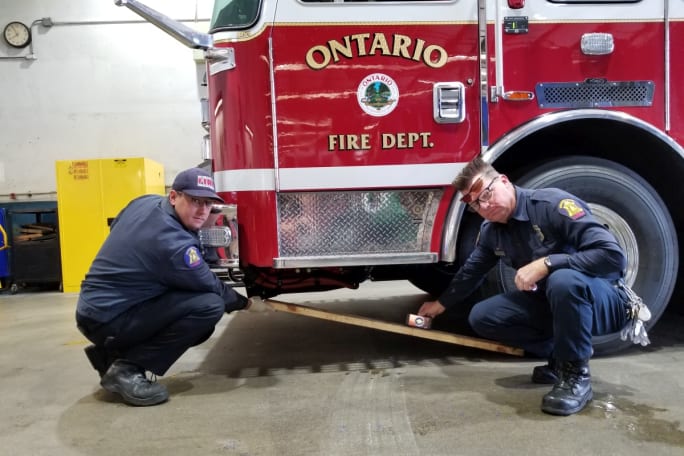
The nearby City of Ontario, Calif., is sharing the use one of its rigs to do virtual vehicle inspections. Instead of flying to Philadelphia for inspections, Riverside County fleet staff send photos and video of the neighboring City of Ontario's brand new vehicle to the manufacturer and ask for the same photos and video of the truck being built, saving money, time, and avoiding exposure.
Photo: Riverside County FD
Gallardo reported that the emergency medical services (EMS) team has been “amazing” in keeping staff members safe. This includes implementing call algorithms to prevent first responders’ exposure to COVID-19 patients and treating every medical call as if the patient were already infected. Additionally, apparatus and ambulances are decontaminated after every EMS call.
In addition, the fleet team receives frequent communication from senior leadership, including daily updates on COVID-19 from the county and daily updates and direction from Cal Fire EMS. The fire chief sends e-mails and holds conferences to keep staff members informed and to listen to their ideas and concerns, and the call center team alerts fire crews of possible COVID-19 medical calls.
He added that these measures not only keep the staff safe, but also keeps morale high.
More Safety
New Partnership Aims to Expand Public Digital Hazard Alert System Statewide
The Hawai’i Department of Transportation (HDOT) is expanding advance digital hazard alerts for the public statewide.
Read More →
New York City Expands Safety Technologies Across Municipal Fleet
Executive Order 19 moves intelligent speed assistance and pedestrian alerts from pilot programs toward standard fleet equipment, offering other public fleets a look at how safety technology can be tested, measured, and scaled.
Read More →
Sponsored•August 10, 2026
Hidden in Plain Sight: Fleet Compliance Risks
Fleet compliance isn't just about having policies — it's about consistently enforcing them. This practical guide reveals six hidden compliance risks common in public sector and shared fleet operations and outlines proven strategies to improve visibility, accountability, and audit readiness.
Read More →
5 Days Left to Submit Your 2026 Fleet Safety Award Nomination
Know a government fleet, safety, or risk manager who deserves recognition for making fleet operations safer? Nominations are open through Aug. 15.
Read More →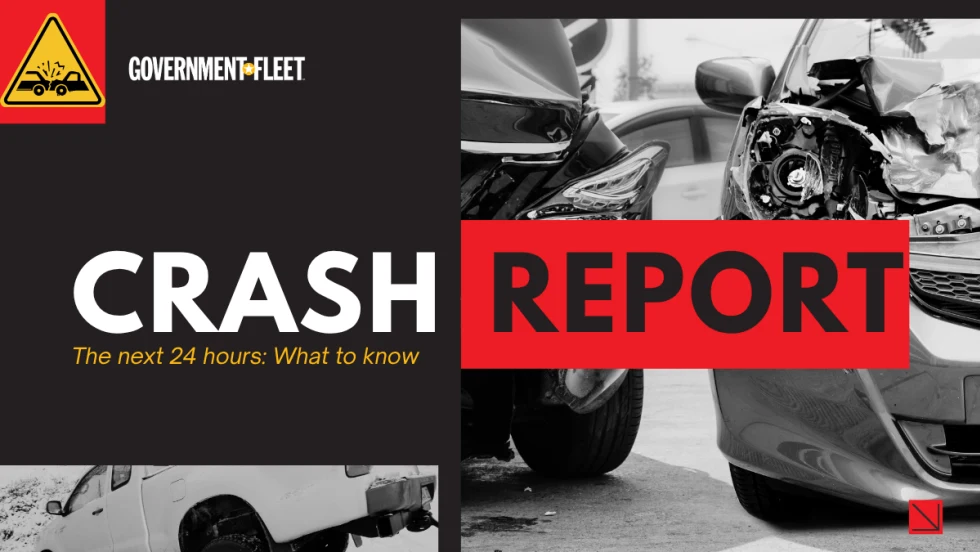
How the First 24 Hours Can Shape a Fleet Crash Response
How a strong accident response process helps government fleets move from the initial report to recovery while building a clearer record for what needs to change next.
Read More →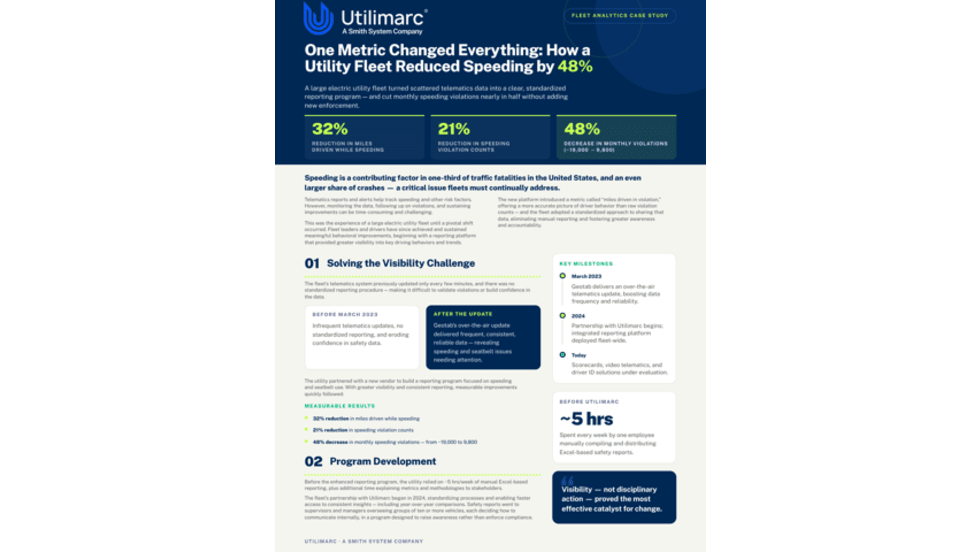
Sponsored•July 17, 2026
How Better Visibility Cut Speeding Violations by 48%
Fleet leaders don't need more data, they need clearer visibility into what the data is saying. This case study explores how one utility replaced speeding-event counts with a single metric — miles driven in violation — to strengthen safety and significantly reduce speeding violations.
Read More →
e-con Systems Expands AI Camera Tools for Traffic Monitoring
The systems support license plate recognition, traffic analytics, and video management for transportation agencies.
Read More →
King Township Pilot Links Driver Feedback to Reduced Speeding
How King Township, a best-in-class municipal fleet, reduced speeding by 10.9% and demonstrated a projected 349% ROI by putting safety ownership directly in drivers' hands.
Read More →
Beyond the Fireline: The Critical Role of Public Fleets in Wildfire Response
Behind every wildfire response is a complex network of vehicles, data, and decisions that must work in sync under extreme pressure. Global heating trends require strong fleet coordination and reliable communications to keep crews safe and operations running smoothly.
Read More →
How AI Is Transforming Public Fleet Safety - Part 1
AI-powered safety systems are helping public fleets tackle distracted driving by delivering real-time coaching and measurable behavior change behind the wheel. In part one of our Q&A, Nauto CEO Stefan Heck explains how agencies can improve safety, reduce costs, and navigate implementation challenges with AI-driven technology.
Read More →