




Related: How to Start a Motor Pool
Lowering Government Fleet Costs with Ride Hailing
For Washington D.C., limited space and high parking fees contribute to increasing fleet costs. A new ride-hailing program aims to solve these problems, help the environment, and even boost a struggling taxi industry.

Roselynne Reyes・Senior Editor

Photo: Getty Images
2 min to read

Photo: Getty Images
Pooling vehicles can lower fleet costs for some agencies. But what about eliminating those vehicles altogether? Washington, D.C., is an area known for its congestion. The capital is not very large, but it’s bustling with people, and parking can be hard to come by.
D.C. employees can use an assigned fleet vehicle, or rent one from Fleet Share, the district motor pool. But Fleet Share’s 97 vehicles are first come, first serve, and not always available for the district’s 33,000 employees. Limited parking spots can also mean circling the block looking for an empty space and paying for parking, which can add up quickly.
“While we love our job and we love what we are able to do, the fewer district vehicles on the road, the better,” said Washington, D.C., Department of Public Works Director Christopher Shorter.
Saving Time, Funds, and Paperwork
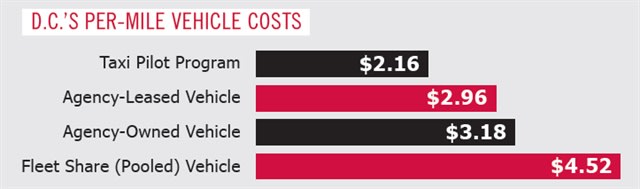
The district is currently running a pilot program that aims to reduce the fleet and utilize vehicles already on the road. The pilot integrates electronic ride hailing through the DC Taxi mobile app. District employees hail a taxi through the app, and their ID cards are linked to the trip. The system processes trips automatically and assigns them to the employee’s agency, eliminating the need for employee reimbursement, expense reports, and invoice management.
Fifteen agencies are participating in the pilot program so far, with 744 D.C. employees and more than 100 taxi drivers enrolled.
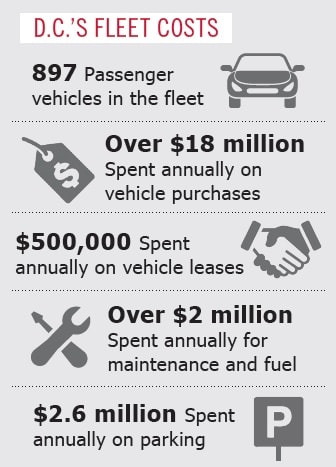
The Department of Public Works and Department of For-Hire Vehicles collaborated on this project, with goals to maximize fleet funds, improve air quality, and revitalize the taxi industry. Both agencies have committed more than $100,000 to the pilot program, which launched in June 2017 and will continue through September 2018.
“This program is about innovation and reinventing transportation,” said Department of For-Hire Vehicles Director Ernest Chrappah. Chrappah noted that there is room for expansion, and as other apps become more integrated, the agencies will look at ways to incorporate them into the pilot.
Mobility: A Growing Trend
Washington, D.C. isn’t the only one looking at alternative methods of transportation.
The Modernizing Government Travel Act, passed in January 2017, allows federal employees traveling on official business to use ride hailing apps (e.g., Uber and Lyft) for reimbursement from the General Services Administration.
In May 2017, Arizona Governor Doug Ducey signed into law HB2440, which aims to reduce the state fleet and promote increased use of ride hailing apps, for-hire vehicles (such as taxis and limousines), and rental companies.
Subscribe to Our Newsletter
More Operations
Could Your Next Fleet Technician Start as an Intern?
What if your next technician hasn’t worked in a fleet shop yet? What fleets are doing to free up time.
Read More →
What’s Slowing Your Fleet Down?
Could a change in how work gets done help your fleet return vehicles to service sooner?
Read More →
Can Public Fleets Trust the Data Driving Their Decisions?
Public fleets have more data than ever, but inconsistent records and missing information can still undermine maintenance, replacement, and cost decisions.
Read More →
How Phoenix Is Building Its Next Generation of Fleet Technicians
With more than 8,000 vehicles and pieces of equipment to maintain, the City of Phoenix could not afford to wait for fully trained technicians to walk through the door. Instead, they revamped their entire workforce strategy and showed how public fleets can create their own talent pipeline while preparing existing employees for increasingly complex vehicles.
Read More →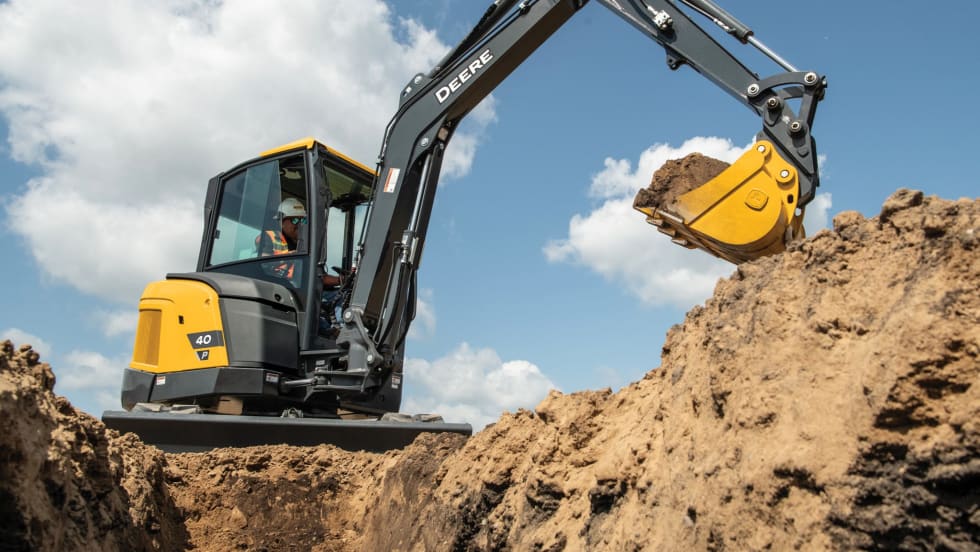
John Deere Introduces 40 P-Tier Compact Excavator
John Deere is adding a compact excavator designed for crews that need to move equipment between jobsites and handle multiple types of work with one machine. The 40 P-Tier weighs less than 10,000 pounds and offers configurable hydraulics, attachment options, and connected fleet-management capabilities.
Read More →
How Leading Fleets Improve and Why Business Plans Matter
This week, we look at what past Leading Fleet winners can teach us about making progress, plus how to build a business plan your fleet will actually use.
Read More →
Nominate a Fleet Leader for the 2027 Public Fleet Hall of Fame
Do you know a fleet leader who has made a lasting impact on the industry? Nominate this fleet professional for the 2027 Public Fleet Hall of Fame.
Read More →
Why Fleet Business Plans Need Three Perspectives
A fleet business plan should help agency leaders understand the fleet’s value, give the organization a clear direction, and establish shared expectations with customer departments.
Read More →
How Oil Analysis, Safety Technology, and Fleet Awards Drive Improvement
What happens when fleets let measured results guide their next decision?
Read More →
Emergency Response, Fleet Sales and New Technology
This week’s fleet news covers emergency preparedness, shifting vehicle sales, electric truck investments, and new tools for monitoring road conditions.
Read More →