




Miami-Dade Creates Technician Trainee Program
The Miami-Dade County (Fla.) fleet has a new program to help it overcome its heavy equipment technician recruitment problems. Fleet Director Alex Alfonso explains how fleet staff created the program and how it works.

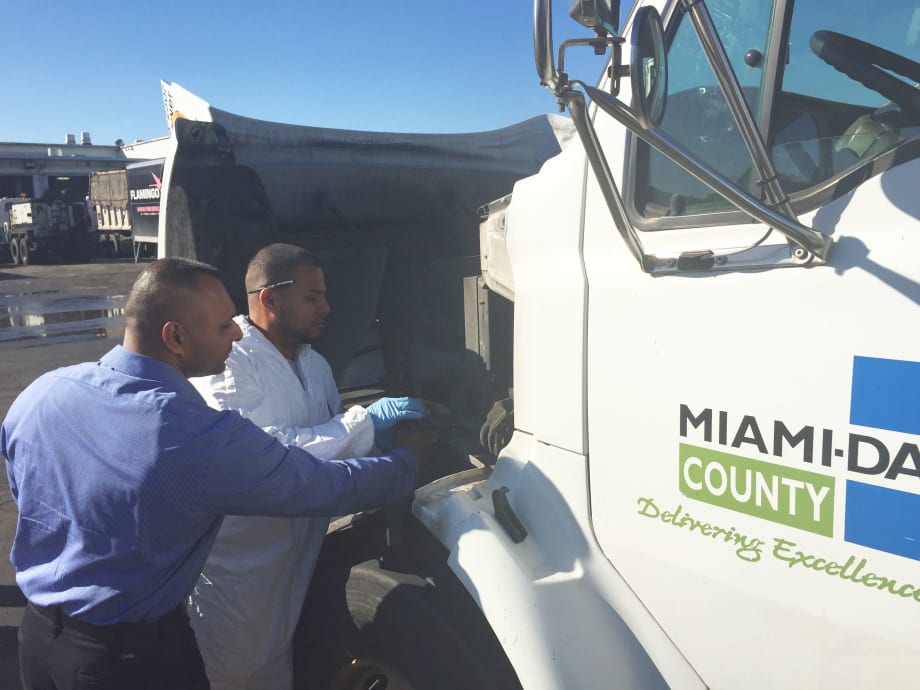
(L-R) Pictured are Pete Moolah, heavy fleet service manager, and Daniel Gasca, auto parts specialist, from the Miami-Dade Internal Services Department fleet. Photo courtesy of Miami-Dade County
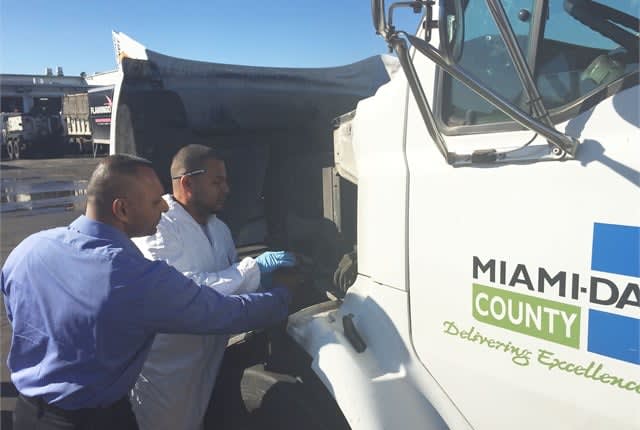
(L-R) Pictured are Pete Moolah, heavy fleet service manager, and Daniel Gasca, auto parts specialist, from the Miami-Dade Internal Services Department fleet. Photo courtesy of Miami-Dade County
The Miami-Dade County (Fla.) fleet has a new program to help it overcome its heavy equipment technician recruitment and retention problems. Its newly launched Heavy Equipment Technician Trainee program, which had its first trainees start in December 2016, allows new graduates and those with just one year of experience to apply for a trainee position, in the hopes program graduates will then become heavy equipment technicians (HETs), said Alex Alfonso, director of Miami-Dade County’s fleet management division.
Alfonso worked with Facilities Supervisor Juan Erbella, Internal Services Department (ISD) Manager Olga Diaz, and Heavy Fleet Service Manager Pete Moolah, as well as union representatives, on the project, modeling it after the Police Department’s officer training program. Alfonso, a former law enforcement officer, previously ran the fleet for the Miami-Dade Police Department before joining the county’s ISD in 2015.
The program curriculum consists of five different targeted skills: preventive maintenance; brake maintenance; suspension, steering, and drive line maintenance; engine and drivetrain maintenance; and hydraulic maintenance. Trainees are tested upon completion of each skill session with a written best based on National Institute of Automotive Service Excellence (ASE) study guides and a performance skills test.
In the past few years, an increasing number of technician retirements at the county coupled with a nationwide truck technician shortage have led to a lower number of qualified applicants for heavy equipment job postings.
“One of the disadvantages under the heavy equipment tech position is a person must have two years of heavy equipment experience. That makes it hard to get people to come in,” Alfonso said.
Under the trainee program, candidates who have one year of experience in heavy automotive equipment or have graduated from a heavy-duty truck program from an accredited vocational school can apply. Trainees are placed in the Step 98 pay grade, which is one pay step below, or about 5% pay less than, Step 1 of the HET classification pay range. Trainees undergo one year of formal job training before becoming HETs.
There’s a compensation incentive for trainers — that 5% saved by placing trainees on the Step 98 pay grade goes to the trainer for the time he works with the trainee.
Alfonso said trainers are long-time technicians at the fleet who are interviewed and chosen based on their experience, ASE certifications, and communication skills. The fleet has chosen three trainers and two trainees that began working in December, out of 139 applicants for the trainee program. Alfonso expects to stagger the program to have two trainees start in December and two in June.
“Depending on the success of the program and how our normal hiring goes, we’ll [determine] how much further we expand it,” Alfonso said.
The Miami-Dade fleet consists of approximately 6,000 light-duty and 6,000 heavy-duty units. It consists of 19 maintenance facilities, seven of which specialize in heavy-duty work.
More Maintenance

Freeing Technicians for Higher-Priority Repairs
Could paid interns help public fleets free up experienced technicians for more complex repairs?
Read More →
Stay ready, set and safer with verified fleet inspections
When fleet inspections aren’t verifiable, missed defects can quickly become downtime, safety risks, and service delays. This white paper shows government and municipal fleet leaders how digital inspections can improve accountability, catch issues earlier, and keep vehicles ready when they’re needed most.
Read More →
Using Oil Analysis to Help with Engine Losses
How a Texas city changed its lubrication practices and began tailoring preventive maintenance intervals after test results showed oil degradation and fuel dilution.
Read More →
Hidden in Plain Sight: Fleet Compliance Risks
Fleet compliance isn't just about having policies — it's about consistently enforcing them. This practical guide reveals six hidden compliance risks common in public sector and shared fleet operations and outlines proven strategies to improve visibility, accountability, and audit readiness.
Read More →
Is Your Fleet Garage Holding Back Your Operation? | The Fleet Breakroom
Norman Barrientos of Barrientos Design & Consulting explains how agencies can use operational data to show decision-makers why a replacement or major renovation is needed.
Read More →
Reducing Long-Term Maintenance Costs and Downtime
Downtime is rarely caused by a single surprise failure but rather by an issue that builds over time through setbacks ranging from deferred maintenance to poor replacement planning. So what's the fix?
Read More →
The Future of Government Fleet Technicians with Mike Cleary
Insight on preparing for hybrid and electric vehicle service, what fleets need to know about recruiting technicians in a competitive market, and how to make the most of limited training budgets.
Read More →
Work Orders Are More Than Records. They're a Roadmap to Fleet Availability
What if your work orders could predict failures, uncover hidden costs, and boost fleet availability? Here's how leading fleets are using the data.
Read More →
Drive More Profit with Greater Fleet Uptime
Fleet downtime costs money. JASPER helps keep vehicles on the road with quality remanufactured components, fast nationwide delivery, and reliable solutions that boost uptime and profitability.
Read More →
Smart Seasonal Maintenance Tips for Government Fleets
Government fleets carry extra weight, and routes, schedules, and public trust depend on reliability. A systematic spring checklist keeps vehicles in service when agencies need them most.
Read More →