Public fleet tchnicians are retiring, and sometimes en masse. With the loss of manpower — and knowledge — how can fleets recover? Fleet managers who have survived technician shortages share their creative strategies.
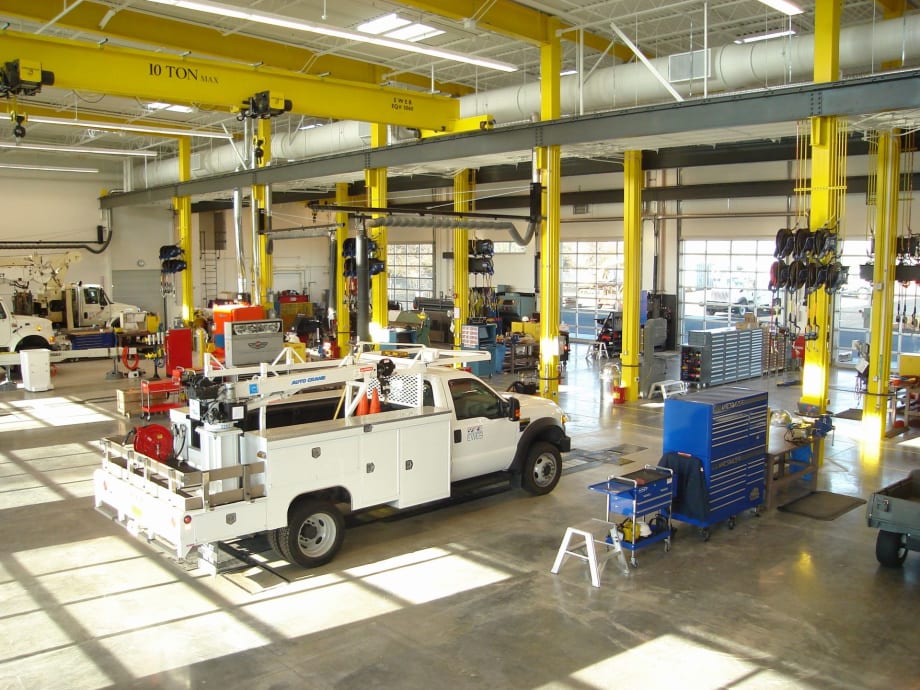
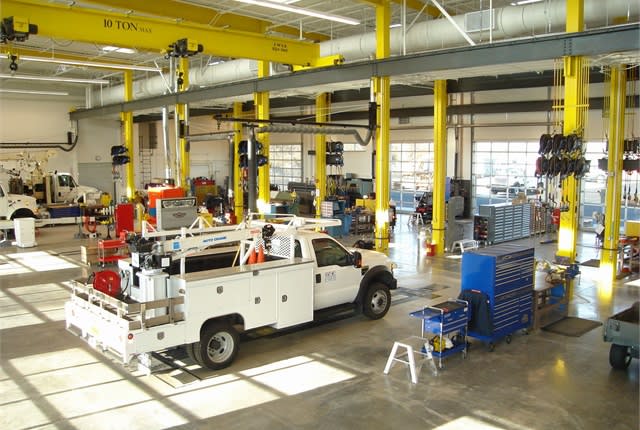
At the Eugene Water & Electric Board (EWEB) in Oregon, 80% of employees in the fleet department have retired in the past five years, and another 10% took other higher paying positions within EWEB. Photo courtesy of EWEB
8 min to read
At the Eugene Water & Electric Board (EWEB) in Oregon, 80% of employees in the fleet department have retired in the past five years, and another 10% took other higher paying positions within EWEB. Photo courtesy of EWEB
At a Glance
Fleets with mass technician retirements must think outside the box to make sure the work gets done:
Employing temporary workers
Having dealership technicians fill in
Connecting with technical colleges
Rehiring retired technicians
Assessing technician salaries.
If half of your technicians walked out the door tomorrow, your fleet would be in trouble. Unfortunately, this can be the case when it comes to public sector fleet technician retirements. For some fleets, a retirement policy changes and the result is an onslaught of technician retirements. Suddenly, fleets are left with no time to plan for the loss. As the hiring process spans months, as it often does for government fleets, technician vacancies cause a backlog of repairs, slower turnaround time, increased dependence on vendors for outsourced repairs, increased costs, and decreased customer satisfaction.
“The downtime of assets and flow of work through our shop can quickly increase when we have vacancies,” said Bryan Lucas, manager, Orange County (Fla.) Fleet Management Division. “We are already challenged with an aging fleet of vehicles and equipment, so having empty bays without technicians just adds to it.”
Ad Loading...
When faced with a technician shortage, Lucas and other fleet managers got creative: they developed out-of-the-box strategies to both handle the loss and be better prepared in the future.
Lucas
Orange County: Casual Employment
A few years ago, the Orange County, Fla., fleet was one such fleet that lost technicians to a retirement policy change. By the end of this year, the fleet will have had 10 of its 41 technicians and four fabrication roles retire in just two years. During this time, the county had another two technicians leave unexpectedly, and another is eligible for retirement at any time.
These unplanned departures take a toll on the fleet, and technicians aren’t quickly replaced. “Whether technicians retire or move on for other reasons, our production and knowledge base is negatively affected,” Lucas said. “We have enough challenges backfilling planned retirements — but when a technician leaves or has to suddenly retire for other reasons, we know it will be three months or more before we have a permanent replacement.”
To compensate for these losses, the county begins planning a year in advance for known retirements. This includes assigning other technicians to train with those who are leaving to ensure knowledge is transferred down the line.
Staff also deployed another strategy to deal with both planned and unexpected departures: casual employment. These equipment mechanic positions are offered the same starting pay rate as entry-level positions but don’t receive benefits such as vacation or medical insurance. Casual employees are able to work 40 hours per week for up to six months.
Ad Loading...
“We only bring technicians on like this if we know we will have vacancies within the six months. We tell the candidates that this is a great way to get their foot in the door, show us what they can do, and to make sure they like working for us,” Lucas said. “If for any reason we have issues with the person, we can quickly release them — but that has only happened one time. All of our other casual position hires eventually applied for permanent positions and are still here.”
In addition to offering a good way to recruit and vet new hires, no approval is needed to hire casual employees, meaning the fleet can add to its ranks quickly. Lucas said this strategy has worked well to backfill vacancies.
Lentsch
Eugene Water & Electric Board: Source Technicians from Dealerships
At Eugene Water & Electric Board (EWEB) in Oregon, the makeup of the technicians on the shop floor has changed dramatically over the last five years. More than 80% of employees in the fleet department have retired in that time and another 10% have taken higher paying positions within the organization. Thanks to changes in pension plans and retirement benefits, most of the technicians opted for early retirement. Of the eight technicians, just one original technician remains on the shop floor — and that individual plans to retire within the next two to three years.
At the same time the EWEB was losing staff, the pool of qualified applicants for their jobs was becoming shallower, and the positions were harder to fill.
So EWEB looked to another source for temporary technicians while filling in the gaps: dealerships. “By partnering with some of our local dealerships, we were able to negotiate a labor rate and buy a block of labor hours. In return, the dealership would send a journey-level technician to work in our shop and report to our crew leader,” said Gary Lentsch, CAFM, fleet manager, EWEB. “We found these trained professionals can provide you with immediate skills, experience, and intangibles required to step in and be immediately productive.”
Ad Loading...
Some fleets have balked at this strategy due to bargaining unit issues. But Lentsch says it’s not much different than bringing in a mechanic from the outside to work on a specialized piece of equipment.
So far, the strategy has been successful for the fleet. “Our technicians have benefited from the experience of having someone on site who can show them how to better diagnose problems and share some secrets of the trade,” Lentsch said. “When an employee leaves, backfilling the position in our organization (like most governmental organizations) will literally take months. Because we have been able to partner with our local dealerships, we haven’t experienced too many of the ill effects of not being able to backfill our positions in a timely manner.”
City of San Jose: Apprenticeship & Rehire Retirees
In two years, the City of San Jose, Calif., said goodbye to nine of the fleet’s 28 technicians, thanks to retirements, separations, and transfers. To make up for the losses, the city took a two-pronged approach: apprenticeships and rehiring retirees.
The fleet’s apprenticeship program spans four years and includes on-the-job training in all seven of the fleet’s shops. All technicians are required to graduate from the program regardless of their prior experience. “This makes vacancies less painful because our journey-level technicians possess the skills to work on all of our fleet assets,” said Dan Sunseri, fleet manager.
In addition to recruiting new apprentices to fill the vacancies, the fleet also looked to the city’s retiree rehire program, which was used by other city departments but hadn’t yet been leveraged by the fleet. “When some of our most experienced techs retired from the fire apparatus program and we simultaneously lost techs in other areas, the light went on to approach our retirees to see if they would be interested to come back on a part-time basis,” Sunseri said. “Much to our surprise, they were very interested. Because our apprentice-to-journey-level-mechanic ratio was increasing, the rehire retire program proved to be a great training resource.”
Ad Loading...
Through the retiree rehire program, the fleet was allowed to bring on retired technicians to work part-time in the shop, up to roughly 900 hours per year. This not only helped fill the manpower deficit, but it also helped the fleet in training younger technicians. “It works well when the retired individuals were highly productive and skilled in their area of expertise, passionate, and worked very well with others,” Sunseri said. “They are the perfect mentors for our young apprentices.”
Between the two strategies, the city has recovered from its technician shortage while also establishing a team of well-trained, knowledgeable technicians.
Schlangen
Dakota County: Connect With Technical Colleges
Dakota County, Minn., has nine techs, two working supervisors, and one project specialist in its shop. In the last two years, three senior techs, one supervisor, and one project specialist all retired, totaling more than 40% of the fleet workgroup staff. “The techs and staff that left were quick and unexpected,” said Kevin Schlangen, CPFP, CAFM, CEM, fleet manager for the county. “They retired earlier than expected, and we were not as aggressive as we should have been in cross training and developing staff.”
This left the shop understaffed but also resulted in a major knowledge gap. “The staff that retire take with them an average of 30 years’ experience at the county and 40 years in the fleet industry,” Schlangen said. “They take with them the history of how we did things in the past and why we have made changes to our current operational procedures.” Fewer skills and institutional knowledge meant slower turnaround time, especially on equipment unique to the municipality.
To resolve the issue, the county promoted technicians through the ranks. The fleet also upped its training game. But that still left fleet with three open technician positions.
Ad Loading...
So the fleet looked outside of its four walls to fill the vacancies. Instead of hiring full-time technicians, the county sourced temporary trainees from the local technical college. The students could be mentored by senior technicians, while the shop could gauge their abilities. “This lets us test out their skill sets, personalities, and work ethic,” Schlangen said. “Then, as openings come up, we encourage them to apply and see how they measure up against other applicants.”
So far, this strategy has worked. “The majority of the fleet staff have worked their way up through promotions, and it has enabled us to build a solid team,” Schlangen said. “The staff that have worked their way up have a great appreciation for what it takes to do the different job duties.”
For the City of Orlando, Fla., the problem of losing technicians was a little different. While it lost technicians to retirement, it was also losing them to the private sector, which offered higher pay. Lower technician salaries also made it difficult to recruit technicians to fill the spots of those who had retired. “This created manpower shortages that were difficult to fill, especially with a healthy private sector competing for the available labor,” said David Dunn, CFM, division manager, Fleet & Facilities Management Division.
After having lost seven of the fleet’s 34 technicians in five years, the city decided to conduct a salary assessment to reevaluate technician pay. “The city is pursuing a city-wide pay study to consider adjustments to compete with the private sector,” Dunn said. “Current employees are staying on and anticipating salary relief while retaining their current city benefits.”
With more competitive pay paired with city benefits, the fleet hopes to both improve retention and
Ad Loading...
The Best Strategy? Planning Ahead
Although these fleets deployed diverse strategies, they agreed the best strategy for replacing retirees is planning ahead. Lentsch summarizes it this way: “Instead of managing in fear of losing your key employees to mass technician retirements, work on building a stronger and more flexible work group that’s ready to weather the turbulence of turnover when it happens.”
St. Johns County, Florida, had fleet data, but turning it into reliable decision guidance was another matter. Instead of starting over with a new fleet management system, the county connected existing tools and built a scoring system that gives managers an objective look at fleet health.
With more than 8,000 vehicles and pieces of equipment to maintain, the City of Phoenix could not afford to wait for fully trained technicians to walk through the door. Instead, they revamped their entire workforce strategy and showed how public fleets can create their own talent pipeline while preparing existing employees for increasingly complex vehicles.
Public fleets have more data than ever, but inconsistent records and missing information can still undermine maintenance, replacement, and cost decisions.
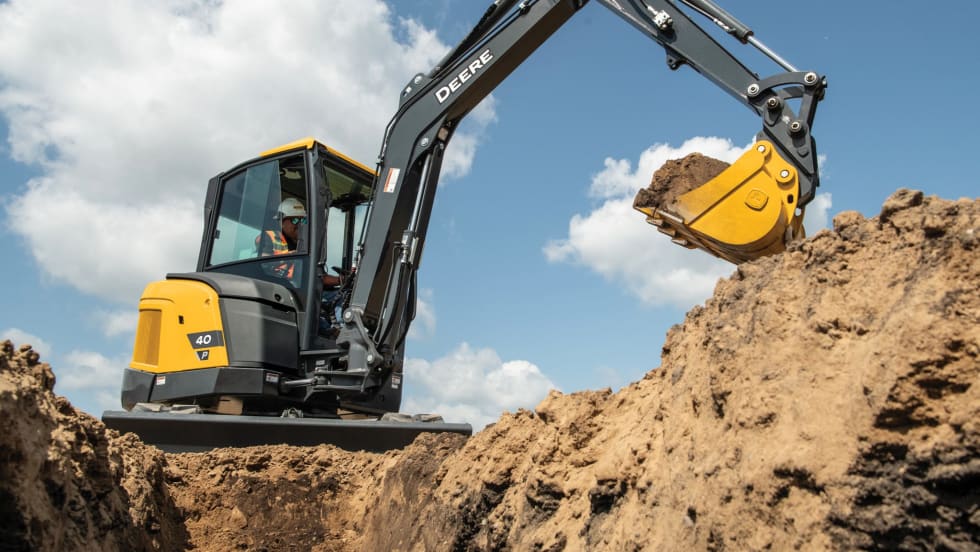
John Deere is adding a compact excavator designed for crews that need to move equipment between jobsites and handle multiple types of work with one machine. The 40 P-Tier weighs less than 10,000 pounds and offers configurable hydraulics, attachment options, and connected fleet-management capabilities.
This week, we look at what past Leading Fleet winners can teach us about making progress, plus how to build a business plan your fleet will actually use.