





How to Track and Manage Emissions…Even If You’re a Small Fleet
DCAS and FDNY Double Their Electric Fleet
The Department of Citywide Administrative Services (DCAS) and the New York City Fire Department (FDNY) are purchasing 30 electric vehicles (EVs), doubling the FDNY’s all-electric fleet presence.
May 22, 2025
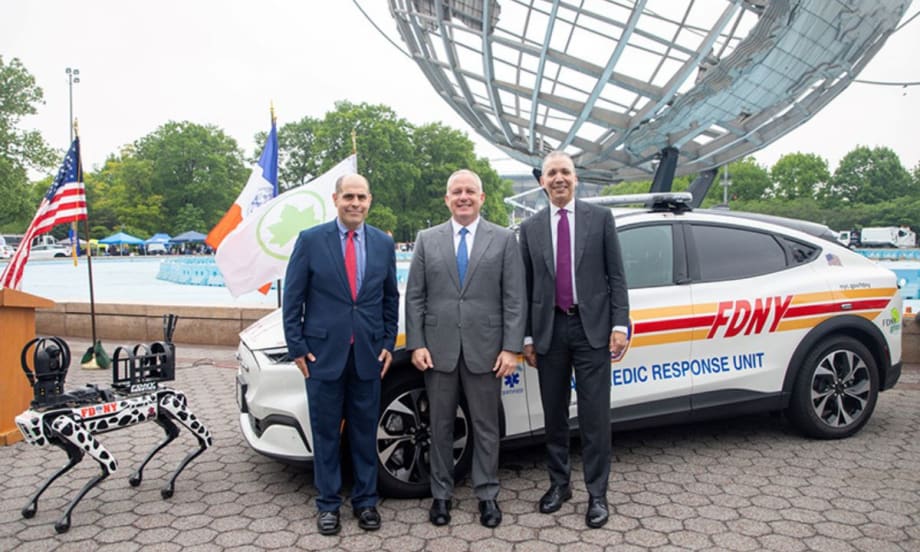
Pictured left to right: DCAS Deputy Commissioner Keith Kerman, FDNY Commissioner Robert S. Tucker, and DCAS Commissioner Louis A. Molina
Photo: NYC DCAS / NYC FDNY
3 min to read
Leading the charge in large-scale sustainable fleet investments, the Department of Citywide Administrative Services (DCAS) and the New York City Fire Department (FDNY) are purchasing 30 electric vehicles (EVs), doubling the FDNY’s all-electric fleet presence.
Luis A. Molina, FDNY Commissioner, and Robert S. Tucker, DCAS Commissioner, joined attendees at the 2025 NYC Fleet Show in Flushing Meadows Corona Park to make the announcement.
In addition to expanding the FDNY's EV fleet, four of the vehicles are slated to become the City’s first-ever EV paramedic response units (PRUs).
These new units will increase Advanced Life Support (ALS) vehicle availability, helping to lower response times for the 35% of FDNY emergency calls that are high-priority, life-threatening.
Comr. Molina said, “With this purchase, we meet at the vital intersection of safety and sustainable efficiency, all measures, electrifying the City’s fleet has continuously stood as the clear path forward to an even greener New York City, and we are proud to work with FDNY to advance the City’s emissions reduction plans while enhancing public safety capabilities. This ongoing transformation across municipal fleet highlights how our widespread vision of fleet efficiency is not only defined by power, but also by the ability to preserve our environment, protect New Yorkers, and dramatically improve our qualities of life,” according to a recent press release.
Comr. Tucker added, “Getting to life-threatening emergencies is incredibly important, and these new EVs will allow us to increase our PRU capabilities, which we know will lower response times and save lives. We are grateful to our partners at DCAS for helping us increase our response while at the same time working toward the City’s green energy goals.”
EV additions include:
13 Ford F-150 Lightning pickups
11 Ford Mustang Mach-E crossovers
5 Chevrolet Blazer EV SUVs
1 Ford E-Transit cargo van
FDNY utilizes an additional 42 on and off-road EVs in non-emergency support roles.
These new EVs will be stationed at EMS Stations 18, 26, and 55 in the Bronx, NY. The FDNY has 33 charging ports, with a fast charger at EMS 18.
In addition to these initiatives, 634 of the 636 FDNY ambulances have been updated with a plug-in hybrid battery alternative power unit (APU) as outlined in Local Law 72 of 2013. They have also installed solar panels on 350 ambulances to offset the limitations of plug-in charging.
There are an additional 150 solar panels on order.
All these implementations serve to advance the City’s Clean Fleet Plan, which started in 2015. The City has been ahead of schedule in meeting the goals set in this initiative and surpassed its “2,000 EVs by 2025” goal with 5,000 EVs by May 2024.
The City of New York operates the largest municipal fleet in the country and has addressed sustainability by integrating multiple modes of clean energy, including solar power and biofuels.
The City is currently on pace to fulfill the Clean Fleet Plan’s overall objectives of reducing emissions 50% by 2025 and 80% by 2035.
FDNY is the greenest fire fleet in the U.S., using electric, hybrid, solar, and renewable diesel.
More Green Fleet
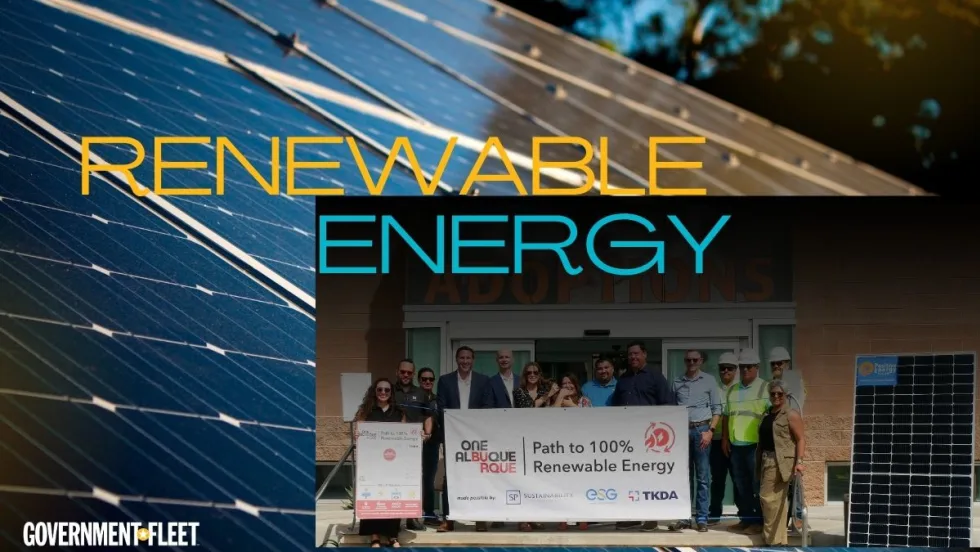
Sustainability Partners, Energy Systems Group Help Albuquerque Close the Gap on its 100% Renewable Energy Goal
The eight-site, 6 MW solar project has advanced the city toward 100% renewable energy for municipal operations.
Read More →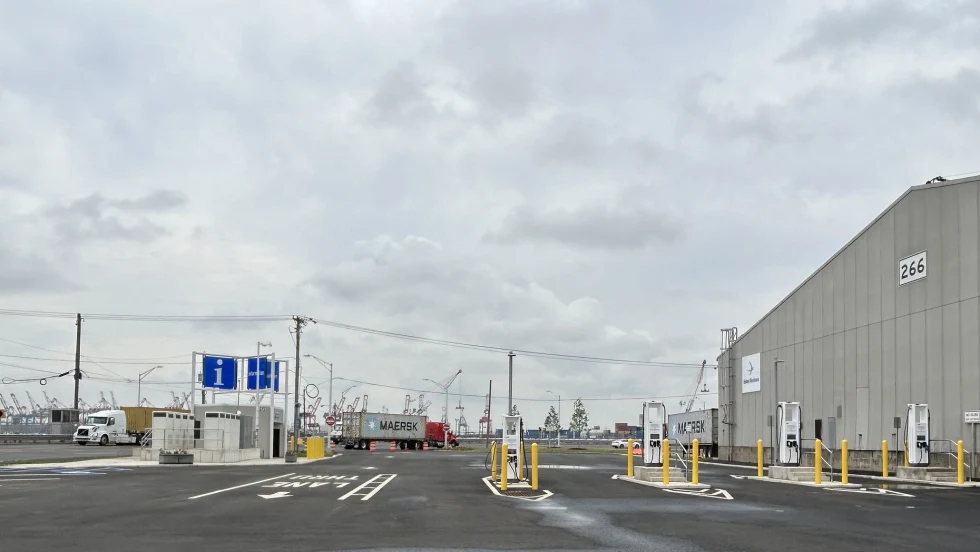
Port Authority and CALSTART Launch $45 Million Electric Truck and Charging Programs
The programs aim to boost sustainable operations across the East Coast's busiest seaport.
Read More →
Moving Government Fleets Beyond the Vehicle Purchase: EV as a Service
A discussion on how EVaaS is moving beyond pilot programs and what fleets should consider before beginning a larger deployment.
Read More →
Moving Government Fleets Beyond the Vehicle Purchase: EV as a Service
As fleets move beyond small EV pilots, Sustainability Partners CEO Adam Cain explains how EVaaS can address the infrastructure and long-term planning required for larger deployments.
Read More →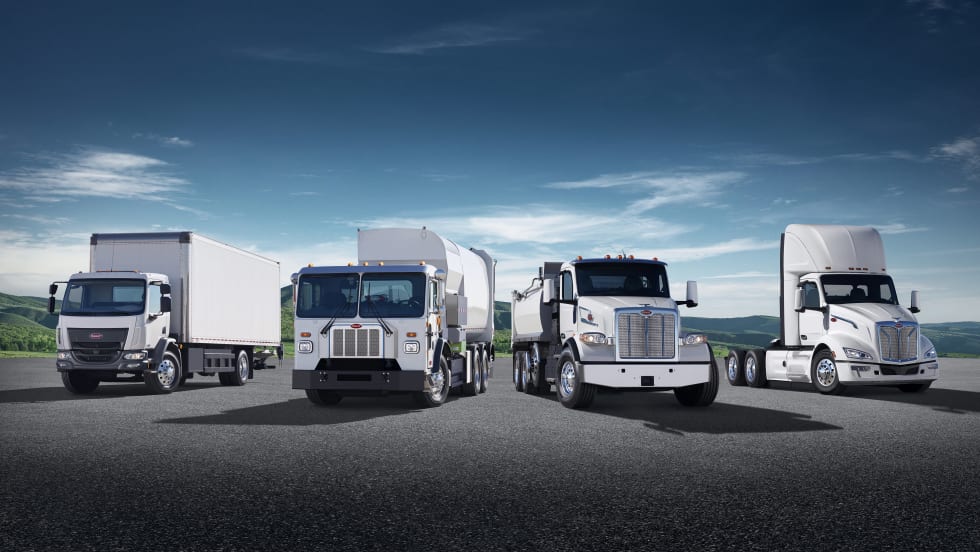
Peterbilt Expands Sourcewell Partnership with Electric Vehicle Lineup
The agreement aims to provide streamlined procurement of Peterbilt trucks for government, education, nonprofit and tribal organizations across the United States and Canada.
Read More →
EV Adoption & Charging Challenges
Where is your fleet in the journey of vehicle electrification? If you're still looking for answers to fleet electrification you've come to the right place.
Read More →
Hawaii Passes Clean Fuel Policy
Hawaii lawmakers passed clean fuel legislation that could support renewable natural gas production, biogas-powered transportation, and lower-carbon fueling options for public and commercial fleets.
Read More →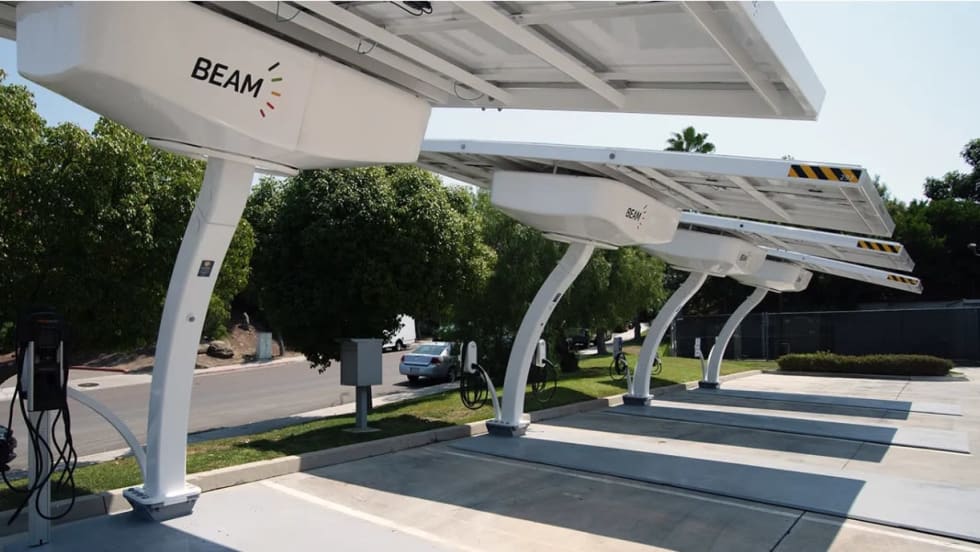
Stanislaus County Deploys Ten Beam Global EV ARC Systems to Support County Fleet Electrification
Stanislaus County deployed 10 off-grid solar-powered EV charging systems and a mobile charging trailer from Beam Global to support its electric fleet operations and emergency response flexibility.
Read More →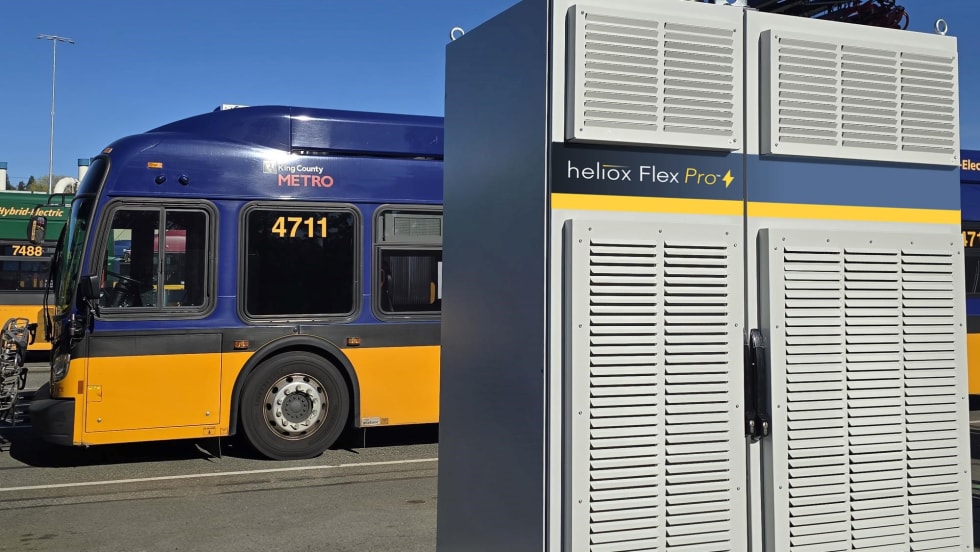
Heliox Pilots 480-kW Bus Charger with King County Metro
King County Metro is piloting Heliox’s new 480-kW Flex Pro charger to support expansion of its battery-electric bus fleet and depot charging infrastructure. The compact charging system supports pantograph and plug-in charging configurations for high-density transit operations.
Read More →