





Want More? How to Implement and Justify a Drone Program
Police, Fire Departments in California Town Launch Joint Drone First Responder Program
The drones are designed to arrive on-scene ahead of Fremont first responders to provide critical real-time situational awareness through live-streamed video.
March 20, 2024
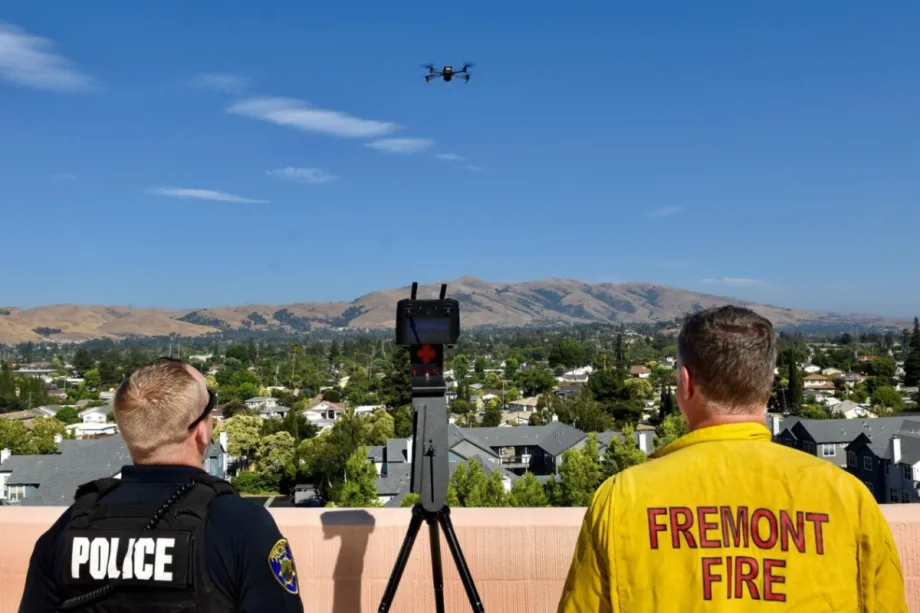
On-scene video from Fremont's drone first responder program empowers responders to make better decisions, de-escalate situations when possible, and identify potential hazards and rescues.
Photo: Skyfire Consulting
2 min to read
The police and fire departments in a California community are teaming up to launch what Skyfire Consulting calls a first-of-its-kind joint Drone First Responder (DFR) program in the United States.
The program, approved by the Fremont City Council in February 2024, is leaning on Skyfire for its support and training to enhance public safety and emergency response times.
Enhancing Situational Awareness and Response
The Fremont DFR program utilizes Unmanned Aerial Vehicles (UAVs) launched from fixed locations in an effort to rapidly respond to public safety incidents.
These UAVs, piloted by certified professionals, are designed to arrive on-scene ahead of first responders to provide critical real-time situational awareness through live-streamed video.
This can help in situations where there is road traffic for patrol vehicles and fire trucks. The drones can be used to create an on-scene presence more quickly, and give responders a better idea of what they're walking into, enhancing safety.
The on-scene video empowers responders to make better decisions, de-escalate situations when possible, and identify potential hazards and rescues.
"Skyfire is honored to support Fremont in launching this historic DFR program," Skyfire Founder and CEO Matt Sloane said. "Our team's deep experience and commitment to public safety were instrumental in bringing this program to life, and we are confident it will serve the Fremont community well."
Pilot Program Success
The Fremont Police and Fire Departments conducted a successful pilot program from November 2022 to January 2023, deploying UAVs from strategic locations. The pilot demonstrated the value of DFR in enhancing public safety, reducing response times, and ensuring first responder safety.
The Fremont DFR program is further bolstered by a partnership with Washington Hospital Healthcare System. The healthcare system was set to begin hosting UAV launches from its rooftop location, expanding the program's reach and response capabilities within the community.
"We’re proud to work with Skyfire to launch this groundbreaking DFR program," Fremont Fire Department Battalion Chief Jeff Kleven said. "This program has the potential to save lives and make our community safer, and Skyfire's expertise has been invaluable in getting us to this point."
More Operations

Is Keeping Older Fleet Vehicles Really Saving Money?
Is keeping vehicles longer saving money, and what happens when a diagnostic test points to the wrong fix?
Read More →
How Smart Fleet Strategy Can Help Local Government Agencies Do More with Less
Keeping a vehicle longer may ease this year’s budget, but what does it cost the next one? A closer look at fleet decisions can reveal opportunities to reduce spending while protecting essential services.
Read More →
Connect with Government Fleet on LinkedIn
From industry news and fleet management strategies to conversations with peers, Government Fleet's LinkedIn page offers public-sector fleet professionals another way to stay informed and connected.
Read More →
Town of Queen Creek Named Most Successful Fleet Award Winner of Inaugural RTA Fleet Success Awards
Five fleets were honored at RTA Connect 2026 in Chicago for excellence across resource efficiency, intentional culture, risk management, and stakeholder satisfaction.
Read More →
Sponsored•October 14, 2026
A buyer's guide to fleet management software in 2027
Buying fleet management software in 2027 means looking beyond features and price. As fleet operations, technology and expectations evolve, this guide explores what today’s fleet professionals should consider when choosing a system that can deliver value now and adapt to what comes next.
Read More →
Hazard Alerts, Fleet Car Sales Rise and a New Shuttle Concept
Fleet car sales doubled, but the bigger picture tells a different story in this week’s roundup.
Read More →
How St. Johns County Turned Fleet Data Into Better Replacement Decisions
St. Johns County, Florida, had fleet data, but turning it into reliable decision guidance was another matter. Instead of starting over with a new fleet management system, the county connected existing tools and built a scoring system that gives managers an objective look at fleet health.
Read More →
Fleet Forward Conference Introduces One-Day Passes for 2026
New one-day registration lets fleet professionals attend Tuesday, Wednesday, or Thursday, with passes available for $249.
Read More →
ENC Unveils its ZAVIR Medium-Duty Shuttle
Two variants of the concept shuttles were revealed: a low-floor configuration and a high-floor configuration.
Read More →
Could Your Next Fleet Technician Start as an Intern?
What if your next technician hasn’t worked in a fleet shop yet? What fleets are doing to free up time.
Read More →