





More Military Content: Bridging the Technician Gap with Military Partnerships
GM Defense, American Rheinmetall Collaboration on Army's Tactical Truck Program
The aim of the multi-phased program is to replace the Army’s family of heavy tactical trucks with production of up to 40,000 trucks.
February 2, 2023
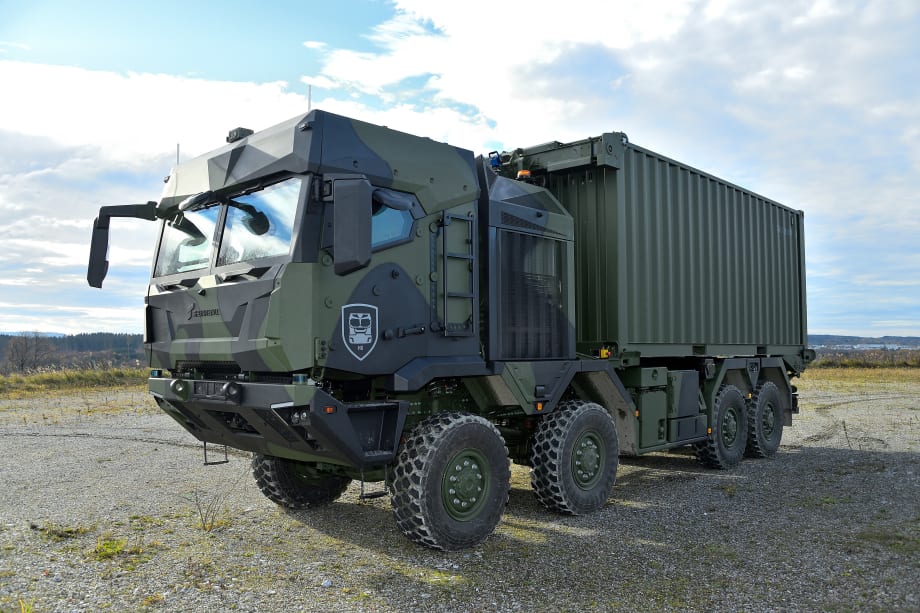
Front 3/4 of American Rheinmetall Vehicles HX3 Common Tactical Truck.
Photo: American Rheinmetall Vehicles
2 min to read
American Rheinmetall Vehicles and GM Defense have won a contract for the first phase of the U.S. Army’s Common Tactical Truck (CTT) Program. This multi-phased program is aimed at replacing the Army’s family of heavy tactical trucks with production of up to 40,000 trucks valued at up to $14 billion.
The two defense companies formed a collaboration in 2022 to compete in the program to deliver a tactical truck with advanced driver assistance systems (ADAS) for safety, increased off-road mobility, cybersecurity, machine learning, artificial intelligence, improved survivability and fuel efficiency, among other emerging technologies. This resulte in the HX3 Common Tactical Truck (HX3-CTT).
The HX3-CTT next-generation system has enhanced on and off road mobility, integrated survivability, and an open digital architecture supporting ADAS and enabled for autonomous vehicle operation. Combined with the open architecture, the commercial backbone of the HX3-CTT is meant to support modernization and allow for rapid increases in capability as technologies mature.
The HX3-CTT provides a basis for optimized lifecycle costs and service support to the Army.
HX3 Common Tactical Truck
The HX3-CTT features an interchangeable protected cab design, ADAS, and drive by wire operation. The new open systems electrical architecture allows for integration of leader-follower, tele-operation, and fully autonomous capabilities that focus on protecting soldiers.
Common platforms and parts to support a family of vehicles
The HX3-CTT allows for modularity across variants, including cargo, load handling systems, tankers, and line haul tractors. With an HX family that can scale from 4x4 to 10x10, the HX is designed to meet any military need.
Commerciality in its DNA
The HX3-CTT leverages best-in-class advances in commercial truck technology, safety, fuel efficiency, and emissions reduction. Ruggedized for the stresses of military service, the HX family provides an “off the shelf” capability. This commercial backbone reduces obsolescence risk/cost, expands parts availability and reduces sustainment demands.
Allied interoperability
The HX family of trucks have been sold to 20 customers globally including an active allied user group consisting of United Kingdom, Australia, New Zealand, Germany, Austria, Norway, Sweden, and Denmark, creating common global supply chains, training opportunities, and integrated operations among key allies operating around the world.
More Operations
Is Keeping Older Fleet Vehicles Really Saving Money?
Is keeping vehicles longer saving money, and what happens when a diagnostic test points to the wrong fix?
Read More →
How Smart Fleet Strategy Can Help Local Government Agencies Do More with Less
Keeping a vehicle longer may ease this year’s budget, but what does it cost the next one? A closer look at fleet decisions can reveal opportunities to reduce spending while protecting essential services.
Read More →
Connect with Government Fleet on LinkedIn
From industry news and fleet management strategies to conversations with peers, Government Fleet's LinkedIn page offers public-sector fleet professionals another way to stay informed and connected.
Read More →
Town of Queen Creek Named Most Successful Fleet Award Winner of Inaugural RTA Fleet Success Awards
Five fleets were honored at RTA Connect 2026 in Chicago for excellence across resource efficiency, intentional culture, risk management, and stakeholder satisfaction.
Read More →
Sponsored•October 14, 2026
A buyer's guide to fleet management software in 2027
Buying fleet management software in 2027 means looking beyond features and price. As fleet operations, technology and expectations evolve, this guide explores what today’s fleet professionals should consider when choosing a system that can deliver value now and adapt to what comes next.
Read More →
Hazard Alerts, Fleet Car Sales Rise and a New Shuttle Concept
Fleet car sales doubled, but the bigger picture tells a different story in this week’s roundup.
Read More →
How St. Johns County Turned Fleet Data Into Better Replacement Decisions
St. Johns County, Florida, had fleet data, but turning it into reliable decision guidance was another matter. Instead of starting over with a new fleet management system, the county connected existing tools and built a scoring system that gives managers an objective look at fleet health.
Read More →
Fleet Forward Conference Introduces One-Day Passes for 2026
New one-day registration lets fleet professionals attend Tuesday, Wednesday, or Thursday, with passes available for $249.
Read More →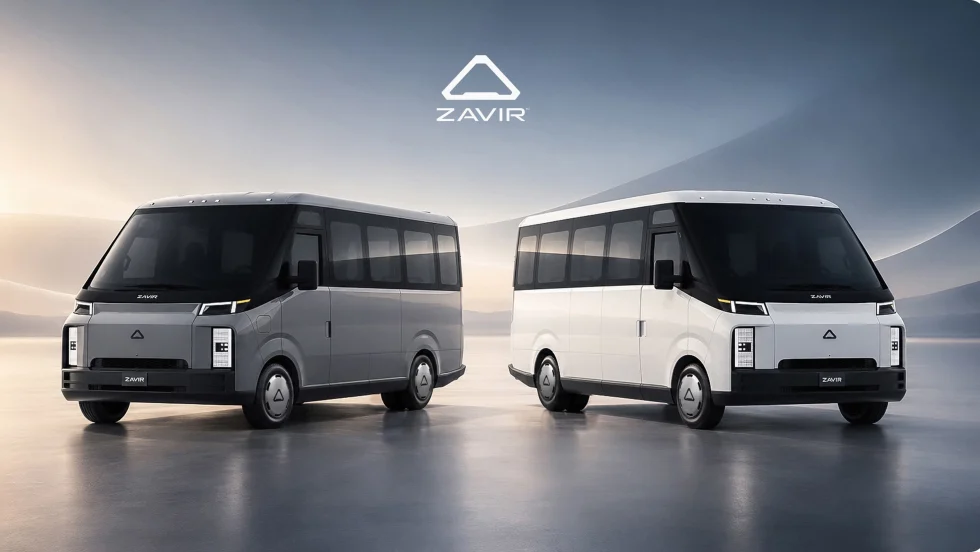
ENC Unveils its ZAVIR Medium-Duty Shuttle
Two variants of the concept shuttles were revealed: a low-floor configuration and a high-floor configuration.
Read More →
Could Your Next Fleet Technician Start as an Intern?
What if your next technician hasn’t worked in a fleet shop yet? What fleets are doing to free up time.
Read More →