





Similar Content: Verizon Frontline Debuts Connected Police Cruiser Prototype
Verizon Frontline Debuts THOR’s Hammer
THOR, or another deployable asset, could be used to extend THOR’s Hammer’s 5G standalone capabilities into areas the trailer can’t reach. For example, THOR’s Hammer could be positioned at an emergency operations center while THOR moves deep into a forest during a wildfire response effort.
August 9, 2022
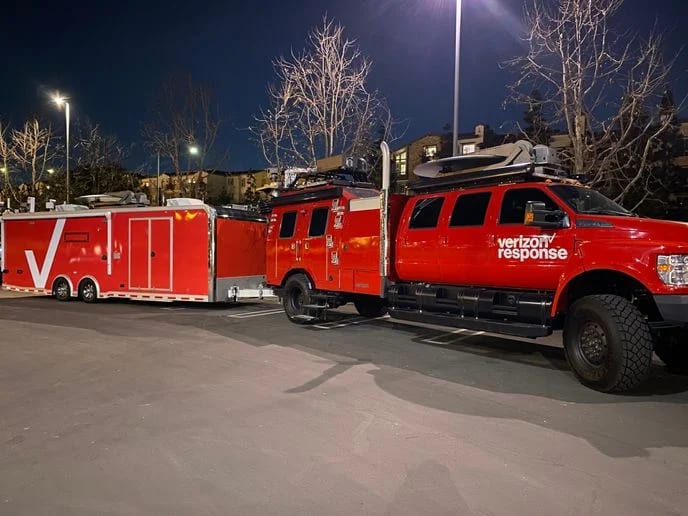
Verizon Frontline introduced THOR’s (Tactical Humanitarian Operations Response) Hammer, a nearly 30-foot trailer that can act as either a private 5G standalone or non-standalone network that can be managed locally from within the trailer.
Photo: Verizon Frontline
3 min to read
Verizon Frontline today introduced THOR’s (Tactical Humanitarian Operations Response) Hammer, the latest in its line of next-generation public safety communications innovations.
Developed with dual-core network capabilities, which enable enhanced operational flexibility, the nearly 30-foot trailer can act as either a private 5G standalone or non-standalone network that can be managed locally from within the trailer.
THOR’s Hammer is built to leverage the network and technology of Verizon Frontline, including Verizon 5G Ultra Wideband (UW), along with additional applications and advanced computing solutions such as network slicing capabilities.
“THOR’s Hammer is the latest example of Verizon Frontline’s commitment to partnering with first responders to understand and meet their evolving needs through innovative solutions that leverage the speed, reliability and security of our network,” says Maggie Hallbach, senior vice president of Verizon public sector. “We have worked side-by-side with first responders on the front lines for decades to ensure they have the communications technology they need to achieve their mission and THOR’s Hammer can now help enable game-changing capabilities for public safety agencies as they work to protect our communities during times of crisis and beyond.”
"Verizon's most-awarded networks provide the resilience, reliability and security that first responders need when it matters most," says Srini Kalapala, senior vice president of technology and product development at Verizon. "Innovations like THOR's Hammer illustrate how 5G's speed, capacity and low-latency can enable applications requiring near-real time responsiveness using technologies like extended reality, network slicing, and edge computing."
Network slicing, which allocates bandwidth to multiple users based on specific requirements, could provide each public safety agency operating in a city with its own dedicated network resources. Resources could then be configured to best meet the needs of the agency using them. For example, if one agency needs access to real-time video and another only needs voice and data service, a dedicated network slice could be optimized to meet each agency’s specific requirements.
THOR’s Hammer’s 5G standalone core could also enable applications requiring near-real time responsiveness such as extended reality (XR) training or 3D mapping.
In addition to its standalone/non standalone network capabilities, THOR’s Hammer will incorporate mission critical push-to-talk (MCPTT), land mobile radio (LMR), and private mobile edge compute (MEC) capabilities.
THOR’s Hammer was built to operate independently or in tandem with THOR.
For instance, THOR, or another deployable asset, could be used to extend THOR’s Hammer’s 5G standalone capabilities into areas the trailer can’t reach. For example, THOR’s Hammer could be positioned at an emergency operations center while THOR moves deep into a forest during a wildfire response effort.
Responding to a wildfire is just one example of where THOR’s Hammer could help provide secure, reliable, standalone 5G Ultra Wideband coverage in areas where network connections and coverage can be challenging or where natural disasters like earthquakes or hurricanes have damaged existing infrastructure.
Verizon Frontline is the advanced network and technology built for first responders – developed over nearly three decades of partnership with public safety officials and agencies on the front lines – to meet their unique and evolving needs.
This story originally appeared in Police Magazine.
More Safety
New Partnership Aims to Expand Public Digital Hazard Alert System Statewide
The Hawai’i Department of Transportation (HDOT) is expanding advance digital hazard alerts for the public statewide.
Read More →
New York City Expands Safety Technologies Across Municipal Fleet
Executive Order 19 moves intelligent speed assistance and pedestrian alerts from pilot programs toward standard fleet equipment, offering other public fleets a look at how safety technology can be tested, measured, and scaled.
Read More →
Sponsored•August 10, 2026
Hidden in Plain Sight: Fleet Compliance Risks
Fleet compliance isn't just about having policies — it's about consistently enforcing them. This practical guide reveals six hidden compliance risks common in public sector and shared fleet operations and outlines proven strategies to improve visibility, accountability, and audit readiness.
Read More →
5 Days Left to Submit Your 2026 Fleet Safety Award Nomination
Know a government fleet, safety, or risk manager who deserves recognition for making fleet operations safer? Nominations are open through Aug. 15.
Read More →
How the First 24 Hours Can Shape a Fleet Crash Response
How a strong accident response process helps government fleets move from the initial report to recovery while building a clearer record for what needs to change next.
Read More →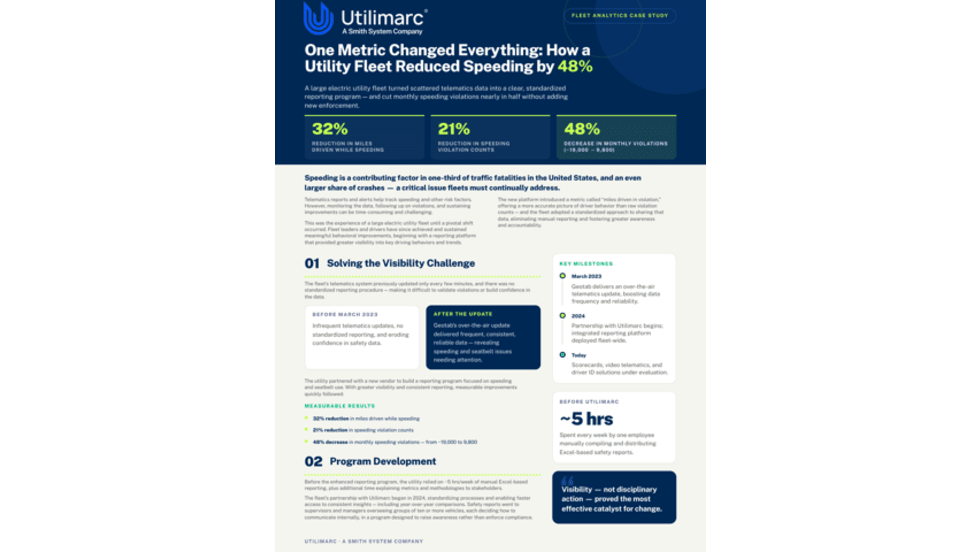
Sponsored•July 17, 2026
How Better Visibility Cut Speeding Violations by 48%
Fleet leaders don't need more data, they need clearer visibility into what the data is saying. This case study explores how one utility replaced speeding-event counts with a single metric — miles driven in violation — to strengthen safety and significantly reduce speeding violations.
Read More →
e-con Systems Expands AI Camera Tools for Traffic Monitoring
The systems support license plate recognition, traffic analytics, and video management for transportation agencies.
Read More →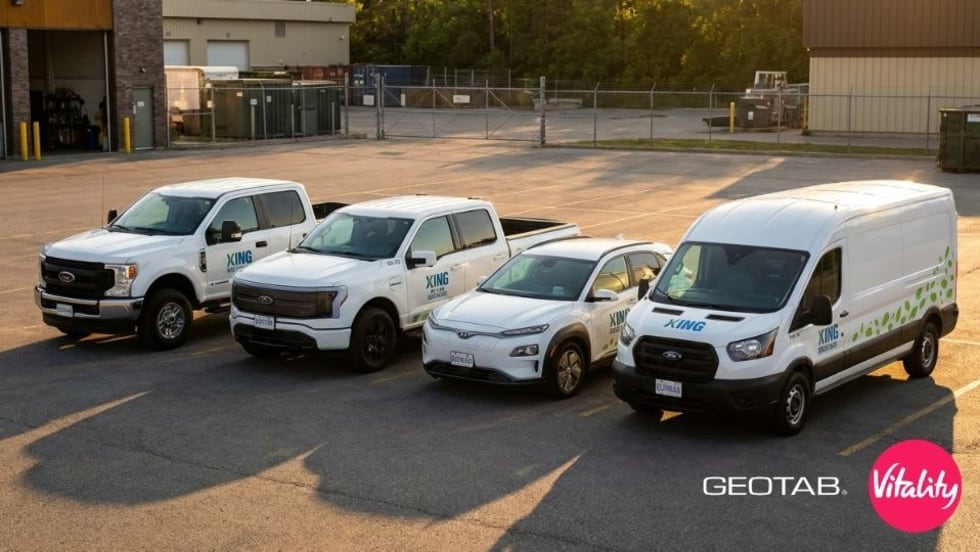
King Township Pilot Links Driver Feedback to Reduced Speeding
How King Township, a best-in-class municipal fleet, reduced speeding by 10.9% and demonstrated a projected 349% ROI by putting safety ownership directly in drivers' hands.
Read More →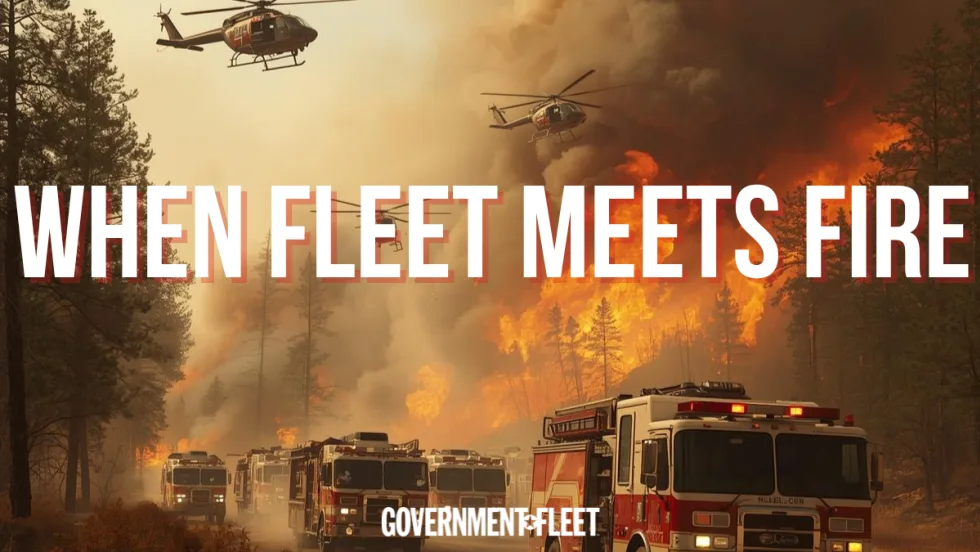
Beyond the Fireline: The Critical Role of Public Fleets in Wildfire Response
Behind every wildfire response is a complex network of vehicles, data, and decisions that must work in sync under extreme pressure. Global heating trends require strong fleet coordination and reliable communications to keep crews safe and operations running smoothly.
Read More →
How AI Is Transforming Public Fleet Safety - Part 1
AI-powered safety systems are helping public fleets tackle distracted driving by delivering real-time coaching and measurable behavior change behind the wheel. In part one of our Q&A, Nauto CEO Stefan Heck explains how agencies can improve safety, reduce costs, and navigate implementation challenges with AI-driven technology.
Read More →