





Similar Content: How Fleets Can Prepare for Natural Disasters: Lessons from Hurricane Matthew
Recovery Efforts Continue for Hurricane Ida
Hurricane Ida ravaged many parts of the Gulf Coast and caused flooding in several northeastern states.
September 7, 2021

Photo: Louisiana State Police
3 min to read
As Troopers and emergency response workers from across the country continue post-storm recovery operations, Troopers are honored to partner with local, state, and out of state public safety agencies. #Ida@ARStatePolice@FLHSMV@GOHSEP@La_DOTD@LouisianaGovpic.twitter.com/4xTkjo6Hap
— LA State Police (@LAStatePolice) September 5, 2021
Rescue and recovery efforts are still ongoing after Hurricane Ida ravaged many parts of the Gulf Coast and caused flash flooding in several northeastern states.
In Louisiana, the Category 4 storm left more than one million people without power, and state officials confirmed a total of 13 deaths.
Prior to the storm, local utility company Entergy anticipated mobilizing a team of 16,000 to restore power across Louisiana using high-water vehicles, rear-alley machines, marsh buggies, drones, and helicopters. On Monday, Entergy announced that its anticipated storm team grew to nearly 26,000, restoring power to 457,000 of Entergy's customers — eight days after Ida made landfall.
As of press time, more than 500,000 residents are still without power, according to the Louisiana Public Service Commission.
Crews are working throughout the areas impacted by Hurricane Ida, including in St. John and St. Charles parishes. We will continue to work as quickly and safely as possible to restore power to all customers. pic.twitter.com/EMqbUcikpL
— Entergy Louisiana (@EntergyLA) September 6, 2021
Louisiana Gov. John Bel Edwards announced on Aug. 30 that the state would also use high-water vehicles, boats, and helicopters to assist with search and rescue efforts, in addition to receiving support from local first responders and Federal Emergency Management (FEMA) teams from various other states, such as New York.
According to USA Today, the Louisiana National Guard reportedly activated a total of 4,900 personnel and lined up 195 high-water vehicles, 73 rescue boats, and 34 helicopters. Meanwhile, troopers from Louisiana State Police teamed up with Arkansas State Police and Florida Highway Patrol to help clear fallen trees; cover damaged roofs; and pass out food, water, and other supplies. The Louisiana Department of Transportation and Development also worked to clear storm-related debris and is currently conducting damage assessments in impacted areas.
Working with @La_DOTD our engineer work teams are actively engaged throughout 11 parishes and have assessed 2,112 miles and cleared 403 miles of roadway from Hurricane #Ida. #ProtectWhatMatters@GOHSEPpic.twitter.com/KZ0qT9jnsc
— LA National Guard (@LANationalGuard) September 1, 2021
As the remnants of Ida headed up north — after being re-categorized as a tropical storm — several states, including Connecticut, New York, New Jersey, and Pennsylvania, suffered severe flooding, and in some cases, tornadoes.
The New Jersey National Guard began conducting search and rescue missions on Sept. 3 throughout flooded parts of northern and central New Jersey. On Tuesday, New Jersey Gov. Phil Murphy said that FEMA teams were still on the ground in Essex, Hudson, Mercer, and Union counties to evaluate damages from Ida.
In Passaic County, New Jersey, half of the North Haledon Police Department’s fleet, including seven motorcycles, was damaged after stormwater flooded the department’s municipal garage and parking lot, according to NorthJersey.com. Officials are still assessing the cost of damage to other fleet equipment stored in the department’s facility.
More Operations

Hazard Alerts, Fleet Car Sales Rise and a New Shuttle Concept
Fleet car sales doubled, but the bigger picture tells a different story in this week’s roundup.
Read More →
How St. Johns County Turned Fleet Data Into Better Replacement Decisions
St. Johns County, Florida, had fleet data, but turning it into reliable decision guidance was another matter. Instead of starting over with a new fleet management system, the county connected existing tools and built a scoring system that gives managers an objective look at fleet health.
Read More →
Fleet Forward Conference Introduces One-Day Passes for 2026
New one-day registration lets fleet professionals attend Tuesday, Wednesday, or Thursday, with passes available for $249.
Read More →
ENC Unveils its ZAVIR Medium-Duty Shuttle
Two variants of the concept shuttles were revealed: a low-floor configuration and a high-floor configuration.
Read More →
Could Your Next Fleet Technician Start as an Intern?
What if your next technician hasn’t worked in a fleet shop yet? What fleets are doing to free up time.
Read More →
How Phoenix Is Building Its Next Generation of Fleet Technicians
With more than 8,000 vehicles and pieces of equipment to maintain, the City of Phoenix could not afford to wait for fully trained technicians to walk through the door. Instead, they revamped their entire workforce strategy and showed how public fleets can create their own talent pipeline while preparing existing employees for increasingly complex vehicles.
Read More →
What’s Slowing Your Fleet Down?
Could a change in how work gets done help your fleet return vehicles to service sooner?
Read More →
Can Public Fleets Trust the Data Driving Their Decisions?
Public fleets have more data than ever, but inconsistent records and missing information can still undermine maintenance, replacement, and cost decisions.
Read More →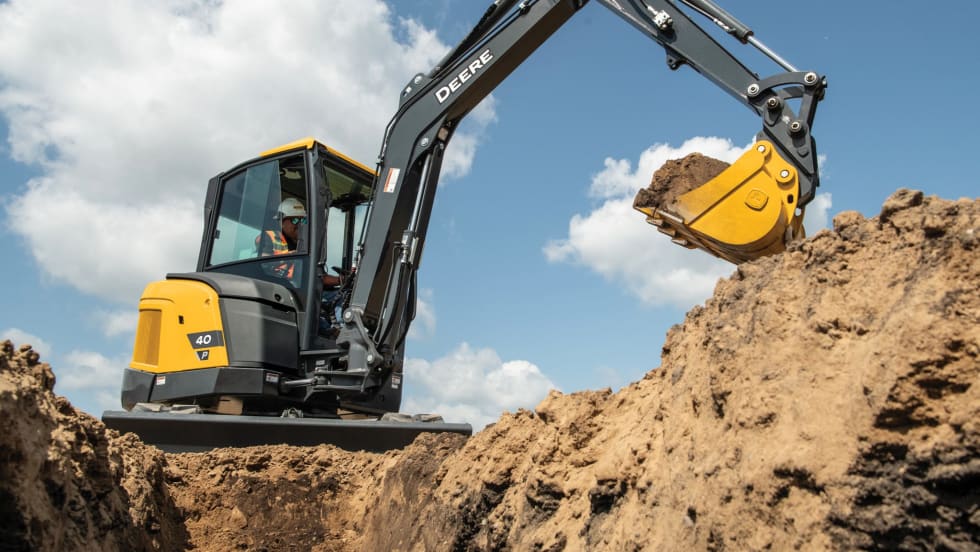
John Deere Introduces 40 P-Tier Compact Excavator
John Deere is adding a compact excavator designed for crews that need to move equipment between jobsites and handle multiple types of work with one machine. The 40 P-Tier weighs less than 10,000 pounds and offers configurable hydraulics, attachment options, and connected fleet-management capabilities.
Read More →
How Leading Fleets Improve and Why Business Plans Matter
This week, we look at what past Leading Fleet winners can teach us about making progress, plus how to build a business plan your fleet will actually use.
Read More →