




Similar Content: Training for Keeps: How to Retain Fleet Technicians
Two Major Principles of Retaining Technicians
The secret to attracting and retaining talent lies in the professional environment you create and adapting to the demands caused by the geographic area your operation is located in.

Lexi Tucker・Senior Editor
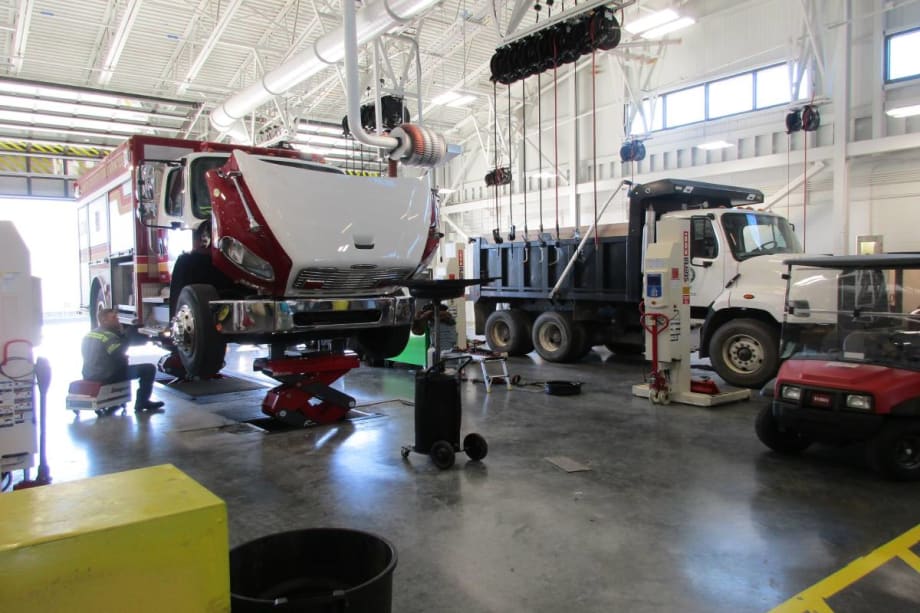
The secret to attracting and retaining talent lies in the professional environment you create and adapting to the demands caused by the geographic area your operation is located in.
Photo: Pasco County
3 min to read
A competent and engaged workforce is vital to ensuring a smooth-running fleet operation. It’s also one of the biggest challenges fleet organizations currently face. Brent Wahl, director of fleet management for Pasco County, Florida, believes this is a challenge that is never really “overcome,” but rather an ongoing mission.
While difficulty in recruitment has been a hot topic of discussion in the fleet management industry, Wahl never thought the situation was as dire as often portrayed.
“If we read articles and review presentation topics of 30 years ago, technician recruitment and training appeared to be as big of a topic then as it is now. Even with the countless discussions on the criticality of recruiting millennials and keeping them happy and engaged, we now find ourselves looking at the next group coming behind them and are getting ready to start the whole process over again,” he explained.
Instead of chasing a magic formula on the new “type” of candidate hitting the market, Wahl believes 90% of the problem can be solved by looking at two basic principles that should apply to everybody, at all times.
Create A Good Place to Work
This is, of course, easier said than done, but there are a few aspects to creating an environment people want to be a part of.
Try to be the best boss you can be. Listen, understand, mentor, give guidance, and set and enforce standards.
“Contrary to what you often may hear these days, a good boss does not let employees do whatever they want,” Wahl stated. “This is one way already engaged employees can become un-engaged.”
Do not tolerate abusive behavior from any of your junior leadership team to their employees, or from other employees to each other.
Spend time and money training/developing your employees and recognizing good behavior and accomplishments.
Understand Your Market
In the case of attracting and retaining technicians, no approach will be one-size-fits-all. Each agency has their own criteria that make recruitment and retention challenges unique to them, according to Wahl. These include pay scales, benefits, incentives, proximity to metro or isolated areas, and the reputation your shops have in the technician community.
Wahl said the Tampa area has a great economy, and therefore Pasco County, on the metro area border, faces challenges by being within a commutable distance to higher-paying private sector positions.
“The majority of our technician applicants with good experience were either using us to get a raise from their current employer, or they were changing jobs every three to four years and not the type we were looking for. The few we would get in this category that we kept wanted to move further away from the metro area, or were commuting and wanted to stop,” he explained. “Our best option was to develop younger techs who could be trained and deal with the productivity/training time issues.”
Fleet managers need to be aware of their own hiring circumstances and be prepared to create recruitment plans around these criteria.
Subscribe to Our Newsletter
More Operations

Is Keeping Older Fleet Vehicles Really Saving Money?
Is keeping vehicles longer saving money, and what happens when a diagnostic test points to the wrong fix?
Read More →
How Smart Fleet Strategy Can Help Local Government Agencies Do More with Less
Keeping a vehicle longer may ease this year’s budget, but what does it cost the next one? A closer look at fleet decisions can reveal opportunities to reduce spending while protecting essential services.
Read More →
Connect with Government Fleet on LinkedIn
From industry news and fleet management strategies to conversations with peers, Government Fleet's LinkedIn page offers public-sector fleet professionals another way to stay informed and connected.
Read More →
Town of Queen Creek Named Most Successful Fleet Award Winner of Inaugural RTA Fleet Success Awards
Five fleets were honored at RTA Connect 2026 in Chicago for excellence across resource efficiency, intentional culture, risk management, and stakeholder satisfaction.
Read More →
Sponsored•October 14, 2026
A buyer's guide to fleet management software in 2027
Buying fleet management software in 2027 means looking beyond features and price. As fleet operations, technology and expectations evolve, this guide explores what today’s fleet professionals should consider when choosing a system that can deliver value now and adapt to what comes next.
Read More →
Hazard Alerts, Fleet Car Sales Rise and a New Shuttle Concept
Fleet car sales doubled, but the bigger picture tells a different story in this week’s roundup.
Read More →
How St. Johns County Turned Fleet Data Into Better Replacement Decisions
St. Johns County, Florida, had fleet data, but turning it into reliable decision guidance was another matter. Instead of starting over with a new fleet management system, the county connected existing tools and built a scoring system that gives managers an objective look at fleet health.
Read More →
Fleet Forward Conference Introduces One-Day Passes for 2026
New one-day registration lets fleet professionals attend Tuesday, Wednesday, or Thursday, with passes available for $249.
Read More →
ENC Unveils its ZAVIR Medium-Duty Shuttle
Two variants of the concept shuttles were revealed: a low-floor configuration and a high-floor configuration.
Read More →
Could Your Next Fleet Technician Start as an Intern?
What if your next technician hasn’t worked in a fleet shop yet? What fleets are doing to free up time.
Read More →