




Learn More: Ohio Fleet Manager Builds Trust and Tech Skills
Creating a Modern Fleet While Maintaining Compassion
Tom Rowlings understands that implementing new technology comes with a learning curve -- and that’s why a patient management style is key.

Lexi Tucker・Senior Editor

5 min to read

Tom Rowlings
Fresh out of school, Tom Rowlings, assistant fleet manager for the City of Cambridge Public Works Department, Mass., started his career by working on private ambulance fleets. He then transitioned to working for the city of Boston in their EMS garage, as well as various other garages as a mechanic and supervisor.
He eventually took a hiatus from city life and went to work in the private sector as a fleet director for an environmental company that operated a 1,200-truck fleet spanning from Vermont to Florida. With a young family, he decided he needed to reduce travel time and found his way to his current position with the City of Cambridge.
The newly revamped job title of assistant fleet manager is part of a fleet team tasked with modernizing how the city’s fleet worked. Some of the processes are antiquated such as mechanics recording repairs on paper. With the support and direction of an experienced fleet manager, “I have been able to focus on making improvements in some of these areas, whether it is record keeping, employee training, or encouraging mechanics to get their ASE certifications,” he says.
What drew him to being in fleet management was this desire to continue his own personal growth, but also the growth of something bigger than himself that served others.
“It's a comfort to be in the fleet world. You know what you're doing, when you have to do it, and you have the opportunity to learn the ins and outs of that particular fleet.”
While they may have some similarities, every fleet is different. New advancements in technology and environmental requirements also make every day different as well. He’s always been someone who really enjoyed getting into the tech details of vehicles, so fleet has been a great fit for him.
“I enjoyed working on ambulances and other specialty vehicles because of the challenge of new technology and that was a perfect fit with all the electronics required. I became one of the go-to guys in the shop for the more challenging repairs.”
Figuring Out Solutions
He appreciates the collaborative nature of the field, and is happy his crew has a desire to work together to find solutions to problems they face.
“We don’t have a ‘drop the hammer’ type of attitude. We understand there are always going to be unique situations that aren’t as straightforward as the easier tasks.”
He provides the example of an asphalt patch truck that was in the shop that wasn’t heating up properly. After some investigation, it was determined a lot of the patch got stuck in the truck and was jamming it up.
“The most interesting part of the job is coming up with a game plan of how we are going to fix it because it's a specialty piece of equipment. We only have one. It’s a big deal that also ties back to learning the environment you're in. You have to understand what everyone else has to do in order for us to properly support them. Without good fleet support, the operation suffers,” he explains.
Facing Difficult Problems and People
There’s no doubt that managing a fleet has it’s challenges, Rowlings finds himself fortunate to have a a willing crew, a supportive manager and senior staff to provide the tools and direction to succeed. One of the biggest challenges Rowlings has faced in his career is figuring out creative ways to utilize the budget effectively so the appropriate vehicles are available to the operation so that they can get the job done right. New vehicles are expensive, including the cost to keep them running. The same goes for adapting to interesting personalities. Understanding why some people do things the way they do can be difficult.
“We have a few staff members who have been here for a while. As a new manager, you come in and as you see improvements that could be made, you try and work collaboratively with the employees to make the change in a positive manner. Change can be difficult to adapt to for some, but if you treat people not how you want to be treated, but how they want to be treated, it tends to garner more respect, which I think is vital to working as a team. We’re all here for the same goal; everyone's here for eight hours to do a job and perform a function. That doesn't mean it has to be the worst place in the world. I am fortunate that we have a solid team that enjoys the work they do.”
Introducing Technology
The next step in modernizing the fleet is an upgrade to electronic record keeping. The fleet did have an electronic repair order database, but it was more antiquated in the way it functions than most. Rowlings is now managing the upgrade of the system to Fleetio, which he had implemented when he was the fleet director at an environmental company prior to working with the city.
This works in tandem with the inventory project that is underway.
“There are parts that have been here for a long time. When you don’t cycle the inventory you can end up with parts for vehicles you haven’t had for 15 years. We’re trying to go through that and make improvements by reorganizing and recording what we have to ensure we don’t continue that process in the future.”
He believes these two projects together will help make the operation run more effectively and allow the mechanics to work more efficiently. He’s purchasing iPads for all of them so they can do their own repair orders and enter all information without having to scribble on a piece of paper.
“At this point, most technicians are well-versed in texting and using apps on their phone.”
Practicing Patience and Understanding
A piece of advice he would like to share is don't take everything personal. Realize that, as a fleet manager, you are there to support, not criticize.
“When something breaks, for instance: you can’t just jump down someone’s throat. At the end of the day, the operation is your customer. Maybe it was an accident, a manufacturer defect, or an instance where someone just doesn’t know. Regardless, these things happen. It's not my job to call someone names and tell them they broke a truck on purpose. Getting the job done and finding the facts and fixing the issues is first and foremost, creating tension doesn’t make the job any easier."
Subscribe to Our Newsletter
More Operations

How St. Johns County Turned Fleet Data Into Better Replacement Decisions
St. Johns County, Florida, had fleet data, but turning it into reliable decision guidance was another matter. Instead of starting over with a new fleet management system, the county connected existing tools and built a scoring system that gives managers an objective look at fleet health.
Read More →
Fleet Forward Conference Introduces One-Day Passes for 2026
New one-day registration lets fleet professionals attend Tuesday, Wednesday, or Thursday, with passes available for $249.
Read More →
ENC Unveils its ZAVIR Medium-Duty Shuttle
Two variants of the concept shuttles were revealed: a low-floor configuration and a high-floor configuration.
Read More →
Could Your Next Fleet Technician Start as an Intern?
What if your next technician hasn’t worked in a fleet shop yet? What fleets are doing to free up time.
Read More →
How Phoenix Is Building Its Next Generation of Fleet Technicians
With more than 8,000 vehicles and pieces of equipment to maintain, the City of Phoenix could not afford to wait for fully trained technicians to walk through the door. Instead, they revamped their entire workforce strategy and showed how public fleets can create their own talent pipeline while preparing existing employees for increasingly complex vehicles.
Read More →
What’s Slowing Your Fleet Down?
Could a change in how work gets done help your fleet return vehicles to service sooner?
Read More →
Can Public Fleets Trust the Data Driving Their Decisions?
Public fleets have more data than ever, but inconsistent records and missing information can still undermine maintenance, replacement, and cost decisions.
Read More →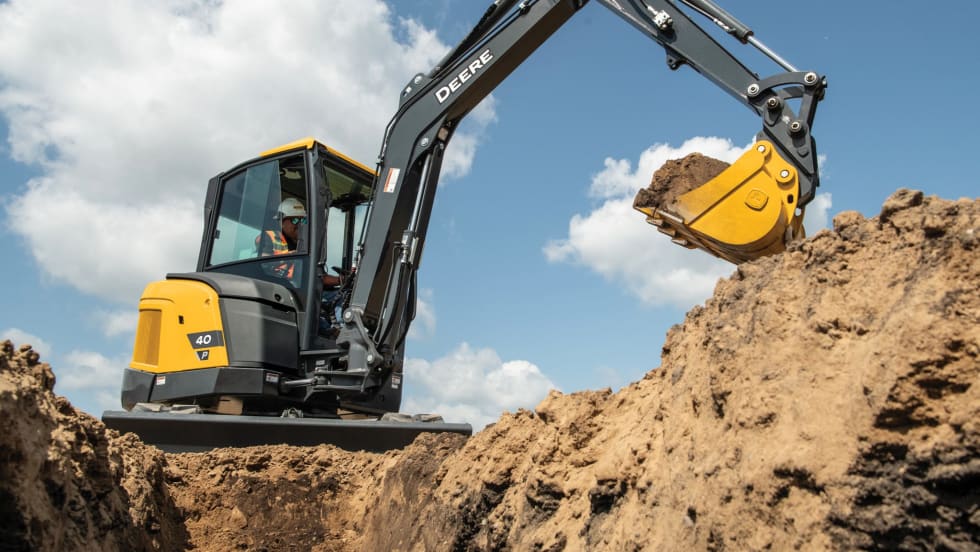
John Deere Introduces 40 P-Tier Compact Excavator
John Deere is adding a compact excavator designed for crews that need to move equipment between jobsites and handle multiple types of work with one machine. The 40 P-Tier weighs less than 10,000 pounds and offers configurable hydraulics, attachment options, and connected fleet-management capabilities.
Read More →
How Leading Fleets Improve and Why Business Plans Matter
This week, we look at what past Leading Fleet winners can teach us about making progress, plus how to build a business plan your fleet will actually use.
Read More →
Nominate a Fleet Leader for the 2027 Public Fleet Hall of Fame
Do you know a fleet leader who has made a lasting impact on the industry? Nominate this fleet professional for the 2027 Public Fleet Hall of Fame.
Read More →