




Related: Ala. Municipality Achieves ASE Blue Seal Designation
Learning From An ASE Blue Seal of Excellence Achieving Fleet
Fleet Manager Michael Dupuis talks about the hard work that goes into earning such an accolade.

Lexi Tucker・Senior Editor
3 min to read
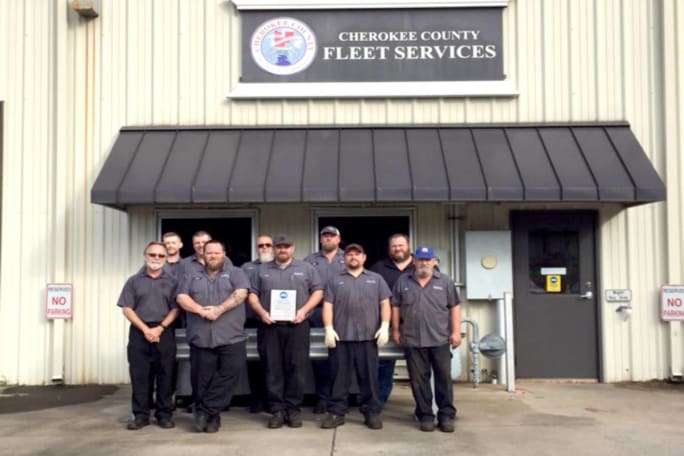
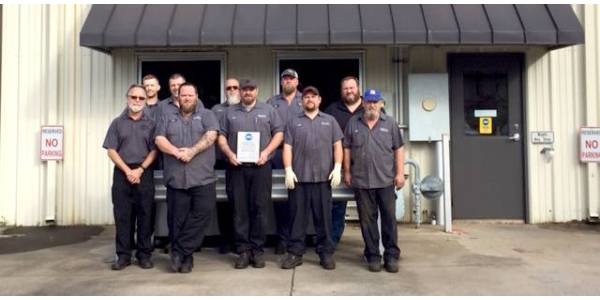
Front row left to right: Michael Dupuis, Fleet Services Director; Chris Winslow, Mechanic 3; Jeremy Rauscher, Mechanic 3; Matt York, Mechanic 2; Ricky Jeans, Mechanic 2; Back row left to right: Ryan Wester, Mechanic 3; Mike Meeks, Mechanic 3; Larry Griffin, Mechanic 3; Jeffrey Pyles, Fleet Supervisor; Shane Callan, Parts Manager
Cherokee County Fleet Management is now one of only six counties in Georgia to achieve the prestigious National Institute of Automotive Service Excellence’s (ASE) Blue Seal of Excellence. This is the second straight year the county department was awarded the designation. Michael Dupuis, director of Cherokee County, Ga., Fleet Management spoke to Government Fleet about what kind of work it takes and how other fleets can aspire to do the same.
Meeting Requirements
To become a Blue Seal Certified shop, a department must have 75% of its techs certified in one category of the repairs they perform. Dupuis says the county set up an incentive program for its technicians to continue their education.
“Cherokee County puts a strong emphasis on continuing education, as well as safety. We want to make sure our technicians stay updated on the newest repair and maintenance techniques and safety standards. They worked hard to attain their certifications, and we are proud they put the time and effort into achieving their goals,” he says.
Fleet Management received the Blue Seal as recognition of its technicians’ proficient work – seven of the eight total technicians for the county have multiple ASE certifications. Two of the employees are master technicians.
Dupuis explains other fleet managers who wish to have their shop become Blue Seal Certified should plan ahead accordingly.
“Know how many technicians you have and what their certification levels are. Research with ASE and learn what it will take, both financially and in manpower, for your particular organization to achieve your goal. Work with your organization’s leadership to develop a plan to begin an incentive program. Once a plan is approved and dollars are allocated, roll out the plan to your employees and get them started.”
Planning for the Future
The technicians for Fleet Management maintain about 800 vehicles, and on average service more than 10 per day while also receiving multiple service calls for job sites. All the work is completed at their current facility on Chattin Drive in Canton. In the coming months, the department will have a larger facility for maintaining county vehicles.
The new maintenance facility expansion is currently under construction and expected to be complete later this year. The $600,000 Special Purpose Local Option Sales Tax project will greatly increase the capacity for maintenance and repairs of county vehicles. Features will include a higher roof to extend ladders on fire apparatus and larger areas for county-owned heavy-duty equipment.
The fleet includes many emergency response vehicles, ranging from ambulances, engines, ladder trucks, patrol vehicles, and specialized unit vehicles. The department is working over the next year to get their technicians EVT (Emergency Vehicle Tech) certified.
“Many of our technicians are skilled to repair and maintain the emergency vehicle portion of our fleet – we simply want to afford them the opportunity to learn more,” explains Dupuis.
More Operations

Is Keeping Older Fleet Vehicles Really Saving Money?
Is keeping vehicles longer saving money, and what happens when a diagnostic test points to the wrong fix?
Read More →
How Smart Fleet Strategy Can Help Local Government Agencies Do More with Less
Keeping a vehicle longer may ease this year’s budget, but what does it cost the next one? A closer look at fleet decisions can reveal opportunities to reduce spending while protecting essential services.
Read More →
Connect with Government Fleet on LinkedIn
From industry news and fleet management strategies to conversations with peers, Government Fleet's LinkedIn page offers public-sector fleet professionals another way to stay informed and connected.
Read More →
Town of Queen Creek Named Most Successful Fleet Award Winner of Inaugural RTA Fleet Success Awards
Five fleets were honored at RTA Connect 2026 in Chicago for excellence across resource efficiency, intentional culture, risk management, and stakeholder satisfaction.
Read More →
Sponsored•October 14, 2026
A buyer's guide to fleet management software in 2027
Buying fleet management software in 2027 means looking beyond features and price. As fleet operations, technology and expectations evolve, this guide explores what today’s fleet professionals should consider when choosing a system that can deliver value now and adapt to what comes next.
Read More →
Hazard Alerts, Fleet Car Sales Rise and a New Shuttle Concept
Fleet car sales doubled, but the bigger picture tells a different story in this week’s roundup.
Read More →
How St. Johns County Turned Fleet Data Into Better Replacement Decisions
St. Johns County, Florida, had fleet data, but turning it into reliable decision guidance was another matter. Instead of starting over with a new fleet management system, the county connected existing tools and built a scoring system that gives managers an objective look at fleet health.
Read More →
Fleet Forward Conference Introduces One-Day Passes for 2026
New one-day registration lets fleet professionals attend Tuesday, Wednesday, or Thursday, with passes available for $249.
Read More →
ENC Unveils its ZAVIR Medium-Duty Shuttle
Two variants of the concept shuttles were revealed: a low-floor configuration and a high-floor configuration.
Read More →
Could Your Next Fleet Technician Start as an Intern?
What if your next technician hasn’t worked in a fleet shop yet? What fleets are doing to free up time.
Read More →