





Related: Nonprofit Creates COVID-19 Resource Page for Local Governments
Fort Collins Fleet Named No. 1 Leading Fleet
The City of Fort Collins, Colo., was selected as this year's big winner.
June 17, 2020
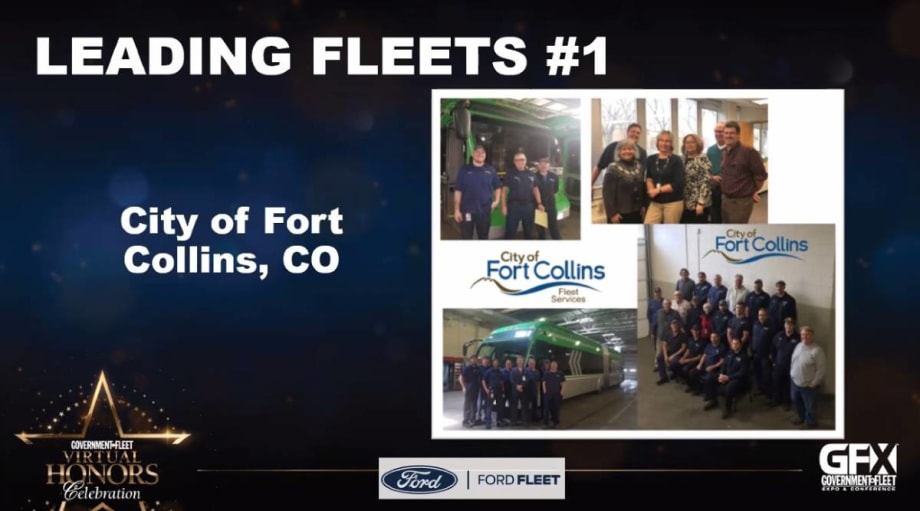
The City of Fort Collins, Colo., was named the No. 1 fleet among the Leading Fleets at the Government Fleet Virtual Honors Celebration on June 16.
2 min to read
The City of Fort Collins, Colo., was named the No. 1 fleet among the Leading Fleets at the Government Fleet Virtual Honors Celebration on June 16.
The operation was chosen for its commitment to training and environmental initiatives.
"I'd like to acknowledge our city leadership," said Tracy Ochsner, assistant operations services director for the City of Fort Collins, at the awards ceremony. "It's not always easy introducing electric cars, propane, and CNG [compressed natural gas] aftermarket conversions to your customers. I'd be remiss if I didn't thank our city manager and city council for creating policies that our fleet goals are in alignment with. Your vision and leadership have given us the opportunity to try new things, which has helped us become a leader in many fleet related initiatives.
The award is co-produced with the American Public Works Association (APWA) and sponsored by Ford. Tony Gratson, Ford's government sales manager, announced the winner. Judges Brian Franklin, CPFP, administrative manager, City of Tulsa, Okla.; Sam Lamerato, retired fleet manager and APWA representative; Kelly Reagan, fleet administrator, City of Columbus, Ohio; and Brad Salazar, director of fleet management, City & County of Denver, were present to name the 50 Leading Fleets and congratulate the winner.
Government Fleet also named the No. 1 fleets in size categories — the No. 1 small fleet (499 or fewer assets) is the Forest Preserve District of DuPage County, Ill., with 376 vehicles, and the No. 1 mid-size fleet (500-999 assets) is the Denver International Airport, Colo., with 940 units. The City of Fort Collins is also the No. 1 large fleet (1,000 or more assets), with 1,412 vehicles.
Staff also announced the top 20 ranked fleets and recognized the remaining Leading Fleets and Notable Fleets.
More Operations

Is Keeping Older Fleet Vehicles Really Saving Money?
Is keeping vehicles longer saving money, and what happens when a diagnostic test points to the wrong fix?
Read More →
How Smart Fleet Strategy Can Help Local Government Agencies Do More with Less
Keeping a vehicle longer may ease this year’s budget, but what does it cost the next one? A closer look at fleet decisions can reveal opportunities to reduce spending while protecting essential services.
Read More →
Connect with Government Fleet on LinkedIn
From industry news and fleet management strategies to conversations with peers, Government Fleet's LinkedIn page offers public-sector fleet professionals another way to stay informed and connected.
Read More →
Town of Queen Creek Named Most Successful Fleet Award Winner of Inaugural RTA Fleet Success Awards
Five fleets were honored at RTA Connect 2026 in Chicago for excellence across resource efficiency, intentional culture, risk management, and stakeholder satisfaction.
Read More →
Sponsored•October 14, 2026
A buyer's guide to fleet management software in 2027
Buying fleet management software in 2027 means looking beyond features and price. As fleet operations, technology and expectations evolve, this guide explores what today’s fleet professionals should consider when choosing a system that can deliver value now and adapt to what comes next.
Read More →
Hazard Alerts, Fleet Car Sales Rise and a New Shuttle Concept
Fleet car sales doubled, but the bigger picture tells a different story in this week’s roundup.
Read More →
How St. Johns County Turned Fleet Data Into Better Replacement Decisions
St. Johns County, Florida, had fleet data, but turning it into reliable decision guidance was another matter. Instead of starting over with a new fleet management system, the county connected existing tools and built a scoring system that gives managers an objective look at fleet health.
Read More →
Fleet Forward Conference Introduces One-Day Passes for 2026
New one-day registration lets fleet professionals attend Tuesday, Wednesday, or Thursday, with passes available for $249.
Read More →
ENC Unveils its ZAVIR Medium-Duty Shuttle
Two variants of the concept shuttles were revealed: a low-floor configuration and a high-floor configuration.
Read More →
Could Your Next Fleet Technician Start as an Intern?
What if your next technician hasn’t worked in a fleet shop yet? What fleets are doing to free up time.
Read More →