




Up to $75,000 Available for Medium-Duty Battery-Electric Trucks in California
The total funding fleets may be eligible to receive includes approximately $75,000 per electric truck, as well as $4,000 per unit for installation of charging infrastructure for trucks operating in certain areas of the South Coast Air Basin in California.
Funding is available to help public and private fleets replace operating medium-duty diesel trucks with battery-electric medium-duty trucks. The funding is provided by the U.S. Environmental Protection Agency (EPA) and the South Coast Air Quality Management District (AQMD), along with the California Air Resources Board (CARB). The total eligible funding fleets may receive is approximately $75,000 per electric truck, as well as $4,000 per unit for installation of electric vehicle (EV) charging infrastructure for trucks operating in certain areas of the South Coast Air Basin. The total level of grant funding per truck is dependent on other State of California funding.
The funding requirements are:
Diesel trucks must be currently in use and of model-year 1990 to 2003 with 16,001 to 26,000 lbs. GVWR (Class 5 and 6).
Diesel trucks must be fully dismantled within 90 days of replacement.
Replacement trucks must be a zero-emission vehicle selected from the California Air Resources Board's HVIP eligible vehicle list.
Replacement trucks must be of the same type and similar GVWR and perform the same type of function as the replaced diesel trucks.
Replacement trucks must primarily operate in San Bernardino, Ontario, Boyle Heights, or the port communities of San Pedro, Long Beach, and Wilmington and be registered in California.
The South Coast AQMD will provide fleets $20,000 per truck from the list of HVIP-eligible battery-electric vehicles. In addition, the South Coast AQMD will provide an incentive of up to $4,000 per unit for installation of EV charging infrastructure to support the operation of funded battery electric trucks.
Fleets may also be able to apply for a HVIP zero-emission truck voucher, managed by CARB, which range in funding from $12,000 to $45,000 for the purchase of each eligible new electric medium-duty truck. However, with the HVIP program’s additional funding for the purchase of the first three trucks, voucher levels can reach $55,000 per vehicle of HVIP funding. HVIP funding is currently exhausted, but additional funding is anticipated to become available once the next year’s program is launched.
Class 6 trucks with MY 1996-2003 diesel engines may be eligible to receive additional grant funds through the California Proposition 1B Goods Movement Emission Reduction Program.
Funding that the South Coast AQMD will provide to eligible public and private fleets to purchase these electric trucks is competitive; interested fleets must apply to the AQMD Request for Proposals solicitation #P2014-02 by Oct. 8 by 1:00 p.m. PST.
A bidder’s conference will be held on Sep. 18 at 10:00 a.m. to review the program. Bidders planning to attend the conference must notify Brian Choe (bchoe@aqmd.gov) by email on or before Sept. 13. The conference will be held at the SCAQMD headquarters in Room CC-2 at 21865 Copley Dr. in Diamond Bar, Calif.
In order to be eligible to receive the South Coast AQMD truck funding, fleets must fully disable and scrap a similar medium-duty diesel truck that performs the same functions and be the same type and similar GVWR as the truck being replaced.
More Green Fleet
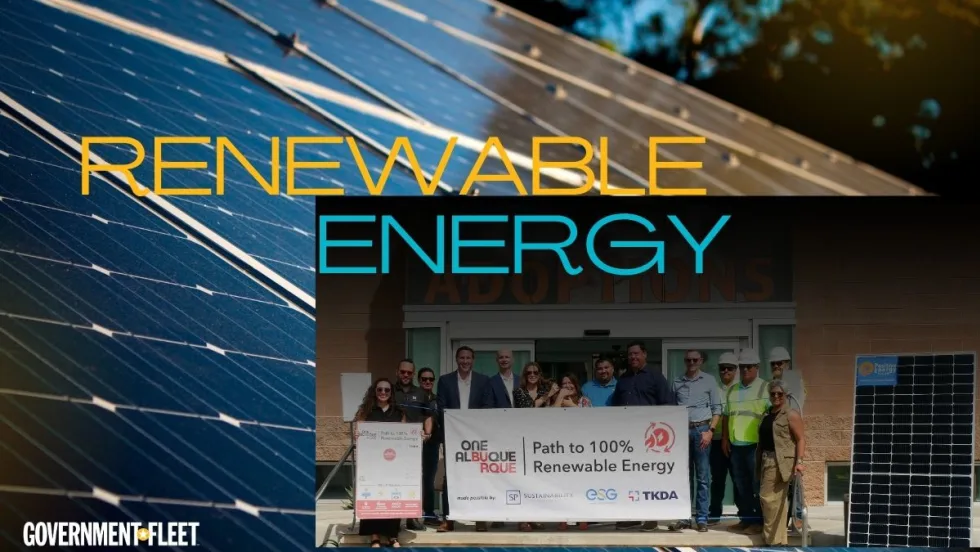
Sustainability Partners, Energy Systems Group Help Albuquerque Close the Gap on its 100% Renewable Energy Goal
The eight-site, 6 MW solar project has advanced the city toward 100% renewable energy for municipal operations.
Read More →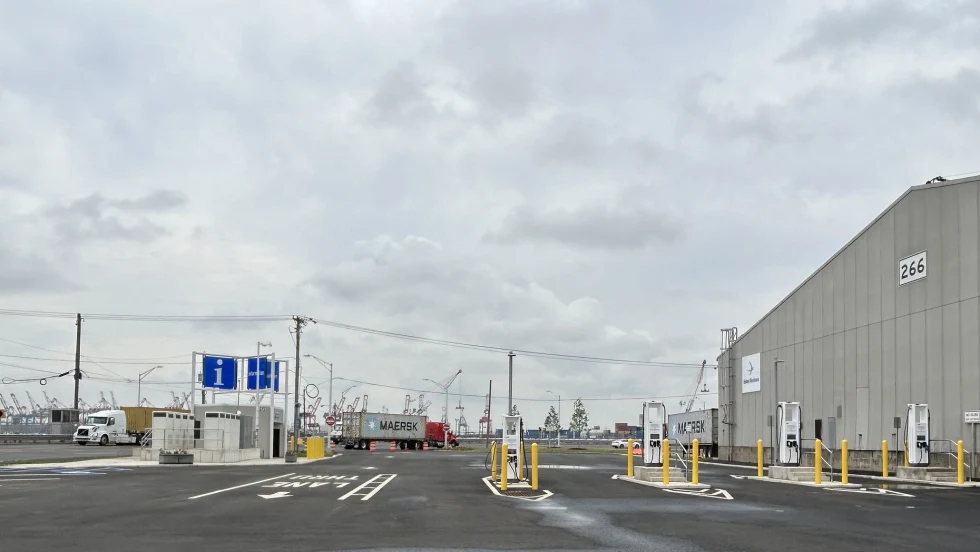
Port Authority and CALSTART Launch $45 Million Electric Truck and Charging Programs
The programs aim to boost sustainable operations across the East Coast's busiest seaport.
Read More →
Moving Government Fleets Beyond the Vehicle Purchase: EV as a Service
A discussion on how EVaaS is moving beyond pilot programs and what fleets should consider before beginning a larger deployment.
Read More →
Moving Government Fleets Beyond the Vehicle Purchase: EV as a Service
As fleets move beyond small EV pilots, Sustainability Partners CEO Adam Cain explains how EVaaS can address the infrastructure and long-term planning required for larger deployments.
Read More →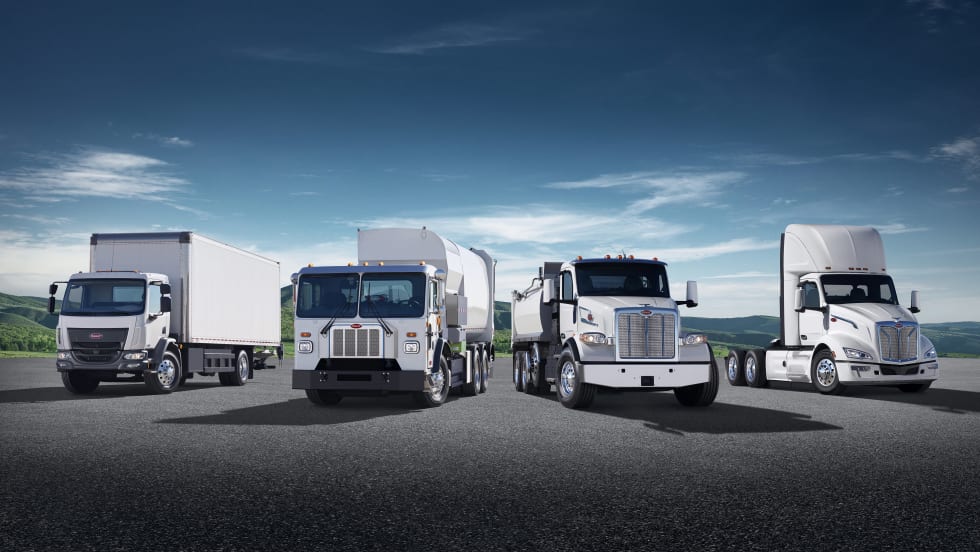
Peterbilt Expands Sourcewell Partnership with Electric Vehicle Lineup
The agreement aims to provide streamlined procurement of Peterbilt trucks for government, education, nonprofit and tribal organizations across the United States and Canada.
Read More →
EV Adoption & Charging Challenges
Where is your fleet in the journey of vehicle electrification? If you're still looking for answers to fleet electrification you've come to the right place.
Read More →
Hawaii Passes Clean Fuel Policy
Hawaii lawmakers passed clean fuel legislation that could support renewable natural gas production, biogas-powered transportation, and lower-carbon fueling options for public and commercial fleets.
Read More →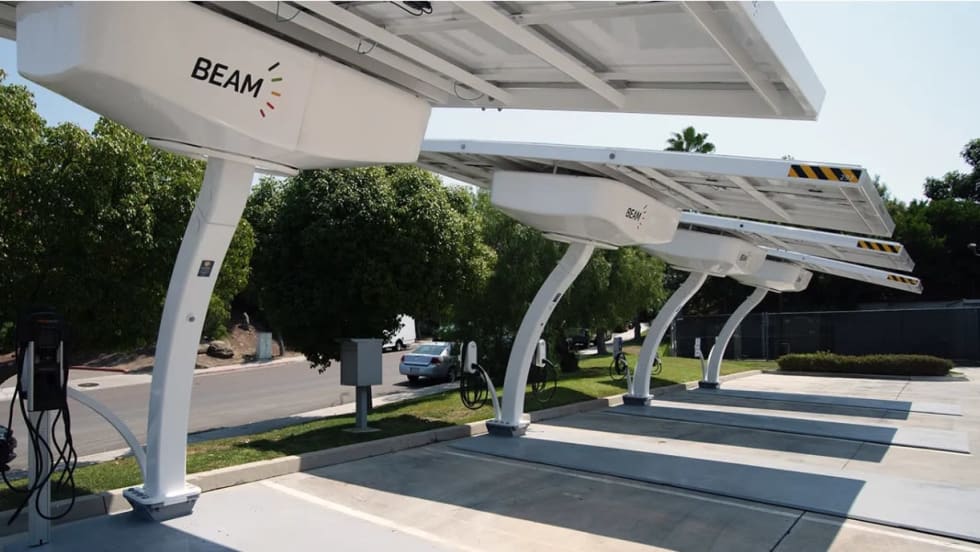
Stanislaus County Deploys Ten Beam Global EV ARC Systems to Support County Fleet Electrification
Stanislaus County deployed 10 off-grid solar-powered EV charging systems and a mobile charging trailer from Beam Global to support its electric fleet operations and emergency response flexibility.
Read More →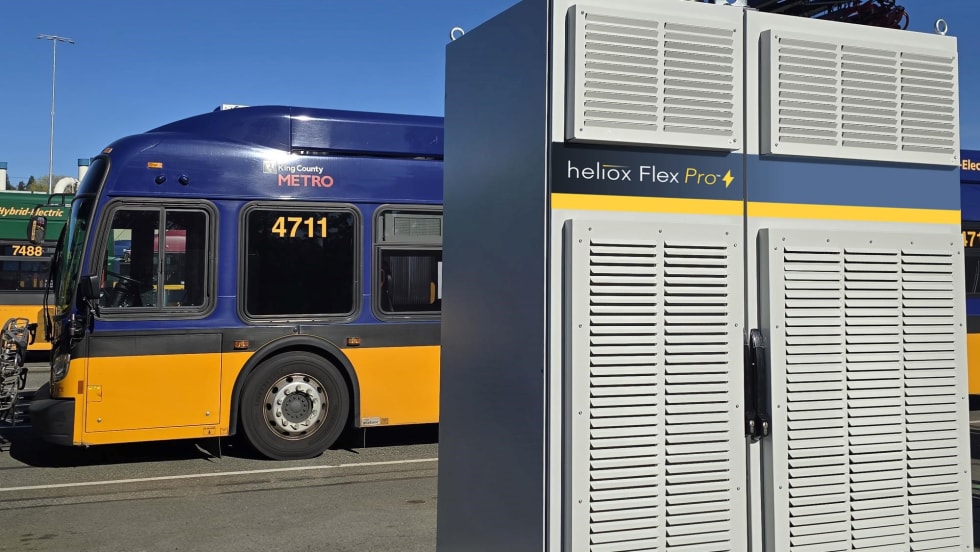
Heliox Pilots 480-kW Bus Charger with King County Metro
King County Metro is piloting Heliox’s new 480-kW Flex Pro charger to support expansion of its battery-electric bus fleet and depot charging infrastructure. The compact charging system supports pantograph and plug-in charging configurations for high-density transit operations.
Read More →