




Two Calif. Counties Make the Switch to Renewable Diesel
Alameda and San Joaquin Counties in California have both begun using renewable diesel to fuel their fleets.

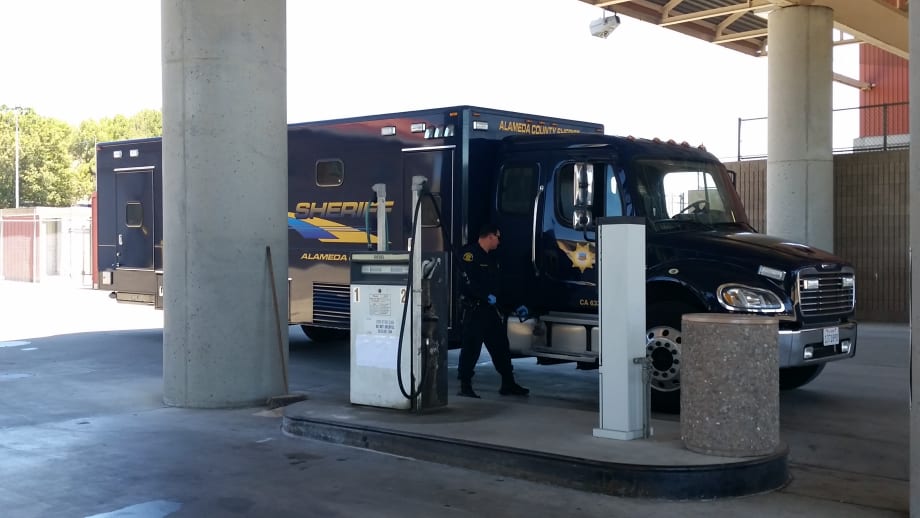
Photo courtesy of Alameda County.
Photo courtesy of Alameda County.
Alameda and San Joaquin Counties in California have both begun using renewable diesel to fuel their fleets.
Alameda County Transportation Services Manager Doug Bond said that the county has been running electric or hybrid electric vehicles since the late-1990s. Most recently, the county was using B-20 biodiesel to fuel some of its fleet. Alameda County purchases about a million gallons of fuel per year, and about 10% of that is biodiesel.
"We’ve been trying alternatives for years,” Bond said. "Basically we’ve been looking to displace petroleum use and anything that comes from oil and trying to move away from it."
Alameda County made the switch to renewable diesel about a month ago, and the program has already yielded results. Bond has seen reductions in NOx emissions and particulate matter as well as a gain in fuel efficiency. The department has also saves of about 9-10 cents per gallon compared to biodiesel.
"There are no ill effects to it; there are huge reductions in emissions," Bond said. "It’s really an easy choice and it’s less expensive than what we were paying on the B-20 before."
San Joaquin County began considering renewable diesel last September. Fleet Manager Kevin Myose saw a presentation about renewable diesel at a Municipal Equipment Maintenance Association meeting and was interested in the environmental advantages.
"In San Joaquin County, the air basin has some of the dirtiest air in the nation," he said. "We’re always looking for ways to reduce our output."
Over the years, San Joaquin County considered a number of alternative fuel options, but had issues with many of them. One selling point of renewable diesel was that it worked within the county's existing infrastructure and did not require any additional equipment, as compressed natural gas (CNG) would.
"The way our fleet’s structured, we don’t have a lot of applications that can really leverage CNG very well," Myose said. "There are some other issues with biodiesel. It causes swelling of seals and some other issues in the equipment itself."
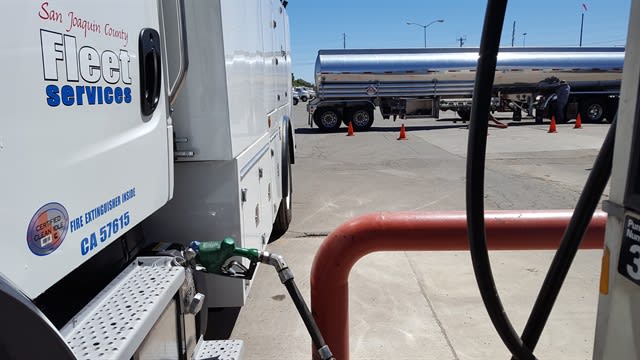
Photo Courtesy of San Joaquin County.
The county finally purchased its first tank in March with no complaints so far. Switching over saved San Joaquin County about $2,000 but, more importantly, has helped make the air quality cleaner and has even helped the department cut down on maintenance.
"It’s estimated about 60-90% reduction in CO2 just from switching to the fuel. There’s about a 33% reduction of particulate matter, specifically PM 2.5, which is known to be a health hazard. It’s one of the main causes of respiratory problems," Myose said. "I think what we’re gonna see, and what other jurisdictions have seen, with the particulate trap is that you have more time until it needs maintenance again. There's less particulates that it’s trapping because there is less particulates in the fuel."
Myose also said that renewable diesel's chemical makeup resembles a premium diesel, with its lower cloud point and higher cetane rating.
"It’ll work in colder weather and it has more energy per molecule," he said. "There are a lot of benefits in that."
Both fleet managers highly recommend the switch to renewable diesel.
A number of West Coast fleets have made the switch to renewable diesel over the past few years, including Carlsbad,Long Beach, and San Francisco in California and Corvallis and Eugene in Oregon.
More Operations

Fleet Forward Conference Introduces One-Day Passes for 2026
New one-day registration lets fleet professionals attend Tuesday, Wednesday, or Thursday, with passes available for $249.
Read More →
ENC Unveils its ZAVIR Medium-Duty Shuttle
Two variants of the concept shuttles were revealed: a low-floor configuration and a high-floor configuration.
Read More →
Could Your Next Fleet Technician Start as an Intern?
What if your next technician hasn’t worked in a fleet shop yet? What fleets are doing to free up time.
Read More →
How Phoenix Is Building Its Next Generation of Fleet Technicians
With more than 8,000 vehicles and pieces of equipment to maintain, the City of Phoenix could not afford to wait for fully trained technicians to walk through the door. Instead, they revamped their entire workforce strategy and showed how public fleets can create their own talent pipeline while preparing existing employees for increasingly complex vehicles.
Read More →
What’s Slowing Your Fleet Down?
Could a change in how work gets done help your fleet return vehicles to service sooner?
Read More →
Can Public Fleets Trust the Data Driving Their Decisions?
Public fleets have more data than ever, but inconsistent records and missing information can still undermine maintenance, replacement, and cost decisions.
Read More →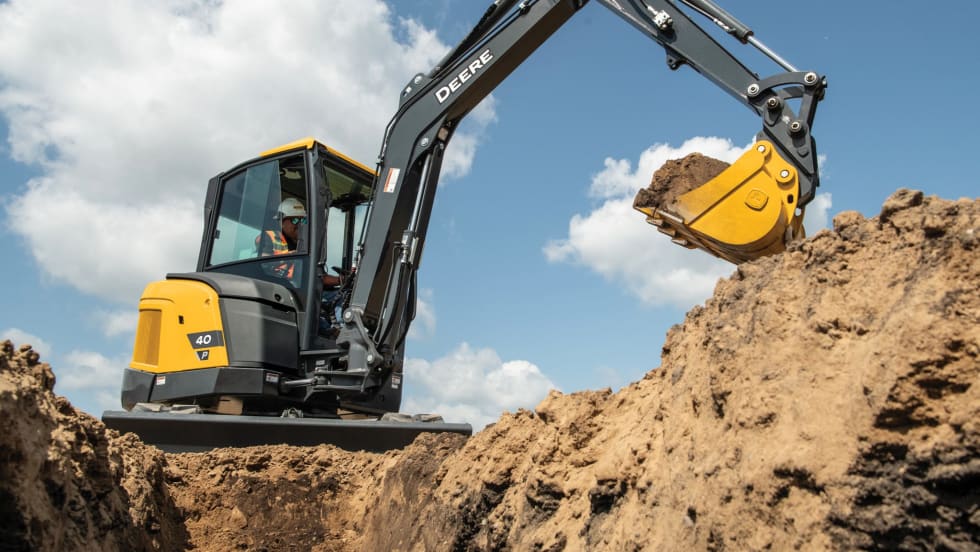
John Deere Introduces 40 P-Tier Compact Excavator
John Deere is adding a compact excavator designed for crews that need to move equipment between jobsites and handle multiple types of work with one machine. The 40 P-Tier weighs less than 10,000 pounds and offers configurable hydraulics, attachment options, and connected fleet-management capabilities.
Read More →
How Leading Fleets Improve and Why Business Plans Matter
This week, we look at what past Leading Fleet winners can teach us about making progress, plus how to build a business plan your fleet will actually use.
Read More →
Nominate a Fleet Leader for the 2027 Public Fleet Hall of Fame
Do you know a fleet leader who has made a lasting impact on the industry? Nominate this fleet professional for the 2027 Public Fleet Hall of Fame.
Read More →
Why Fleet Business Plans Need Three Perspectives
A fleet business plan should help agency leaders understand the fleet’s value, give the organization a clear direction, and establish shared expectations with customer departments.
Read More →