




Top 2009 News: Atlanta Cops Help Dream Up High-tech Police Car
ATLANTA – The new, high-tech Carbon E7 concept vehicle was designed by cops for cops, drawing on suggestions from more than 3,000 law enforcement professionals, according to CNN.com.
Original post date: March 26, 2009
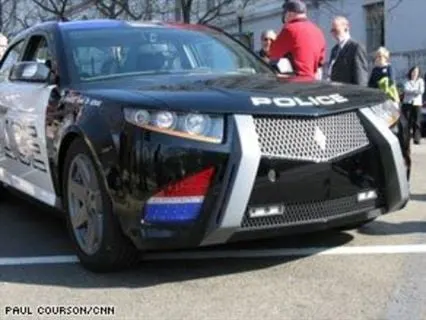
ATLANTA – Carbon Motors Corp.'s new high-tech Carbon E7 concept vehicle draws on suggestions from more than 3,000 law enforcement professionals, according to CNN.com. The E7 was designed by cops for cops, breaking the tradition of recruiting family sedans into the force, company co-founder Stacy Dean Stephens said.
Highlights of the futuristic prototype include:
300 hp from a clean diesel engine.
Flashing lights visible from all angles.
Ergonomic cockpit.
Onboard computer with voice command and instant license plate recognition.
Integrated shotgun mounts.
Seat recesses to accommodate bulky gun belts.
Rear-hinged "suicide doors" make it easier for handcuffed passengers to get in and out, and the seat is designed so "guests" can ride comfortably with their hands cuffed behind their backs. Seat belts are anchored in the center of the seat and buckle near the door for added safety so the officer doesn't have to lean across the prisoner.
Perhaps most popular among cops is the rear compartment, which is sealed off from the front and made entirely of seamless, washable plastic, with drain plugs in the floor — a bonus for those who have experienced prisoners vomiting or relieving themselves in the back seat.
The E7 can go 0 to 60 mph in 6.5 seconds, has a top speed of 155 mph, and can withstand a 75-mph rear impact, according to the company's Web site. It has bullet-resistant panels in the doors and dash and has push bumpers incorporated into the aluminum frame. The upper flashing lights are integrated into the roof panel, eliminating the need for a bolted-on light bar that causes aerodynamic drag -- reducing fuel economy -- and can lead to rust.
Despite the technologically advanced features, price may make the vehicle a tough sell to fleets, with company officials estimating as much as $50,000 per unit.
More Operations
Who Deserves Fleet Recognition and What Could You Teach at GFX?
Who helped shape your fleet career, and what have you learned that could help someone else?
Read More →
What’s Haunting Public Sector Fleets?
Public sector fleet challenges rarely happen in isolation, and addressing one often means understanding how it connects to another.
Read More →
Is Keeping Older Fleet Vehicles Really Saving Money?
Is keeping vehicles longer saving money, and what happens when a diagnostic test points to the wrong fix?
Read More →
How Smart Fleet Strategy Can Help Local Government Agencies Do More with Less
Keeping a vehicle longer may ease this year’s budget, but what does it cost the next one? A closer look at fleet decisions can reveal opportunities to reduce spending while protecting essential services.
Read More →
Connect with Government Fleet on LinkedIn
From industry news and fleet management strategies to conversations with peers, Government Fleet's LinkedIn page offers public-sector fleet professionals another way to stay informed and connected.
Read More →
Town of Queen Creek Named Most Successful Fleet Award Winner of Inaugural RTA Fleet Success Awards
Five fleets were honored at RTA Connect 2026 in Chicago for excellence across resource efficiency, intentional culture, risk management, and stakeholder satisfaction.
Read More →
A buyer's guide to fleet management software in 2027
Buying fleet management software in 2027 means looking beyond features and price. As fleet operations, technology and expectations evolve, this guide explores what today’s fleet professionals should consider when choosing a system that can deliver value now and adapt to what comes next.
Read More →
Hazard Alerts, Fleet Car Sales Rise and a New Shuttle Concept
Fleet car sales doubled, but the bigger picture tells a different story in this week’s roundup.
Read More →
How St. Johns County Turned Fleet Data Into Better Replacement Decisions
St. Johns County, Florida, had fleet data, but turning it into reliable decision guidance was another matter. Instead of starting over with a new fleet management system, the county connected existing tools and built a scoring system that gives managers an objective look at fleet health.
Read More →
Fleet Forward Conference Introduces One-Day Passes for 2026
New one-day registration lets fleet professionals attend Tuesday, Wednesday, or Thursday, with passes available for $249.
Read More →