





Keep Reading: Virginia Fleet Management Hosts EV Ride and Drive
Ride and Drive: A Hands-On Approach to Change
A municipal ride and drive is nothing new, but the importance of allowing city leaders and those within the fleet to test drive new vehicles, especially EVs, goes beyond just a fun spin in a shiny vehicle.
May 15, 2023
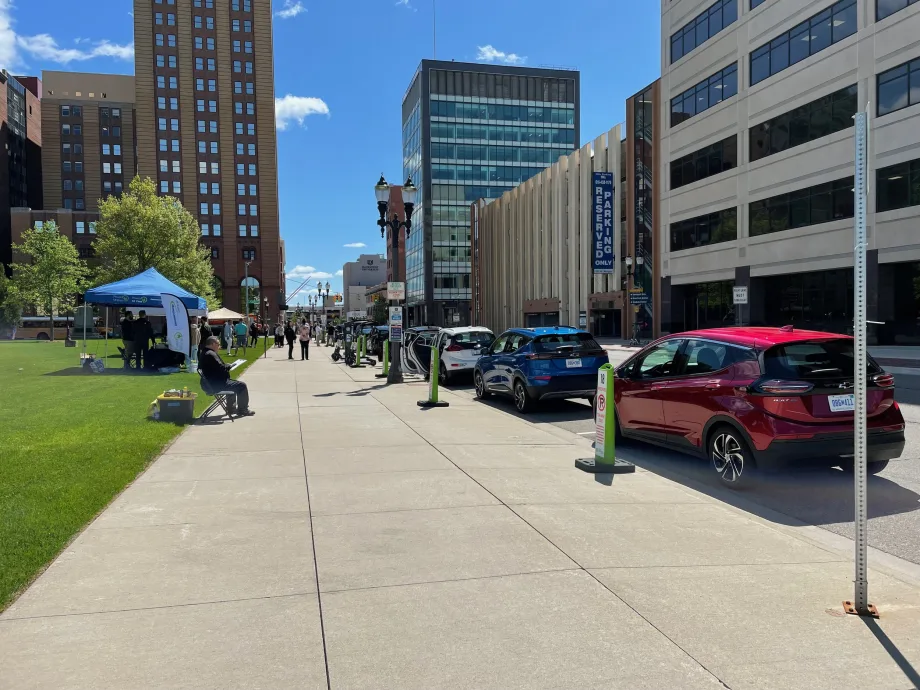
At Michigan's ride and drive participants were able to see exhibits demonstrating charging stations and other supply chain elements in the EV transition.
Photo: Michigan Conservative Energy Forum
5 min to read
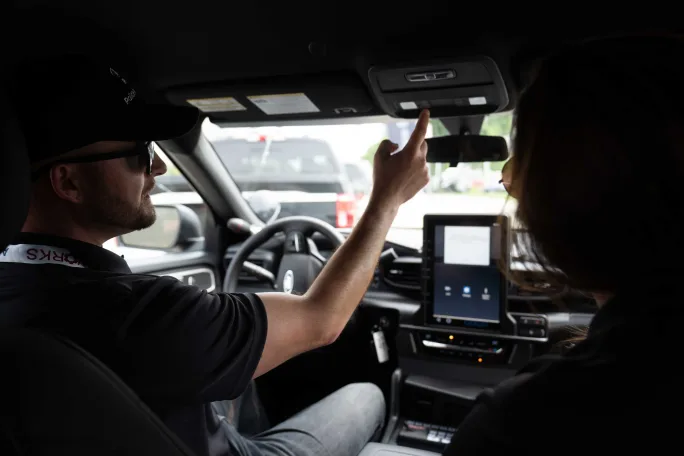
Attendees had a chance to test drive a handful of vehicles at GFX 2022.
Photo: Ross Stewart Photography
If your fleet hasn't done one already, you've most likely heard of one city or another putting on a ride and drive letting employees get behind the wheel of a vehicle that could potentially become the newest addition to the fleet.
But why bring in a handful of vehicles for everyone to drive? Just Google the vehicle, some might say; all that info is online, reviews and all. Will a test drive really sway the decision-making? For most municipalities, the answer goes beyond simply providing a day to see if those vehicles would be a good fit for the fleet. It becomes a group effort in not only deciding what is best, but bringing in stakeholder engagement and educating the people with purchasing power.
Electric vehicles (EVs) were recently the highlight at a ride and drive at Michigan's State Capitol on May 9. Legislators and other officials were able to test drive a range of EVs, including SUVs and commercial.
Through our work serving municipal and school district fleets, we have seen fleet managers are often concerned with battery range and drivability, explained Joshua Williams, Midwest regional manager, market development, with Highland Electric Fleets, adding that "We have found interest in EV adoption increases significantly when communities get to experience these vehicles in person."
A few days later in Louisiana, elected officials and business leaders were test drive vehicles at Cleco Power’s EV Ride and Drive Expo. The event, like many others, was to support the state’s and nation’s transition to EVs.
The ride and drive is obviously well and alive. Still, it's important to point out why a ride and drive event should be on every fleet's calendar if it isn't already.
This week, Cleco partnered with @LAcleanfuels and @driveelectricla to showcase the latest #EV technology at the Ride & Drive Expo in Pineville. pic.twitter.com/SR9xy9ixBi
— Cleco (@ClecoPower) May 12, 2023
Vehicle Evaluation and the Need for More Information
Besides just being fun and breaking up the work day, ride and drives provide an opportunity for city officials and fleet managers to evaluate different vehicle models firsthand. It allows them to assess factors such as performance, handling, comfort, and overall suitability for their specific needs. By experiencing the vehicles in real-world conditions, decision-makers can make more informed choices when selecting vehicles for their fleets.
"There is no substitute for touching, seeing, and driving an EV," noted Edward Rivet, executive director, Michigan Conservative Energy Forum.
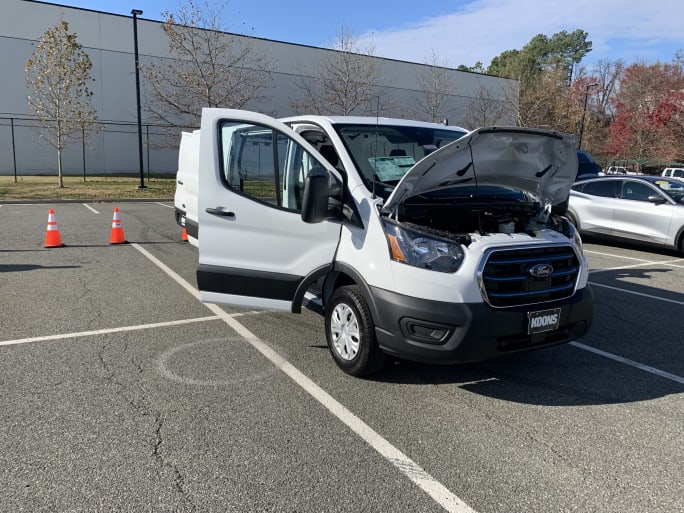
The Office of Fleet Management for the city of Alexandria, Virginia, hosted an electric vehicle ride and drive event on December 2, 2022.
Photo: City of Alexandria
Sustainability Considerations in the Race for Zero-Emissions
If there was a fleet word for 2023, it would probably be sustainability. Stricter emissions regulations and pressure coming down the political ladder has forced municipalities to start transitioning their fleets to greener alternatives. As cities aim to reduce their carbon footprint and transition to more sustainable transportation options, ride and drives become valuable in showcasing EVs and other low-emission alternatives. Participants are able to get a hands-on approach to clean technologies and better understand their range of capabilities. Plus this provides a time to ask questions on charging infrastructure requirements and gather information necessary for incorporating sustainable vehicles into fleets.
At Michigan's ride and drive for example, participants were able to see exhibits demonstrating charging stations and other supply chain elements in the EV transition.
As far as questions, Rivet noted that attendees were looking for a wide range of answers to find more information, from performance, cost and other specifics about the vehicles, to how charging will come to more remote places.
"One of our exhibitors has a robust off-grid charging system, who talked with the Polaris fully electric off road ATV exhibitor, while both talked with staff from our state parks department where off road enthusiasts could utilize both technologies," Rivet added. "A very nice synergy."
Stakeholder Engagement Meets Education and Awareness
Ride and drives offer an opportunity to engage various stakeholders, including fleet operators, drivers, and city officials, in discussions about the future of transportation. It facilitates open dialogue, allowing participants to ask questions, share concerns, and gain insights into the potential benefits and challenges associated with adopting new vehicle technologies. This engagement can foster collaboration and collective decision-making.
"Remarkably, some legislators have yet to have ridden in or driven an EV," Rivet explained, adding that the Lansing ride and drive allowed for the demonstration of the broad footprint EVs are filling. "Just seeing an electric school bus and realizing that our daily realities can be filled with this emerging technology and with so many benefits helps fill in the context for policy makers," he adds.
Then there's the educational platform side, helping participants learn about the latest advancements in vehicle technology, safety features, and alternative fuel options. City officials and fleet managers can stay up-to-date on industry trends and gain a deeper understanding of the available options. By increasing awareness and knowledge, ride and drives can support informed decision-making as a part of the adoption of more efficient and sustainable transportation solutions.

Getting into the driver's seat of a car on the potential purchase list is an ideal time to ask questions that could make or break a fleet addition.
Photo: Ross Stewart Photography
Data Collection and Performance Evaluation
Through ride and drives, cities can collect valuable data on areas such as the following:
Vehicle performance.
Fuel efficiency.
Range.
User feedback.
Having this information at hand can guide evidence-based decision-making that carries into informing fleet management strategies while supporting the evaluation of potential cost savings, a major factor for municipalities. The real-world experience gained from a ride and drives also provides insight into how vehicles perform in specific city environments.
Simply put, ride and drives serve as essential tools for cities to explore their options. As the saying goes "it's not a matter of if, but when," and fleets understand they need to be prepared to make those changes when the time comes. Granted, ICE vehicles have yet to go extinct, but the trend is showing green. It's time to, literally and figuratively, jump on the ride-and-drive bandwagon so when the full force of the electric wave hits, your fleet will be ready.
More Operations

Is Keeping Older Fleet Vehicles Really Saving Money?
Is keeping vehicles longer saving money, and what happens when a diagnostic test points to the wrong fix?
Read More →
How Smart Fleet Strategy Can Help Local Government Agencies Do More with Less
Keeping a vehicle longer may ease this year’s budget, but what does it cost the next one? A closer look at fleet decisions can reveal opportunities to reduce spending while protecting essential services.
Read More →
Connect with Government Fleet on LinkedIn
From industry news and fleet management strategies to conversations with peers, Government Fleet's LinkedIn page offers public-sector fleet professionals another way to stay informed and connected.
Read More →
Town of Queen Creek Named Most Successful Fleet Award Winner of Inaugural RTA Fleet Success Awards
Five fleets were honored at RTA Connect 2026 in Chicago for excellence across resource efficiency, intentional culture, risk management, and stakeholder satisfaction.
Read More →
Sponsored•October 14, 2026
A buyer's guide to fleet management software in 2027
Buying fleet management software in 2027 means looking beyond features and price. As fleet operations, technology and expectations evolve, this guide explores what today’s fleet professionals should consider when choosing a system that can deliver value now and adapt to what comes next.
Read More →
Hazard Alerts, Fleet Car Sales Rise and a New Shuttle Concept
Fleet car sales doubled, but the bigger picture tells a different story in this week’s roundup.
Read More →
How St. Johns County Turned Fleet Data Into Better Replacement Decisions
St. Johns County, Florida, had fleet data, but turning it into reliable decision guidance was another matter. Instead of starting over with a new fleet management system, the county connected existing tools and built a scoring system that gives managers an objective look at fleet health.
Read More →
Fleet Forward Conference Introduces One-Day Passes for 2026
New one-day registration lets fleet professionals attend Tuesday, Wednesday, or Thursday, with passes available for $249.
Read More →
ENC Unveils its ZAVIR Medium-Duty Shuttle
Two variants of the concept shuttles were revealed: a low-floor configuration and a high-floor configuration.
Read More →
Could Your Next Fleet Technician Start as an Intern?
What if your next technician hasn’t worked in a fleet shop yet? What fleets are doing to free up time.
Read More →