





Keep Reading: Building Stronger Cultures and Smarter Leadership in Fleet Organizations
Terex, REV Group Outline Merger as Terex Exits Aerials
The merger aims to create a diversified manufacturer serving emergency response, waste, utilities, environmental services, and materials processing equipment.
November 11, 2025
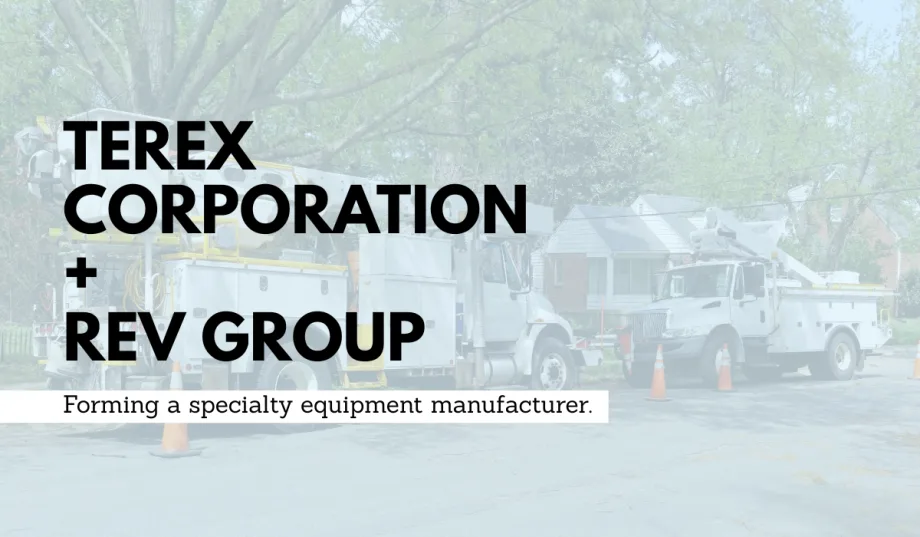
The merger aims to create a diversified manufacturer serving emergency response, waste, utilities, environmental services, and materials processing equipment.
Photo: Government Fleet
3 min to read
Terex Corporation and REV Group have entered into a definitive merger agreement to merge in a stock and cash transaction to form a specialty equipment manufacturer.
According to a press release, the merger would create a diversified manufacturer serving emergency response, waste, utilities, environmental services, and materials processing equipment. They added that the combined organization would have a substantial U.S. manufacturing footprint to meet domestic demand.
The companies expect $75 million in annualized benefits in 2028, with about half achieved 12 months after closing. Terex also announced that it will initiate a process to exit its Aerials segment, including the assessment of a potential sale or spin-off.
Company-Stated Rationale and Expected Effects:
Portfolio: The companies plan for the combined business to offer a broader range of specialty equipment for emergency response, waste, utilities, environmental services, and materials processing. These were described as markets with steady demand.
Financing and liquidity: According to the release, the combination is expected to provide greater financial flexibility, including a targeted leverage profile, lower capital needs, and higher free cash flow to fund growth while maintaining discipline.
Scale and growth: The companies expect the deal to increase scale and create additional avenues for expansion by combining complementary capabilities.
Projected annualized improvements: The companies forecast $75 million in run-rate cost reductions and revenue gains by 2028, with about half realized within 12 months after closing.
More on the Merger Agreement
Under the terms of the agreement, REV Group shareholders will receive, for each REV Group share, 0.9809 of a share of the combined company and $8.71 in cash ($425 million in total).
Upon closing, Terex shareholders will own approximately 58%, while REV Group shareholders will own approximately 42% of the combined company’s fully diluted shares on a pro forma basis. Following the close, the combined company will continue to be traded on the NYSE under the symbol TEX. Both parties expect to pay dividends in the ordinary course of business through closing.
The combined company is expected to have approximately $7.8 billion in net sales and a combined Adjusted EBITDA margin of approximately 11% as of year-end 2025 excluding benefit of synergies.
It is estimated that at closing, the combined company would have a net debt to trailing twelve-month pro forma Adjusted EBITDA ratio of approximately 2.5x, including run-rate synergies of $75 million, with the opportunity to de-lever further post-Aerials exit.
The exchange ratio and the closing share prices for Terex and REV Group as of October 28, 2025 represent an implied total enterprise value of the combined company of approximately $9 billion. Excluding Aerials and including $75 million of synergies, it is estimated that the combined company would have an even stronger pro forma Adjusted EBITDA margin of approximately 14% for 2025.
Corporate Governance
Following the close, the board of the combined company will consist of 12 directors, of which seven will be from the Terex board and five from the REV Group board.
Timing & Approvals
The transaction is expected to close in the first half of 2026, subject to approval by both companies’ shareholders, required regulatory clearance, and satisfaction of other customary closing conditions.
More Operations

Who Deserves Fleet Recognition and What Could You Teach at GFX?
Who helped shape your fleet career, and what have you learned that could help someone else?
Read More →
What’s Haunting Public Sector Fleets?
Public sector fleet challenges rarely happen in isolation, and addressing one often means understanding how it connects to another.
Read More →
Is Keeping Older Fleet Vehicles Really Saving Money?
Is keeping vehicles longer saving money, and what happens when a diagnostic test points to the wrong fix?
Read More →
How Smart Fleet Strategy Can Help Local Government Agencies Do More with Less
Keeping a vehicle longer may ease this year’s budget, but what does it cost the next one? A closer look at fleet decisions can reveal opportunities to reduce spending while protecting essential services.
Read More →
Connect with Government Fleet on LinkedIn
From industry news and fleet management strategies to conversations with peers, Government Fleet's LinkedIn page offers public-sector fleet professionals another way to stay informed and connected.
Read More →
Town of Queen Creek Named Most Successful Fleet Award Winner of Inaugural RTA Fleet Success Awards
Five fleets were honored at RTA Connect 2026 in Chicago for excellence across resource efficiency, intentional culture, risk management, and stakeholder satisfaction.
Read More →
Sponsored•October 14, 2026
A buyer's guide to fleet management software in 2027
Buying fleet management software in 2027 means looking beyond features and price. As fleet operations, technology and expectations evolve, this guide explores what today’s fleet professionals should consider when choosing a system that can deliver value now and adapt to what comes next.
Read More →
Hazard Alerts, Fleet Car Sales Rise and a New Shuttle Concept
Fleet car sales doubled, but the bigger picture tells a different story in this week’s roundup.
Read More →
How St. Johns County Turned Fleet Data Into Better Replacement Decisions
St. Johns County, Florida, had fleet data, but turning it into reliable decision guidance was another matter. Instead of starting over with a new fleet management system, the county connected existing tools and built a scoring system that gives managers an objective look at fleet health.
Read More →
Fleet Forward Conference Introduces One-Day Passes for 2026
New one-day registration lets fleet professionals attend Tuesday, Wednesday, or Thursday, with passes available for $249.
Read More →