




Terex Advocates New Work Zone Capacity Comparison for Digger Derricks
To help utility companies and contractors select the right size of digger derrick to complete the majority of their day-to-day tasks, Terex Utilities is promoting a new comparison called Work Zone Capacity as a new industry standard.
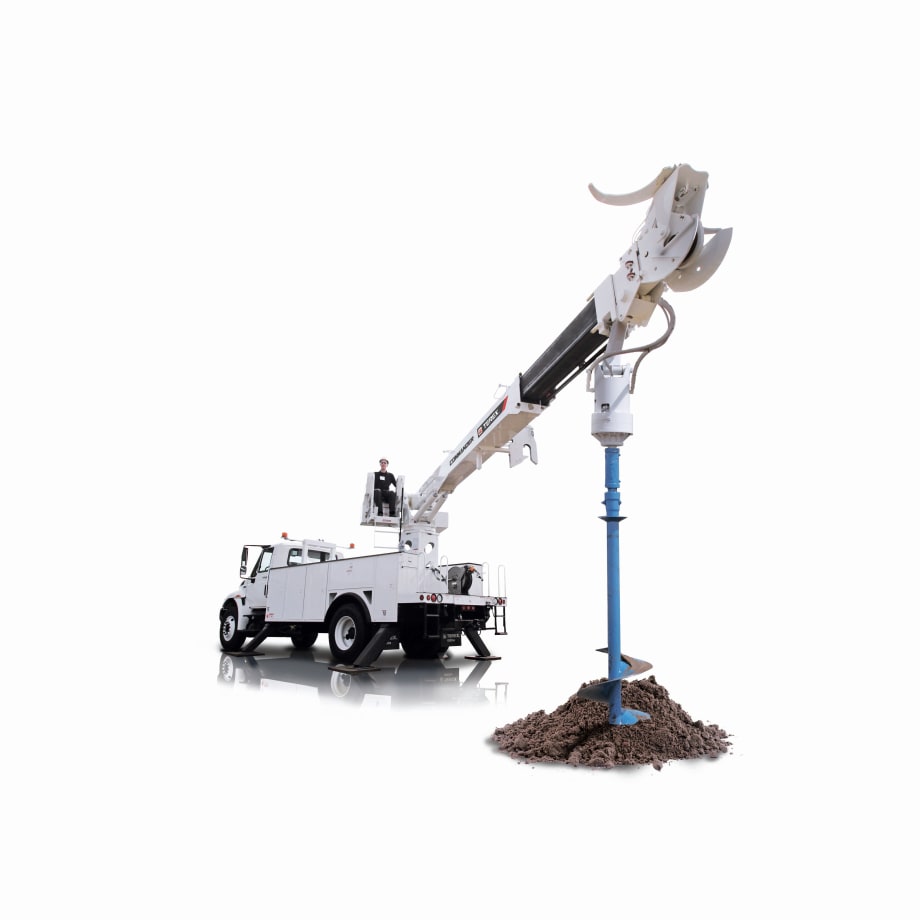
Photo courtesy of Terex
To help utility companies and contractors select the right size of digger derrick to complete the majority of their day-to-day tasks, Terex Utilities is promoting a new comparison called Work Zone Capacity as a new industry standard. Work Zone Capacity highlights the ability of a digger derrick to perform the tasks that these trucks are built for — digging holes and setting poles.
The new Work Zone Capacity standard reflects not only the digger derrick’s boom lifting capacity, but it also accounts for the digger derrick’s auger digging and lifting capacity. These capacities need to match the work the operator is trying to do. For instance, utility fleets do not want to buy a digger derrick with a capacity in the work zone that does not allow them to lift an auger full of material out of the hole. The new Work Zone Capacity gives utility companies the tool to select a truck properly sized to perform all of the jobs it is tasked to do.
“To select the right digger derrick for the job,” said John Pantkze, project manager, Terex Utilities, “the truck should be able to dig a hole and set the pole without the need to reposition the digger derrick. This means that operators need to consider not only the lifting capacity at a 10-ft load radius (the current industry comparison standard), but also the digging and lifting capacity out of the hole at the operator’s typical working radius (often in the 20- to 40-ft range at 0 to -15 degrees, depending on the size of the digger derrick). The object of the new Work Zone Capacity standard is to match these capacities to the job.”
It’s important for operators to really understand all of the capacities of their digger derricks, not just those capacities readily available on the manufacturers’ specification sheets, Pantzke said.
“With the range of work that a digger derrick is tasked to do, the usual specifications and comparisons only tell part of the story and can lead to oversights when selecting equipment,” he said.
To calculate a digger derrick’s Work Zone Capacity, operators need to take into account the soil conditions and density of the material the truck will be working in, as well as the auger sizes they will be using and number of flights needed. Then, operators can use a specialized calculator designed by Terex to determine a digger derrick’s Work Zone Capacity.
For more information about the new Work Zone Capacity standard, visit www.terexutilities.com.
More Maintenance

Freeing Technicians for Higher-Priority Repairs
Could paid interns help public fleets free up experienced technicians for more complex repairs?
Read More →
Stay ready, set and safer with verified fleet inspections
When fleet inspections aren’t verifiable, missed defects can quickly become downtime, safety risks, and service delays. This white paper shows government and municipal fleet leaders how digital inspections can improve accountability, catch issues earlier, and keep vehicles ready when they’re needed most.
Read More →
Using Oil Analysis to Help with Engine Losses
How a Texas city changed its lubrication practices and began tailoring preventive maintenance intervals after test results showed oil degradation and fuel dilution.
Read More →
Hidden in Plain Sight: Fleet Compliance Risks
Fleet compliance isn't just about having policies — it's about consistently enforcing them. This practical guide reveals six hidden compliance risks common in public sector and shared fleet operations and outlines proven strategies to improve visibility, accountability, and audit readiness.
Read More →
Is Your Fleet Garage Holding Back Your Operation? | The Fleet Breakroom
Norman Barrientos of Barrientos Design & Consulting explains how agencies can use operational data to show decision-makers why a replacement or major renovation is needed.
Read More →
Reducing Long-Term Maintenance Costs and Downtime
Downtime is rarely caused by a single surprise failure but rather by an issue that builds over time through setbacks ranging from deferred maintenance to poor replacement planning. So what's the fix?
Read More →
The Future of Government Fleet Technicians with Mike Cleary
Insight on preparing for hybrid and electric vehicle service, what fleets need to know about recruiting technicians in a competitive market, and how to make the most of limited training budgets.
Read More →
Work Orders Are More Than Records. They're a Roadmap to Fleet Availability
What if your work orders could predict failures, uncover hidden costs, and boost fleet availability? Here's how leading fleets are using the data.
Read More →
Drive More Profit with Greater Fleet Uptime
Fleet downtime costs money. JASPER helps keep vehicles on the road with quality remanufactured components, fast nationwide delivery, and reliable solutions that boost uptime and profitability.
Read More →
Smart Seasonal Maintenance Tips for Government Fleets
Government fleets carry extra weight, and routes, schedules, and public trust depend on reliability. A systematic spring checklist keeps vehicles in service when agencies need them most.
Read More →