




Telematics Study Finds Waste In N.C. State Fleet
A telematics study analyzing a sampling of North Carolina's vehicle fleet showed many state vehicles aren't being regularly used and others suffer from excessive idling that reduces fuel efficiency.
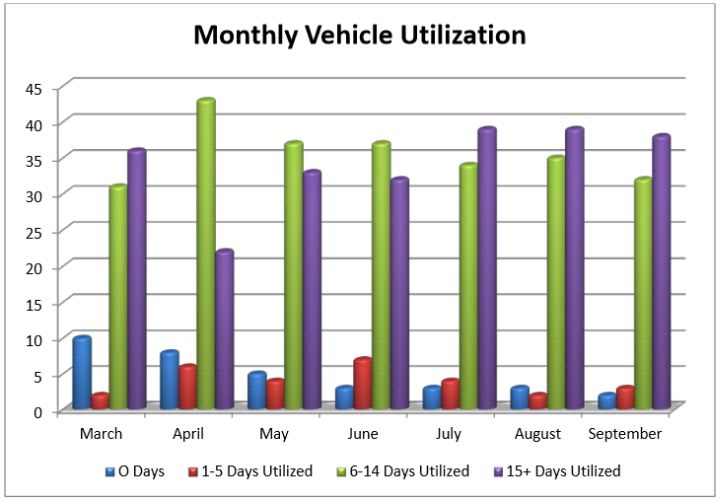
Chart courtesy of Verizon.
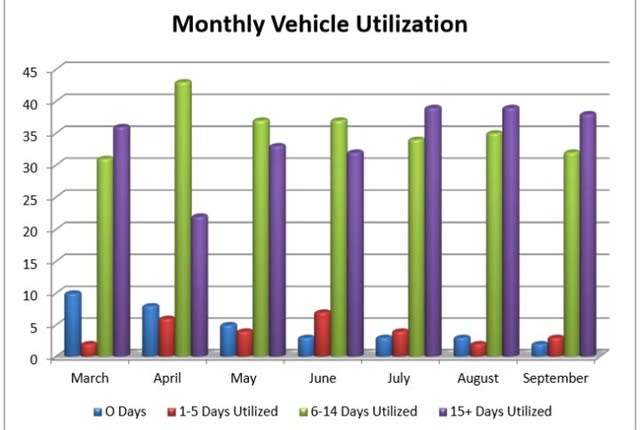
Chart courtesy of Verizon.
A telematics study analyzing a sampling of North Carolina's vehicle fleet showed many state vehicles aren't being regularly used and others suffer from excessive idling that reduces fuel efficiency.
Verizon Telematics presented its findings to the Joint Legislative Program Evaluation Oversight Committee on Feb. 23 as one of four vendors seeking a state contract to provide GPS-based vehicle monitoring software. The pilot project monitored the use of 76 state vehicles over a seven-month period using Verizon's Networkfleet system. North Carolina maintains a fleet of 33,000 vehicles, according to Verizon.
State agencies participating in the study included the Department of Administration, Department of Health and Human Services, Department of Transportation, N.C. State University, and the University of North Carolina.
The study identified 34 vehicles that were not used at all during the seven-month period, and 28 vehicles were used one to five days. Extrapolating that across a fleet, the state could possibly reduce the fleet by 896 vehicles, according to the report.
When studying idle time, Verizon found that longer idle events increased during summer months. From July to September, idle events of 10 minutes or longer averaged more than 1,000 per month. In August, pilot vehicles idled for more than 650 hours on 10-minute idling events. That represents about 200 gallons of fuel or about 2.5 gallons per vehicle. At $2.95 per gallon, the $7.38 per vehicle per month equates to a possible savings of $56,545 per month (or $678,546 per year) by eliminating those idling events.
The report also found that the 76 vehicles frequently exceeded the posted speed limit with an average of 5,000 instances per month of speeding more than 5 mph over the limit. There were about 2,000 cases per month of speeding of at least 10 mph over the limit.
Department of Administration Secretary Kathryn Johnston said her agency will prepare its own study based on the findings of the four vendors and present a recommendation to lawmakers by the end of May, reports WRAL.
Read the full study here.
More Telematics
How Conversational AI Can Simplify Driver Workflows
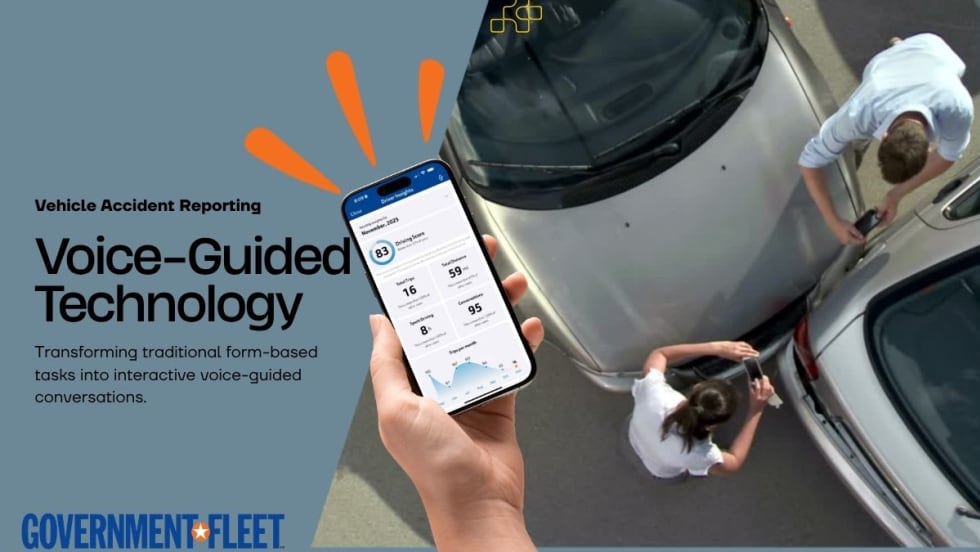
Voice-guided technology is helping drivers complete vehicle inspections, accident reporting, and motor pool checkouts through conversations instead of forms.
Read More →
Connecticut Renews Fleet Telematics Agreement, Adds Automation Tools
Connecticut is expanding the use of automation within its fleet operations as part of a renewed telematics agreement. The new tools are designed to reduce manual reporting, streamline compliance tasks, and support management of the state's more than 3,600 vehicles.
Read More →
Tennessee DOT Selects Geotab as Fleet Telematics Provider
As state transportation agencies continue to expand their use of connected vehicle technologies, the Tennessee Department of Transportation is moving forward with a new telematics deployment. The initiative is expected to provide greater insight into fleet activity, asset utilization, and maintenance operations.
Read More →
City of Temple Enhances Fleet Operations with New Telematics Technology
The City of Temple is deploying a new Geotab telematics system across multiple municipal departments to improve fleet maintenance, safety monitoring and operational efficiency.
Read More →
3 Ways Fleet Tech Builds Public Trust
Managing a state or local fleet comes with levels of accountability private companies don’t have. Read how modern fleet technology helps elevate visibility and safety to strengthen community trust.
Read More →
Geotab Launches Next-Gen GO Devices to Strengthen Oversight and Data Security
Next-generation telematics platform promises stronger diagnostics, asset tracking, and actionable insights.
Read More →
Ford Pro Telematics Introduces In-App Asset Tracking
Ford Pro Telematics expands its abilities.
Read More →
Distracted Driving and Samsara AI Safety
The U.S. public sector continues to use AI technology to combat the dangers of distracted driving.
Read More →
Teletrac Navman’s TN360 Now Connects with Factory-Fitted Telematics for Easier Fleet Oversight
Agencies can now tap into factory-installed vehicle data within TN360 without taking vehicles out of service for hardware installs.
Read More →
Element, Samsara Partner to Launch Comprehensive Fleet and Operations Management Offering
This joint offering streamlines procurement and onboarding for shared customers to deliver greater safety and efficiency for fleets.
Read More →