





Photo Gallery: San Diego County Fleet Facility
San Diego County Opens $22M Fleet Facility
San Diego County, Calif., opened its $22 million fleet facility building in May. The structure consists of a 45,000-square-foot ground floor fleet service operation and four levels of parking for fleet vehicles and county employees.
June 28, 2016
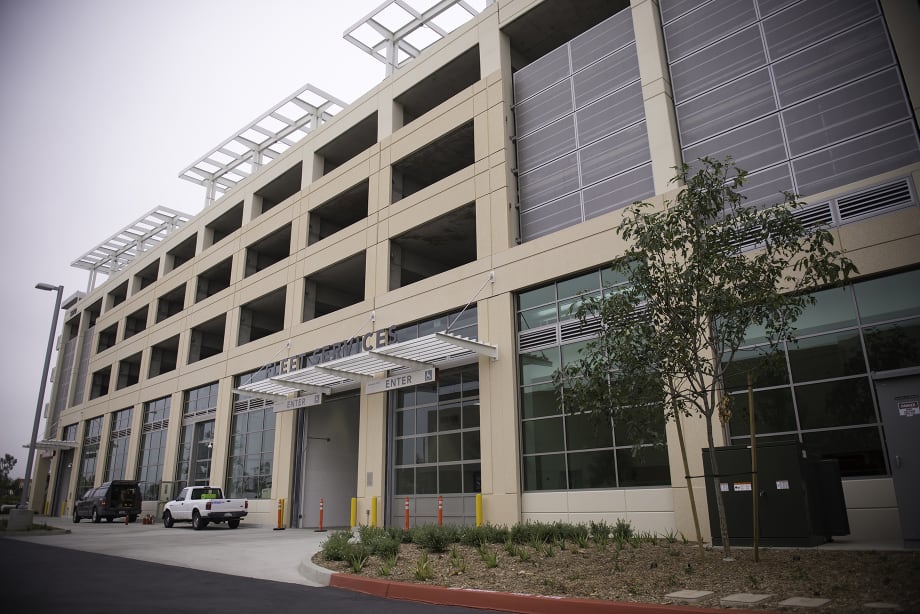
Photo by Vince Taroc
2 min to read
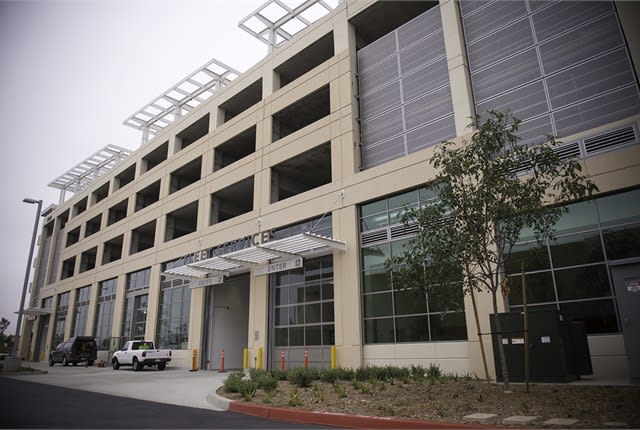
Photo by Vince Taroc
Photo by Vince Taroc
San Diego County, Calif., opened its $22 million fleet facility building in May. The structure consists of a 45,000-square-foot ground floor fleet service operation and four levels of parking for fleet vehicles and county employees.
Fleet moved into the new facility to make room for a crime lab. The relatively new shop equipment from its old building will be moved to satellite shops, which have aging equipment.
The building is located within a county administration campus. Sharyl Blackington, fleet manager for the county, said the completed building reflects the campus plan of emphasis on pedestrian circulation and walkability, quality civic architecture, and committment to community planning and public art.
Fleet services approximately 1,900 of its 4,100 vehicles and equipment at this facility — its biggest of eight — in addition to upfitting and storage for remarketing. In addition to administrative offices, it has 32 service bays.
“Not every bay has a lift in it. We have flat work, lift work, and flex bay work,” said John Manring, fleet coordinator. “If the heavy side workload is higher, we can move heavy into those bays and then if we get a large order of vehicles where we’re pushing a lot of sedans through here, we can put those people into the flex bays with the sedans.”
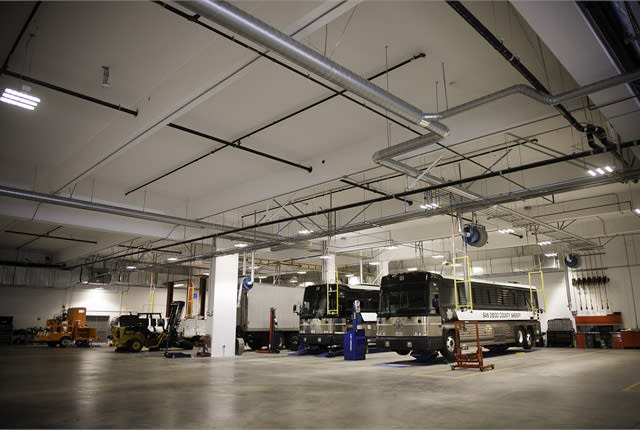
Photo by Vince Taroc
The facility also includes a centralized fluid management system and an exhaust system that is capable of doing five complete air changes in one hour. The building has a “circulation logic” that directs large vehicles to its primary entry, Blackington said. Large roll-up doors are aligned with the parking areas for buses and also give staff control during inclement weather.
The third floor has reserved parking for fleet, and drivers without appointments can park vehicles needing service there. It also houses the motor pool and electric vehicles.
“What we're hoping to do is consolidate this pool and make it become part of the consolidated motor pool for other departments' use at this campus,” said Brad Northup, fleet acquisitions coordinator.
The top floor is reserved for vehicles coming into service or ready for remarketing.
More Operations

Town of Queen Creek Named Most Successful Fleet Award Winner of Inaugural RTA Fleet Success Awards
Five fleets were honored at RTA Connect 2026 in Chicago for excellence across resource efficiency, intentional culture, risk management, and stakeholder satisfaction.
Read More →
Sponsored•October 14, 2026
A buyer's guide to fleet management software in 2027
Buying fleet management software in 2027 means looking beyond features and price. As fleet operations, technology and expectations evolve, this guide explores what today’s fleet professionals should consider when choosing a system that can deliver value now and adapt to what comes next.
Read More →
Hazard Alerts, Fleet Car Sales Rise and a New Shuttle Concept
Fleet car sales doubled, but the bigger picture tells a different story in this week’s roundup.
Read More →
How St. Johns County Turned Fleet Data Into Better Replacement Decisions
St. Johns County, Florida, had fleet data, but turning it into reliable decision guidance was another matter. Instead of starting over with a new fleet management system, the county connected existing tools and built a scoring system that gives managers an objective look at fleet health.
Read More →
Fleet Forward Conference Introduces One-Day Passes for 2026
New one-day registration lets fleet professionals attend Tuesday, Wednesday, or Thursday, with passes available for $249.
Read More →
ENC Unveils its ZAVIR Medium-Duty Shuttle
Two variants of the concept shuttles were revealed: a low-floor configuration and a high-floor configuration.
Read More →
Could Your Next Fleet Technician Start as an Intern?
What if your next technician hasn’t worked in a fleet shop yet? What fleets are doing to free up time.
Read More →
How Phoenix Is Building Its Next Generation of Fleet Technicians
With more than 8,000 vehicles and pieces of equipment to maintain, the City of Phoenix could not afford to wait for fully trained technicians to walk through the door. Instead, they revamped their entire workforce strategy and showed how public fleets can create their own talent pipeline while preparing existing employees for increasingly complex vehicles.
Read More →
What’s Slowing Your Fleet Down?
Could a change in how work gets done help your fleet return vehicles to service sooner?
Read More →
Can Public Fleets Trust the Data Driving Their Decisions?
Public fleets have more data than ever, but inconsistent records and missing information can still undermine maintenance, replacement, and cost decisions.
Read More →