




Related: Miami-Dade County: Planning for COVID-19 and Hurricanes
Residential Waste Volume Increases, Impacting Municipal Waste Haulers
Waste volume has increased between 5% and 30% nationally on residential routes as people stay home to slow the spread of the COVID-19 virus.
April 14, 2020
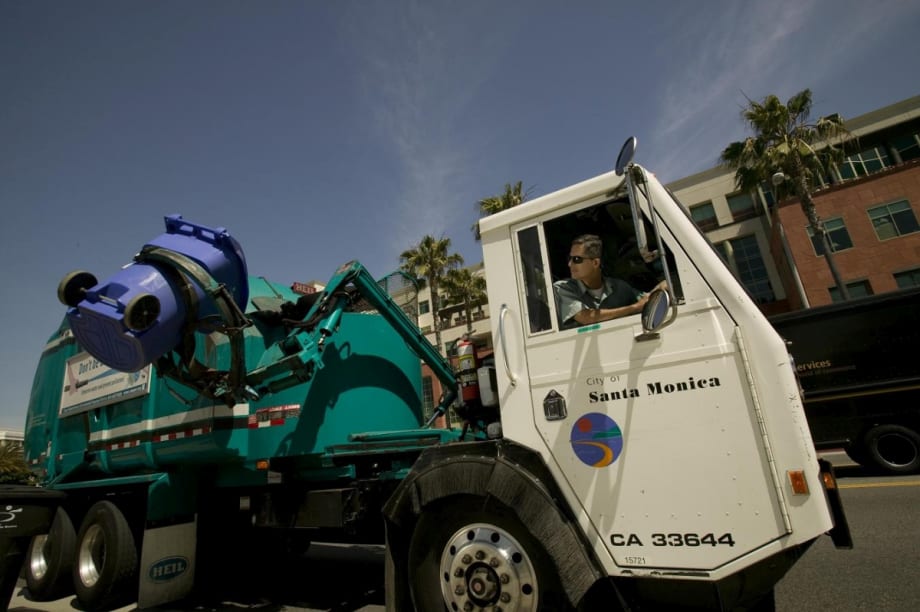
Automated side loaders allow operators to work alone.
Photo courtesy of SWANA
4 min to read
Waste volume has increased between 5% and 30% nationally on residential routes as people stay home to slow the spread of the COVID-19 pandemic, mostly impacting municipal operations that almost exclusively pick up residential waste, according to David Biderman, executive director and CEO of the Solid Waste Association of North America.
“People are at home, they're eating at home, or they ordered a zillion things from Amazon, or they have spare time and they decided, well, it's time to do the spring cleaning in the garage or the attic,” he said. “So we're seeing significant amounts of material out on the street going into the back of trucks. And what that means is that the trucks are running later. They're running heavier. I expect, but don't know for sure, that that has maintenance implications.”
In order to focus on the increased volume of trash, many local governments are suspending yard waste collection.
“They're suspending bulky pickup because the manpower that was being used for those things needs to be devoted to picking up the trash,” Biderman explained.
On the other hand, private fleets collecting more commercial garbage from office buildings and industrial facilities have seen a decline as many businesses have closed. In New York City, for example, waste volume is down 50% in the commercial sector, he said.
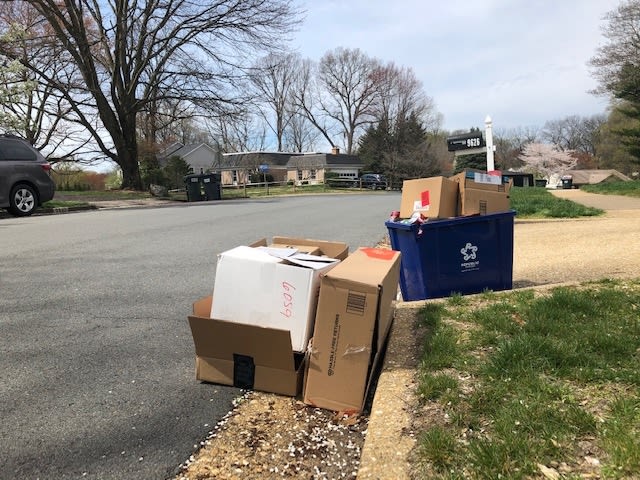
Municipal waste volume has increased during the COVID-19 crisis, as more people are staying at and working from home.
Photo courtesy of SWANA
Operational Changes to Keep Drivers Safe
Operators may be nervous about the garbage and recycling they’re touching as well as the cleanliness of vehicles. That means cleaning is now more important than ever.
Biderman said more operators are cleaning the inside of the cab every day, wiping down touchpoints and anything else that might have been touched. Unfortunately, the supply of cleaning material may not be so easily available.
“One of my concerns going forward is, do Public Works agencies have a sufficient supply for personal protective equipment…and hand sanitizer?” he said. “I don’t have the answer to that.”
Another point making fleet operators nervous is vehicle sharing — having more than one person in the cab doesn’t allow for a 6-foot distance between them. How have operators handled this problem?
Biderman said he’s aware of some refuse haulers having the non-driver drive his vehicle to the beginning of the route rather than the yard. The refuse driver meets him there with the garbage truck, and the helper gets on the step of the truck, never entering the cab. After they’ve completed the route for an area or neighborhood, the driver drops off the helper at his car.
Refuse workers in Fairfax County, Va., are being shuttled to routes so they don’t have to share a cab with the driver, the Washington Post reported.
Additionally, many organizations have a policy where if one person on a crew has symptoms of COVID-19, the other person is also sent home, he said.
Despite sick operators and those under quarantine, at this point, Biderman said we don’t need to be concerned about an operator shortage.
“Even in New York City, the epicenter for this, even though there are 300 people in the New York City Department of Sanitation who have tested positive, they’ve got 7,800 workers. That’s 4% of the workforce — it’s not enough to adversely affect their ability to pick up the trash,” he said.
In cases where there are adverse effects, it’s mostly delays — such as delaying pickup by a day or picking up in the afternoon rather than the morning.
Cleaning Is Also Important for Technicians
As for technicians servicing refuse vehicles?
“They need to make sure that they're wearing all the appropriate PPE when they're servicing vehicles right now because those vehicles may be coming in contact with waste that may have coronavirus,” he said. “I'm thinking particularly about metal and hard plastics, where there's at least one study that indicates the coronavirus live on that for a couple of days.”
If entering the cab, mechanics should ensure that it has been wiped down, and to wipe it down again when he or she is finished servicing the vehicle, he said.
COVID-19 May Increase Demand for Automated Trucks
One potential long-term outcome of the COVID-19 pandemic is an increased interest in purchasing automated side loaders that only require one operator.
“There are some communities that have been resistant to them for a variety of reasons. I think this is going to be a reason for some local governments to take a second and close look at whether or not traditional manual rear loader trucks still make sense — and whether or not it's time to go to automated side loaders,” Biderman said.
He added that while automated side loaders may be more expensive to purchase and require more maintenance, it could halve workforce needs.
More Operations
Is Keeping Older Fleet Vehicles Really Saving Money?
Is keeping vehicles longer saving money, and what happens when a diagnostic test points to the wrong fix?
Read More →
How Smart Fleet Strategy Can Help Local Government Agencies Do More with Less
Keeping a vehicle longer may ease this year’s budget, but what does it cost the next one? A closer look at fleet decisions can reveal opportunities to reduce spending while protecting essential services.
Read More →
Connect with Government Fleet on LinkedIn
From industry news and fleet management strategies to conversations with peers, Government Fleet's LinkedIn page offers public-sector fleet professionals another way to stay informed and connected.
Read More →
Town of Queen Creek Named Most Successful Fleet Award Winner of Inaugural RTA Fleet Success Awards
Five fleets were honored at RTA Connect 2026 in Chicago for excellence across resource efficiency, intentional culture, risk management, and stakeholder satisfaction.
Read More →
Sponsored•October 14, 2026
A buyer's guide to fleet management software in 2027
Buying fleet management software in 2027 means looking beyond features and price. As fleet operations, technology and expectations evolve, this guide explores what today’s fleet professionals should consider when choosing a system that can deliver value now and adapt to what comes next.
Read More →
Hazard Alerts, Fleet Car Sales Rise and a New Shuttle Concept
Fleet car sales doubled, but the bigger picture tells a different story in this week’s roundup.
Read More →
How St. Johns County Turned Fleet Data Into Better Replacement Decisions
St. Johns County, Florida, had fleet data, but turning it into reliable decision guidance was another matter. Instead of starting over with a new fleet management system, the county connected existing tools and built a scoring system that gives managers an objective look at fleet health.
Read More →
Fleet Forward Conference Introduces One-Day Passes for 2026
New one-day registration lets fleet professionals attend Tuesday, Wednesday, or Thursday, with passes available for $249.
Read More →
ENC Unveils its ZAVIR Medium-Duty Shuttle
Two variants of the concept shuttles were revealed: a low-floor configuration and a high-floor configuration.
Read More →
Could Your Next Fleet Technician Start as an Intern?
What if your next technician hasn’t worked in a fleet shop yet? What fleets are doing to free up time.
Read More →