





Related: Fleets Make Streets Safer with Vision Zero Initiative
Report: Public Agencies Should Buy Smaller, Safer Trucks
Public agencies, which purchase a significant number of large vehicles, can reduce traffic fatalities by buying vehicles with improved designs.
December 11, 2018
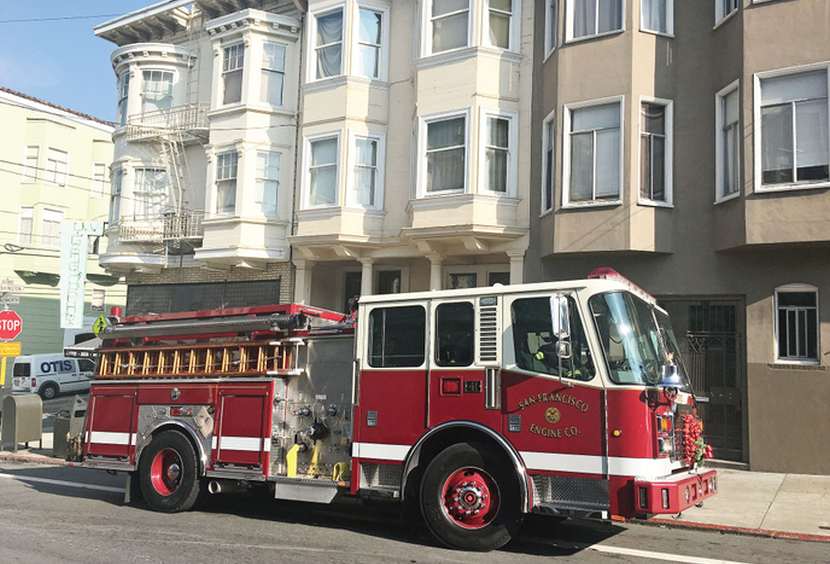
The San Francisco Fire Department’s new fire trucks are smaller, have a better turning radius, and have cameras with a 360-degree view.
Photo courtesy of SFFD
4 min to read
Public agencies, which purchase a significant number of large vehicles, can reduce traffic fatalities by buying vehicles with improved designs, according to a newly released report co-produced by the National Association of City Transportation Officials (NACTO) and the U.S. Department of Transportation Volpe Center.
Large vehicles — including fire trucks, waste management vehicles, and freight trucks — count for a disproportionate, and growing, number of fatalities on U.S. streets. Despite making up only 4% of the U.S. vehicle fleet, trucks account for 7% of all pedestrian, 11% of all bicyclist, and 12% of all car and light-truck fatalities. Over the past year, even as overall traffic fatalities slightly declined, fatalities involving large trucks increased 9%.
“The U.S. has the highest traffic fatality rate in the developed world, and large vehicles make up a disproportionate and growing number of those fatalities,” said Linda Bailey, executive director of NACTO, in a news release. “Choosing vehicles with safer designs is a simple and proven step that any city can take to help stem the rising epidemic of traffic deaths on our streets.”
Researchers concentrated on the opportunities available to cities from new procurement strategies for large vehicles and found that:
Accommodating the largest vehicles on the street — often emergency response vehicles or municipal refuse vehicles — prevents cities from redesigning streets for safer speeds and reduced crossing distances. Even as street designs with narrower lanes, smaller turning radii, and decreased crossing distances are shown to increase street safety, larger vehicles requires wider lanes, larger turning radii, and significant space to maneuver and park, preventing street designers from making street improvements that improve safety for everyone.
Smaller, more maneuverable emergency response trucks often have similar, or better, capabilities than the most common trucks on U.S. streets today. Aerial ladder fire trucks used in major European and Asian cities can reach just as high, despite being only two-thirds as long and having only half of the turn radius as common American models. Some models of pumper fire trucks are up to 30% smaller, and have a turn radius up to 50% less than more typically procured models.
Trucks with improved direct vision can markedly decrease operator reaction time: up to 50% faster than through indirect vision (mirrors, backup cameras, etc.), with minimal additional cost. When tested in a simulation, more than half of distracted drivers in traditional cabs struck a pedestrian, while only 12% of high-vision cab drivers did. High-vision truck cabs cost 0-5% more than conventional cabs — costs that may be recouped over time with decreased insurance and crash liability claims.
Many design elements that improve driver visibility can be retrofitted onto existing fleets, enhancing safety more rapidly than typical vehicle replacement cycles. Peep windows, teardrop windows, and reduced window tinting can generally be retrofitted onto existing vehicles, providing immediate safety benefits.
Advanced Driver Assistance Systems (ADAS) on the market — which use cameras, radar, and other sensors — can significantly mitigate crashes with other vehicles, but are inconsistent at detecting and responding to pedestrians and bicyclists on city streets. The inconsistent nature of ADAS systems can also lead to over-reliance on the part of drivers, slowing reaction time.
More specialized emergency response operations may allow for further improvements in street design, as well as improved emergency response times. Multiple cities studied use motorcycles and/or bicycles in lieu of or to supplement full-size fire and ambulance trucks for medical calls. Many cities likewise use smaller equipment in selected congested or constrained areas, enabling cities to redesign streets in those areas using best street design practices for safe speeds and improved pedestrian and cyclist visibility.
“In our research, we found that it’s possible to have the best of both worlds: smaller, more maneuverable trucks, with the same capabilities as larger, less nimble models,” said Jonah Chiarenza of the U.S. Department of Transportation Volpe Center in a release. “As cities look at new models in the life cycle of replacing their fleets, this win-win dynamic can help make for safer streets.”
Researchers from the USDOT Volpe Center authored “Optimizing Large Vehicles for Urban Environments” with pooled funding from six U.S. cities: Boston, Chicago, Los Angeles, San Francisco, Seattle, and Washington D.C. The full report can be found here.
More Safety
New Partnership Aims to Expand Public Digital Hazard Alert System Statewide
The Hawai’i Department of Transportation (HDOT) is expanding advance digital hazard alerts for the public statewide.
Read More →
New York City Expands Safety Technologies Across Municipal Fleet
Executive Order 19 moves intelligent speed assistance and pedestrian alerts from pilot programs toward standard fleet equipment, offering other public fleets a look at how safety technology can be tested, measured, and scaled.
Read More →
Sponsored•August 10, 2026
Hidden in Plain Sight: Fleet Compliance Risks
Fleet compliance isn't just about having policies — it's about consistently enforcing them. This practical guide reveals six hidden compliance risks common in public sector and shared fleet operations and outlines proven strategies to improve visibility, accountability, and audit readiness.
Read More →
5 Days Left to Submit Your 2026 Fleet Safety Award Nomination
Know a government fleet, safety, or risk manager who deserves recognition for making fleet operations safer? Nominations are open through Aug. 15.
Read More →
How the First 24 Hours Can Shape a Fleet Crash Response
How a strong accident response process helps government fleets move from the initial report to recovery while building a clearer record for what needs to change next.
Read More →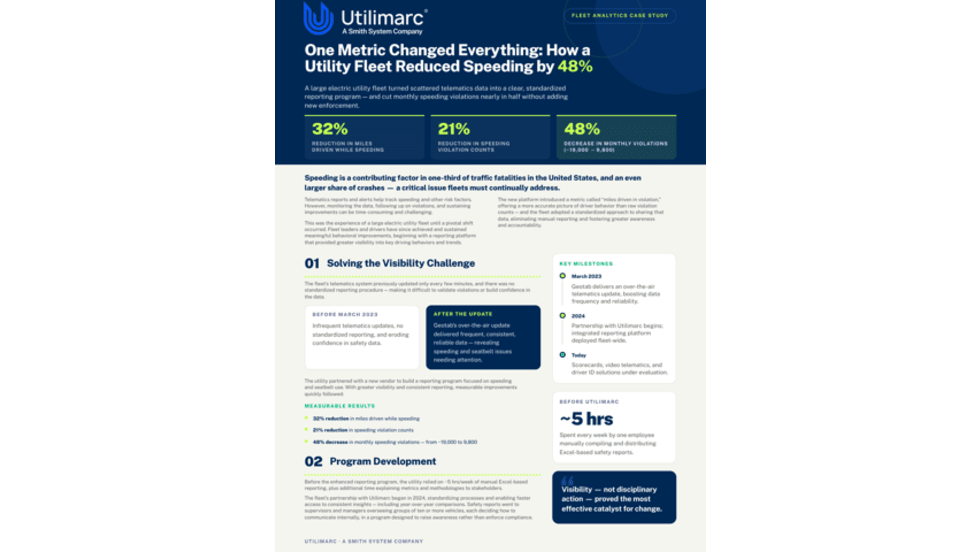
Sponsored•July 17, 2026
How Better Visibility Cut Speeding Violations by 48%
Fleet leaders don't need more data, they need clearer visibility into what the data is saying. This case study explores how one utility replaced speeding-event counts with a single metric — miles driven in violation — to strengthen safety and significantly reduce speeding violations.
Read More →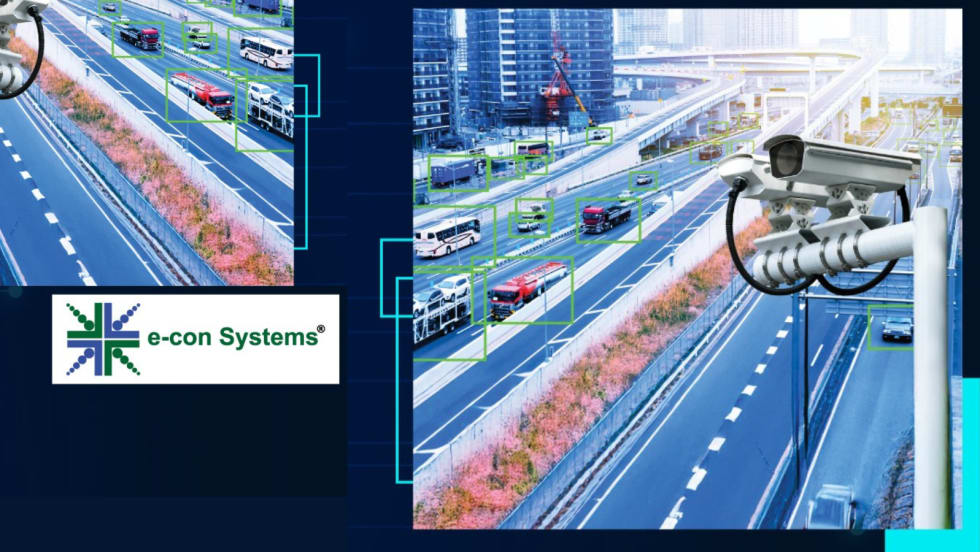
e-con Systems Expands AI Camera Tools for Traffic Monitoring
The systems support license plate recognition, traffic analytics, and video management for transportation agencies.
Read More →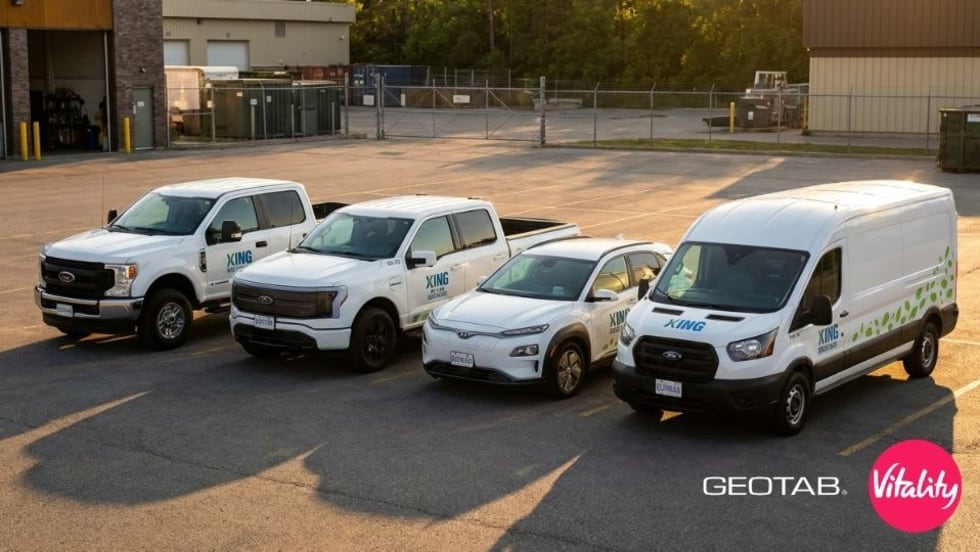
King Township Pilot Links Driver Feedback to Reduced Speeding
How King Township, a best-in-class municipal fleet, reduced speeding by 10.9% and demonstrated a projected 349% ROI by putting safety ownership directly in drivers' hands.
Read More →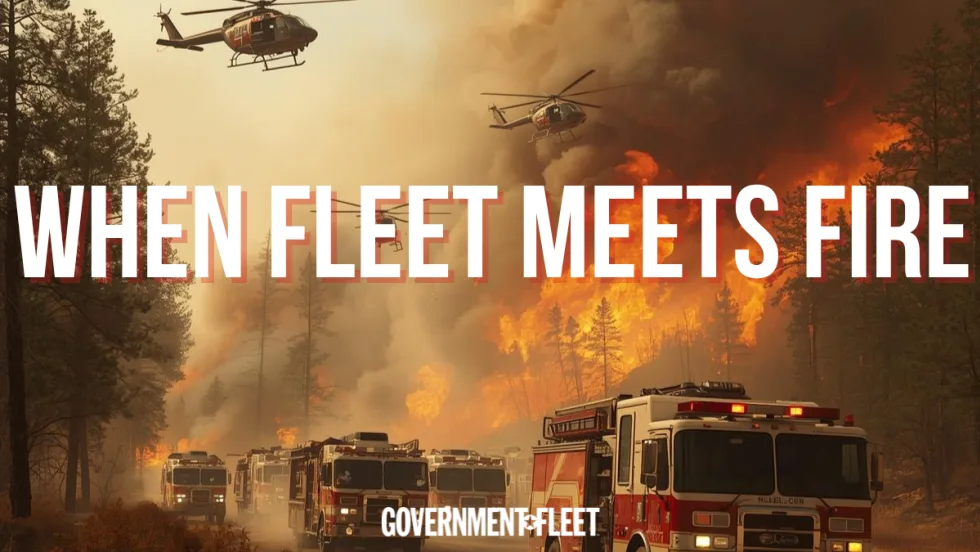
Beyond the Fireline: The Critical Role of Public Fleets in Wildfire Response
Behind every wildfire response is a complex network of vehicles, data, and decisions that must work in sync under extreme pressure. Global heating trends require strong fleet coordination and reliable communications to keep crews safe and operations running smoothly.
Read More →
How AI Is Transforming Public Fleet Safety - Part 1
AI-powered safety systems are helping public fleets tackle distracted driving by delivering real-time coaching and measurable behavior change behind the wheel. In part one of our Q&A, Nauto CEO Stefan Heck explains how agencies can improve safety, reduce costs, and navigate implementation challenges with AI-driven technology.
Read More →