





Electric Vehicle Consortium Reveals Real-World EV Performance Data for Fleets
Utilimarc has launched an Electric Vehicle Consortium to bring together vehicle and charging data into a single database.
February 1, 2024
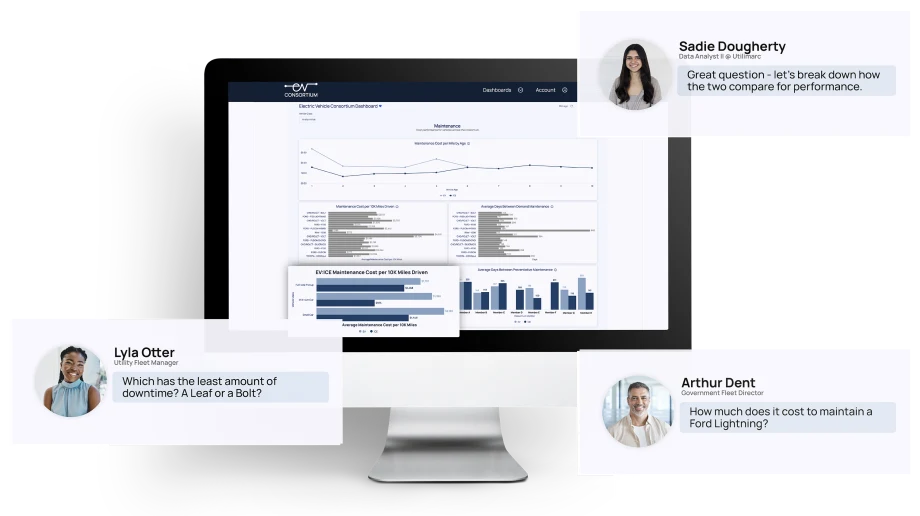
The EVC community allows for a greater volume of data that fleets can use within their operation moving forward when it comes to electrification.
Photo: Utilimarc
4 min to read
As the world of fleet charges into the future with increased electrification, the way the industry leaders approach and better understand these changes has benefitted from the insight of others within the fleet community.
Understanding this need for more collaboration Utilimarc has launched an Electric Vehicle Consortium (EVC), which provides a community powered by forward-thinking fleet managers, analysts, and administrators to collaborate on data showing the realities of fleets electrifying their operations.
A common challenge among fleets is not having the visibility into best electrification practices due to not having enough electric vehicles to draw solid conclusions at the time or simply not having data on technologies the fleet still wants to deploy.
This is where the EV Consortium comes in: other members who have gone through a similar journey, and deployed the same tech, can provide preliminary in-field operational data points necessary for data-driven decisions within the operation.
The consortium is designed for fleets to have a deeper analysis of EVs and their impact on operations. Specifically geared toward fleet managers, the platform acts as a guide to better grasp performance levels and targets compared to alternative fuel vehicles and internal combustion engine (ICE) vehicles.
"If you are feeling overwhelmed about the transition to electric vehicles, then I strongly recommend that you join the EV Consortium," said Santa Clarita Valley Water Agency Fleet and Warehouse Operations Supervisor Jesus Martinez. "By combining our data, we will be able to make data-driven decisions about electric vehicles. Going forward, the journey to zero emissions will be less overwhelming because we know we can rely on Utilimarc’s data analytics expertise and the support of fellow consortium members."
Collaboration Efforts to Provide More In-Depth Data Results
The EVC community allows for a greater volume of data that fleets can use within their operation moving forward when it comes to electrification.
A network of fleet professionals meet for quarterly meetings, roundtable discussions, and best-practice presentations to provide answers to questions such as:
How do maintenance costs and downtime hours differ between EVs and ICE vehicles?
What is the average amount of time and miles between charges for my electric sedans and pickup trucks?
What is the average cost in maintaining my electric sedans and pickup trucks?
Analysts meet with new members to explain where to find the data and how to pull it from the system. Data is submitted each quarter during a week-long data submission window that begins about a month after the quarter ends. Fleets can submit data via APIs, batch, and manual using an upload platform.
Currently, data is collected on light-duty vehicles (sedans, pickups, SUVs, and vans) and will expand to medium- and heavy-duty vehicles once they become more universally available and members add them to their fleets.
The metrics used in the EVC are generated from data that lives in multiple fleet-related systems. The most notable are fleet management information systems, telematics, and charging stations. Data is collected on both EVS and ICE vehicles in order to draw comparisons between the two on maintenance cost, reliability and usage.
Creating More Reliable and Consistent Results
Thanks to a large amount of EV data brought in the consortium will be able to provide more reliable and consistent results when analyzing fleet concerns such as the cost, usage, and performance of EVs while also drawing comparisons to ICE equivalents.
"The automotive industry is currently undergoing a significant paradigm shift from traditional internal combustion engine vehicles to battery electric vehicles," said Austin, Texas, Fleet Mobility Services Assistant Director Rick Harland. "In this era of rapid change, the Utilimarc EV Consortium has emerged as a beacon of collaboration, knowledge-sharing, and innovation. The city of Austin is proud to be one of the founding members of this groundbreaking initiative."
The city of Columbus, Ohio, will be using the EV Consortium to help navigate the fleet through the process of EV ownership. According to city of Columbus Environmental Policy and Project Manager Amy Krohn, the dashboard will enable the city's fleet management staff to isolate data that they had previously never been able to isolate before.
In addition to managing Columbus' EVs Krohn noted that they also plan to use the information provided for future discussions with city leaders and stakeholders.
"The Consortium also gives us a unique platform to share information and discuss our experiences and challenges with peer cities who are also working to electrify their fleets," she said. "We expect the EV data to help us in making future fleet decisions and are looking forward to utilizing the consortium in the months and years to come."
Topics:Operations
More Operations
Who Deserves Fleet Recognition and What Could You Teach at GFX?
Who helped shape your fleet career, and what have you learned that could help someone else?
Read More →
What’s Haunting Public Sector Fleets?
Public sector fleet challenges rarely happen in isolation, and addressing one often means understanding how it connects to another.
Read More →
Is Keeping Older Fleet Vehicles Really Saving Money?
Is keeping vehicles longer saving money, and what happens when a diagnostic test points to the wrong fix?
Read More →
How Smart Fleet Strategy Can Help Local Government Agencies Do More with Less
Keeping a vehicle longer may ease this year’s budget, but what does it cost the next one? A closer look at fleet decisions can reveal opportunities to reduce spending while protecting essential services.
Read More →
Connect with Government Fleet on LinkedIn
From industry news and fleet management strategies to conversations with peers, Government Fleet's LinkedIn page offers public-sector fleet professionals another way to stay informed and connected.
Read More →
Town of Queen Creek Named Most Successful Fleet Award Winner of Inaugural RTA Fleet Success Awards
Five fleets were honored at RTA Connect 2026 in Chicago for excellence across resource efficiency, intentional culture, risk management, and stakeholder satisfaction.
Read More →
Sponsored•October 14, 2026
A buyer's guide to fleet management software in 2027
Buying fleet management software in 2027 means looking beyond features and price. As fleet operations, technology and expectations evolve, this guide explores what today’s fleet professionals should consider when choosing a system that can deliver value now and adapt to what comes next.
Read More →
Hazard Alerts, Fleet Car Sales Rise and a New Shuttle Concept
Fleet car sales doubled, but the bigger picture tells a different story in this week’s roundup.
Read More →
How St. Johns County Turned Fleet Data Into Better Replacement Decisions
St. Johns County, Florida, had fleet data, but turning it into reliable decision guidance was another matter. Instead of starting over with a new fleet management system, the county connected existing tools and built a scoring system that gives managers an objective look at fleet health.
Read More →
Fleet Forward Conference Introduces One-Day Passes for 2026
New one-day registration lets fleet professionals attend Tuesday, Wednesday, or Thursday, with passes available for $249.
Read More →