




Police EVOC Trainers Give Driving Notes on Patrol Cars
LOS ANGELES - The 2011 model-year evaluation by the Los Angeles County Sheriff Department has arrived, and it's a riveting read.
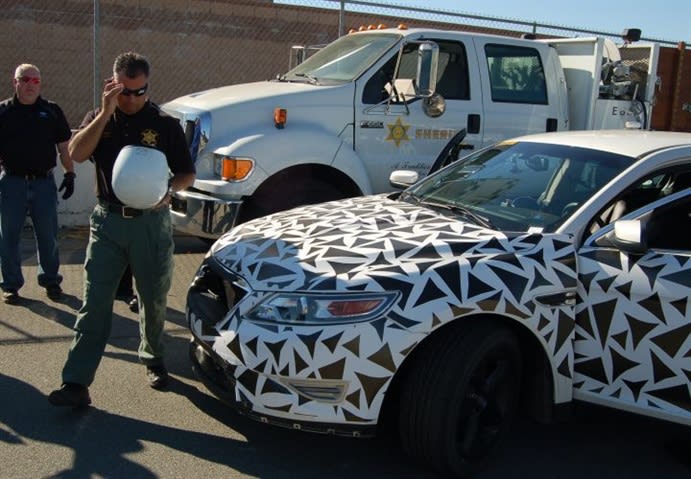
An EVOC driver with the L.A. County Sheriff's Department prepares to test the Ford P.I. prototype. Photo: Paul Clinton.
LOS ANGELES - The 2011 model-year evaluation by the Los Angeles County Sheriff Department has arrived, and it's a riveting read.
This year's report may feel a warmer to the touch (or click, because they've been posted online). It includes subjective driving notes from emergency driving trainers with the agency and the LAPD who evaluated the crop of new patrol cars in November during the LASD's annual vehicle testing. Experienced officers drove these new patrol vehicles, and filled out evaluation reports, giving their opinions of the performance, handling, braking and other aspects of driving the vehicles.
The driving notes, concise observations that read like a Zagat restaurant review entry, are included as one element of the in-depth evaluation of the performance and safety features of the 2011 Chevrolet Caprice PPV, 2011 Dodge Charger Pursuit, and 2012 Ford Police Interceptor sedan. Special service vehicles such as the Chevy Tahoe and Ford Police Interceptor Utility were also tested.
The nation's largest sheriff's agency evaluated 11 2011 model-year patrol cars and special service vehicles, four 2012 Ford prototypes, and five motorcycles. Four officer drivers provide driving notes for each vehicle for brakes, cornering/handling, transmission (shift points) and engine.
Chevrolet Caprice PPV (2011)
Officers who drove the Chevy Caprice's 6.0-liter, V8 engine, which was run on both unleaded and E85 blended fuel, gave the vehicle generally high ratings for power, handling and braking.
The engine is a "strong, strong powerplant," Dep. Ramiro Juarez noted. "Power [is] hard throughout rpm range."
In his handling evaluation, Officer Marc Hemsworth noted the Caprice's "moderate understeer," as well as the "inconsistency with stability control [that] made smooth exit turns challenging."
The Caprice won praise for its "flawless" shift points that "kept the engine in its powerband at all times."
Brakes delivered "little to no fade" and pedal travel was seen as appropriate. Officer Alex Penrith noted brakes were "very consistent" with a "good initial bite."
Dodge Charger Pursuit (2011)
Dodge brought its pair of Charger Pursuits - the 3.6-liter V-6 and 5.7-liter V-8 - that received generally high marks, as well. Officer drivers responded to the V-6 version's "good power" and said braking required "unusually high pedal effort." Deputy Juarez said the vehicle is "overall [a] good car, well mannered."
The V-8 Hemi was tested in 2.65 and 3.06 rear-axle ratios. The 2.65-differential version received high praise for its "easy" throttle modulation, Deputy Robert Robinson wrote. Dep. Juarez noted the vehicle's "good steering feel, steering ratio was precise and reactive." Officers also noted a "great deal of brake fade." The 3.06-differential version also received high scores.
Ford Police Interceptor (2012)
Drivers tested the Ford Police Interceptors as 2011 prototypes, including the 3.5-liter V-6 in front-wheel drive and all-wheel drive, as well as the 3.5-liter turbo-charged V-6 all-wheel drive powertrain.
The front-wheel drive base version had "good power, easier to rev" with "quick and precise" steering turning into curves with only mild understeer. Deputy Juarez called it a "very well-balanced vehicle." Under the hand of Officer Penrith, the vehicle exhibited "some hint of torque steer" and steering that "bites hard on entries" into curves.
Officers praised the all-wheel version for its "excellent brake action" with no "fade or pull." Handling was "very neutral" and "bounce was non-existent." Officer Penrith praised the tires for their "excellent transitions between grip and loss," and said the engine is "acceptable, but the weak part of the package."
The turbo-charged version provides a transmission that "shifted very quickly and did a great job keeping the engine in its powerband." The car was "well balanced" and offered a "strong" engine that "pulled evenly and hard throughout the entire rpm range. Good torque band."
Read the full LASD Vehicle Test and Evaluation Program report.
By Paul Clinton
More Operations

How St. Johns County Turned Fleet Data Into Better Replacement Decisions
St. Johns County, Florida, had fleet data, but turning it into reliable decision guidance was another matter. Instead of starting over with a new fleet management system, the county connected existing tools and built a scoring system that gives managers an objective look at fleet health.
Read More →
Fleet Forward Conference Introduces One-Day Passes for 2026
New one-day registration lets fleet professionals attend Tuesday, Wednesday, or Thursday, with passes available for $249.
Read More →
ENC Unveils its ZAVIR Medium-Duty Shuttle
Two variants of the concept shuttles were revealed: a low-floor configuration and a high-floor configuration.
Read More →
Could Your Next Fleet Technician Start as an Intern?
What if your next technician hasn’t worked in a fleet shop yet? What fleets are doing to free up time.
Read More →
How Phoenix Is Building Its Next Generation of Fleet Technicians
With more than 8,000 vehicles and pieces of equipment to maintain, the City of Phoenix could not afford to wait for fully trained technicians to walk through the door. Instead, they revamped their entire workforce strategy and showed how public fleets can create their own talent pipeline while preparing existing employees for increasingly complex vehicles.
Read More →
What’s Slowing Your Fleet Down?
Could a change in how work gets done help your fleet return vehicles to service sooner?
Read More →
Can Public Fleets Trust the Data Driving Their Decisions?
Public fleets have more data than ever, but inconsistent records and missing information can still undermine maintenance, replacement, and cost decisions.
Read More →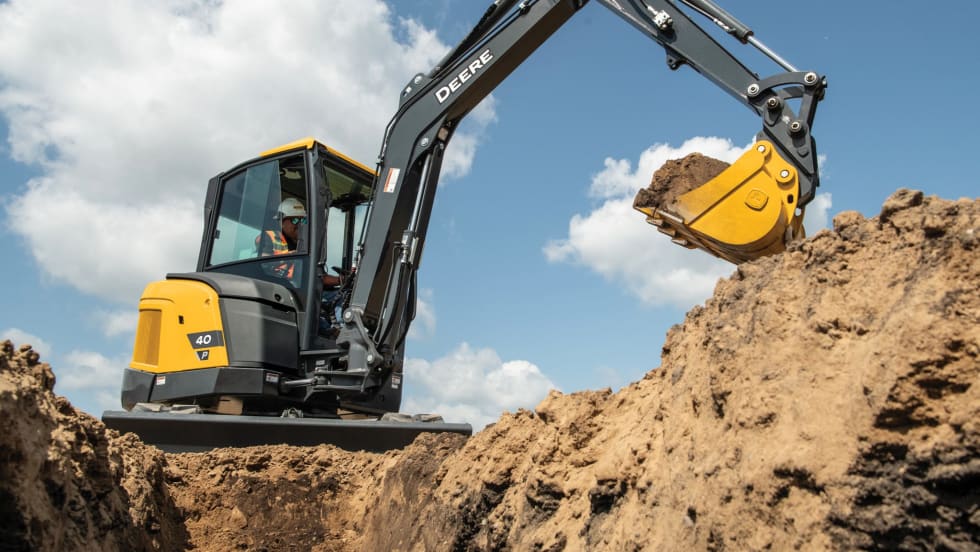
John Deere Introduces 40 P-Tier Compact Excavator
John Deere is adding a compact excavator designed for crews that need to move equipment between jobsites and handle multiple types of work with one machine. The 40 P-Tier weighs less than 10,000 pounds and offers configurable hydraulics, attachment options, and connected fleet-management capabilities.
Read More →
How Leading Fleets Improve and Why Business Plans Matter
This week, we look at what past Leading Fleet winners can teach us about making progress, plus how to build a business plan your fleet will actually use.
Read More →
Nominate a Fleet Leader for the 2027 Public Fleet Hall of Fame
Do you know a fleet leader who has made a lasting impact on the industry? Nominate this fleet professional for the 2027 Public Fleet Hall of Fame.
Read More →