




Philadelphia Gas Works Unveils New Natural Gas Vehicles
Philadelphia Gas Works (PGW) recently introduced its new fleet of 24 natural gas-powered Honda Civic sedans.
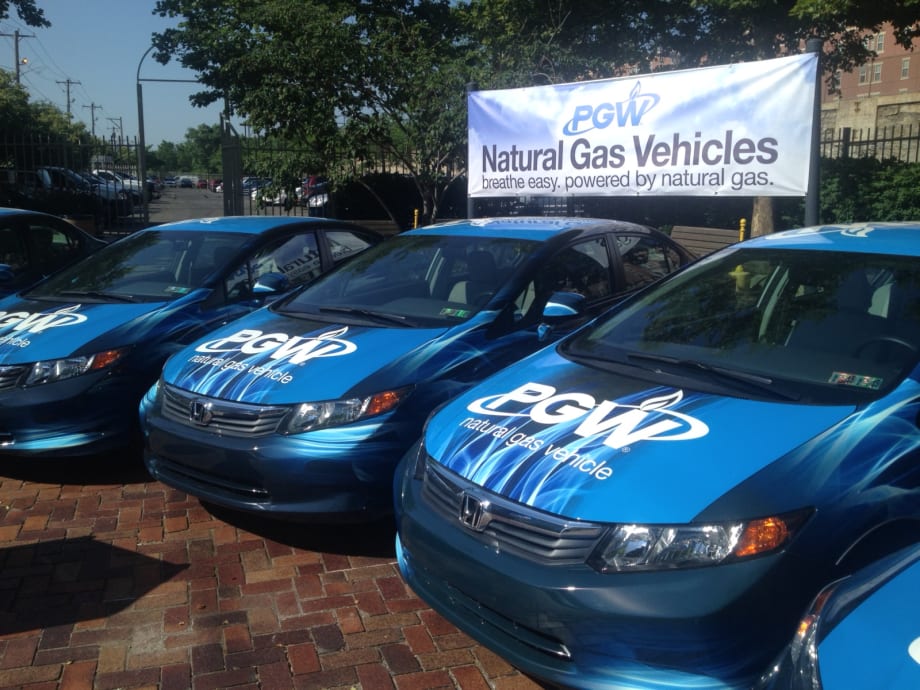
The new Natural Gas Vehicle (NGV) fleet can now be seen driving Philadelphia’s roadways. Adding 24 NGVs is the equivalent of removing six vehicles from the roadway each year, according to PGW. (Photo: PGW)
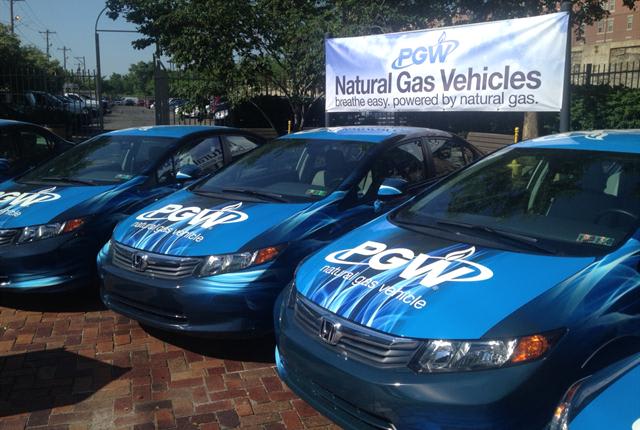
The new Natural Gas Vehicle (NGV) fleet can now be seen driving Philadelphia’s roadways. Adding 24 NGVs is the equivalent of removing six vehicles from the roadway each year, according to PGW. (Photo: PGW)
Philadelphia Gas Works (PGW), along with Department of Environmental Protection (DEP) Secretary E. Christopher Abruzzo, recently introduced its new fleet of 24 natural gas-powered Honda Civic sedans.
PGW held a special event to unveil the new units on June 18, where the utility was joined by energy and fleet operations experts, customers, and leaders in the drive to develop Philadelphia’s natural gas vehicle (NGV) market.
Designed and built to run solely on compressed natural gas, the NGVs join the utility’s existing fleet of approximately 600 vehicles, which includes a wide array of vehicle types, from mid-size sedans and minivans to pickup trucks, dump trucks, and maintenance walk-in and utility vans. PGW also operates a handful of Toyota Prius models.
Fleet vehicles typically remain in use for approximately seven years, depending on the type of vehicle and how it’s used, according to Barry O’Sullivan, director of corporate communications for PGW.
PGW made the announcement about the new NGV additions in October 2013. Most of the NGVs will be made available to PGW’s marketing department, but will also be assigned to a variety of other departments, Sullivan told UF last October.
Founded in 1836, PGW is owned by the City of Philadelphia and is the largest municipally owned gas utility in the country. It manages a distribution system of approximately 6,000 miles of gas mains and service pipes supplying approximately 500,000 customers. PGW's operations are managed by a nonprofit corporation, the Philadelphia Facilities Management Corporation (PFMC).
Related story:
Philadelphia Gas Works to Roll Out 24 Natural Gas Vehicles in Spring 2014
More Operations
Who Deserves Fleet Recognition and What Could You Teach at GFX?
Who helped shape your fleet career, and what have you learned that could help someone else?
Read More →
What’s Haunting Public Sector Fleets?
Public sector fleet challenges rarely happen in isolation, and addressing one often means understanding how it connects to another.
Read More →
Is Keeping Older Fleet Vehicles Really Saving Money?
Is keeping vehicles longer saving money, and what happens when a diagnostic test points to the wrong fix?
Read More →
How Smart Fleet Strategy Can Help Local Government Agencies Do More with Less
Keeping a vehicle longer may ease this year’s budget, but what does it cost the next one? A closer look at fleet decisions can reveal opportunities to reduce spending while protecting essential services.
Read More →
Connect with Government Fleet on LinkedIn
From industry news and fleet management strategies to conversations with peers, Government Fleet's LinkedIn page offers public-sector fleet professionals another way to stay informed and connected.
Read More →
Town of Queen Creek Named Most Successful Fleet Award Winner of Inaugural RTA Fleet Success Awards
Five fleets were honored at RTA Connect 2026 in Chicago for excellence across resource efficiency, intentional culture, risk management, and stakeholder satisfaction.
Read More →
A buyer's guide to fleet management software in 2027
Buying fleet management software in 2027 means looking beyond features and price. As fleet operations, technology and expectations evolve, this guide explores what today’s fleet professionals should consider when choosing a system that can deliver value now and adapt to what comes next.
Read More →
Hazard Alerts, Fleet Car Sales Rise and a New Shuttle Concept
Fleet car sales doubled, but the bigger picture tells a different story in this week’s roundup.
Read More →
How St. Johns County Turned Fleet Data Into Better Replacement Decisions
St. Johns County, Florida, had fleet data, but turning it into reliable decision guidance was another matter. Instead of starting over with a new fleet management system, the county connected existing tools and built a scoring system that gives managers an objective look at fleet health.
Read More →
Fleet Forward Conference Introduces One-Day Passes for 2026
New one-day registration lets fleet professionals attend Tuesday, Wednesday, or Thursday, with passes available for $249.
Read More →