





Related: In These Cities, Fleet Vehicles Are Roaming Data Centers
NYC Using Fleet Vehicles to Test Air Quality
Five vehicles that serve the South Bronx in New York City will be equipped with sensors that collect air quality data.
January 21, 2020
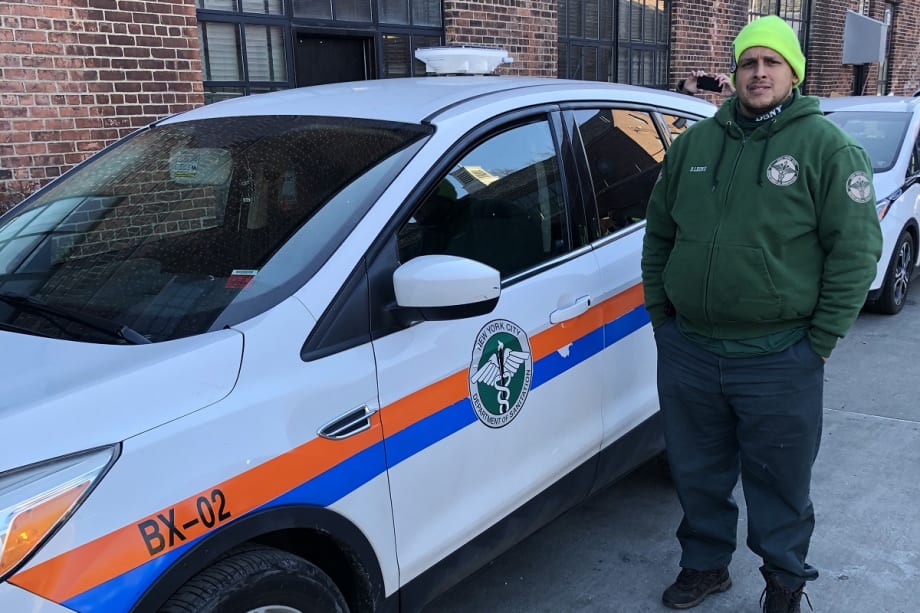
Benjamin Leon of the Department of Sanitation poses with a fleet vehicle fitted with an air quality monitoring device.
Photo courtesy of New York City
2 min to read

With this new technology, city government can see how air quality may differ from street to street.
Photo of New York City via Unsplash/Zach Miles
New York City has launched CityScanner, a pilot program that will use city fleet vehicles to test local air quality. Five vehicles that serve the South Bronx will be equipped with sensors that collect air quality data, which is often used by city government to identify problem areas, determine causes of poor air quality, and make decisions to improve air quality.
The city’s existing municipal fixed-sensor network — the New York City Community Air Survey — tracks six different kinds of air pollution and how levels vary by neighborhood. But mobile sensors allow the city to collect hyper-local data on fine particulates.
“NYC Fleet is one of the nation’s largest adopters of telematics technology,” said Keith Kerman, NYC chief fleet officer and Department of Citywide Administrative Services (DCAS) deputy commissioner. “Air quality monitoring through CityScanner will work in conjunction with our telematics solution, adding an exciting new dimension to our efforts to use data to make the city cleaner and safer.”
Using a new technology developed by the Senseable City Lab at the Massachusetts Institute of Technology (MIT), CityScanner is based on small, solar-powered sensors affixed on top of vehicles that use a laser-based technology to detect pollutants in the air at an unprecedented level of space and time resolution. This information is used by environmental scientists to dynamically detect pollution hotspots and air quality trends in the city.
This pilot program builds upon the success of similar pilots spearheaded by the Environmental Defense Fund (EDF) in Houston, London, and West Oakland, Calif.
"Public vehicles equipped with state-of-the-art sensors are a powerful, underutilized tool in the battle against air pollution, given the vast urban footprint they cover," said Harold Rickenbacker Ph.D., Environmental Defense Fund clean air & innovation manager and advisor on the CityScanner project. "Municipal vehicles performing their routine jobs are capable of detecting pollution at a block-by-block level, giving policymakers unprecedented levels of data to inform environmental and public health decisions. This innovative project has the potential to position New York City as a leader with other cities, the tech community, and the private sector."
In a previous study, MIT deployed City Scanner sensors on trash trucks in the City of Cambridge, Mass. Over a 12-month period, the sensors collected more than 1.6 million data points, which helped the city map hotspots and gain insights regarding sources of pollution.
At the time, MIT shared this video to showcase the technology:
More Operations

Fleet Forward Conference Introduces One-Day Passes for 2026
New one-day registration lets fleet professionals attend Tuesday, Wednesday, or Thursday, with passes available for $249.
Read More →
ENC Unveils its ZAVIR Medium-Duty Shuttle
Two variants of the concept shuttles were revealed: a low-floor configuration and a high-floor configuration.
Read More →
Could Your Next Fleet Technician Start as an Intern?
What if your next technician hasn’t worked in a fleet shop yet? What fleets are doing to free up time.
Read More →
How Phoenix Is Building Its Next Generation of Fleet Technicians
With more than 8,000 vehicles and pieces of equipment to maintain, the City of Phoenix could not afford to wait for fully trained technicians to walk through the door. Instead, they revamped their entire workforce strategy and showed how public fleets can create their own talent pipeline while preparing existing employees for increasingly complex vehicles.
Read More →
What’s Slowing Your Fleet Down?
Could a change in how work gets done help your fleet return vehicles to service sooner?
Read More →
Can Public Fleets Trust the Data Driving Their Decisions?
Public fleets have more data than ever, but inconsistent records and missing information can still undermine maintenance, replacement, and cost decisions.
Read More →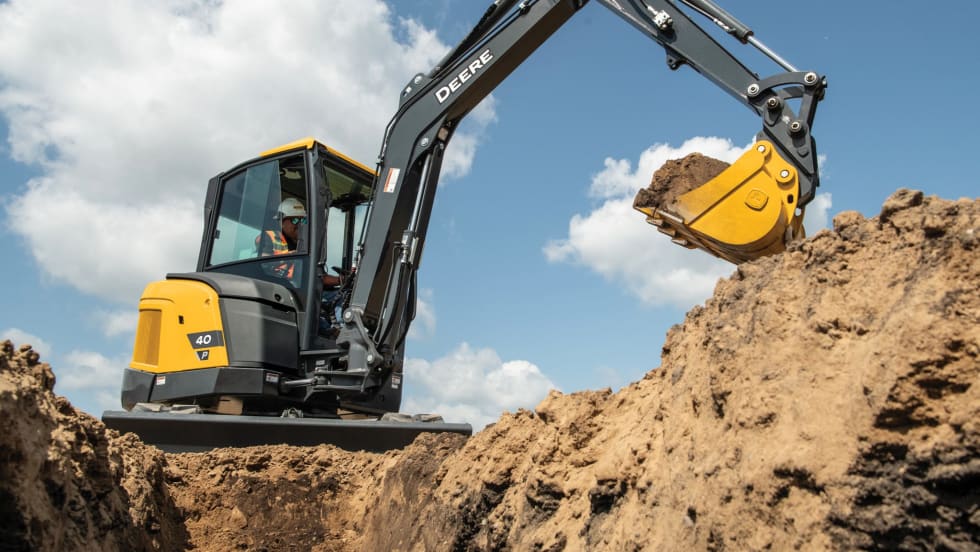
John Deere Introduces 40 P-Tier Compact Excavator
John Deere is adding a compact excavator designed for crews that need to move equipment between jobsites and handle multiple types of work with one machine. The 40 P-Tier weighs less than 10,000 pounds and offers configurable hydraulics, attachment options, and connected fleet-management capabilities.
Read More →
How Leading Fleets Improve and Why Business Plans Matter
This week, we look at what past Leading Fleet winners can teach us about making progress, plus how to build a business plan your fleet will actually use.
Read More →
Nominate a Fleet Leader for the 2027 Public Fleet Hall of Fame
Do you know a fleet leader who has made a lasting impact on the industry? Nominate this fleet professional for the 2027 Public Fleet Hall of Fame.
Read More →
Why Fleet Business Plans Need Three Perspectives
A fleet business plan should help agency leaders understand the fleet’s value, give the organization a clear direction, and establish shared expectations with customer departments.
Read More →