




NYC Releases Annual Mayor's Management Report on Fleet
In FY20, the NYC Fleet Department made progress in many areas, while some areas of initiative were delayed due to COVID-19.

Photo: NYCDCAS
Each year, the NYC Mayor’s Office of Operations prepares the Mayor’s Management Report (MMR), a comprehensive look at city government performance in each agency. Fleet has its own section of the MMR, as well as contributions in the Department of Citywide Administrative Services (DCAS) section.
In FY20, Fleet made progress in many areas, while some areas of initiative were delayed due to COVID-19.
In March 2019, Mayor de Blasio issued Executive Order 41 which called for the reduction of at least 1,000 vehicles by June 30, 2021. The baseline year for the initiative was the Preliminary MMR of FY19 when the fleet had 31,159 total owned vehicles and 25,690 on-road units. In the FY20 MMR, it's reporting 30,502 total fleet units and 24,877 on-road units.
Tied to fleet reduction, it reported its largest revenue program for used cars ever at $11.6 million, $2 million more than last year.
Even beyond fleet count, the most important aspect of this environmental initiative is to reduce fuel use. Fleet used over 3 million fewer gallons of liquid fuel in FY20 compared to the full year FY18. It did not achieve gains in biofuel use due to COVID-19, which delayed its renewable diesel procurement, originally scheduled for Feb. DCAS Procurement has just recently reissued a public notice of this procurement, which is available here.
The fuel economy (Fleet MPG) of city vehicles has greatly improved from 6.1 in FY18 to 6.5 in FY19, and 7.0 in FY20. Fleet MPG, as reported in the MMR, adds fuel use for all off-road and small equipment units (like chainsaws) to the vehicles with which they operate. Fleet MPG captures all fleet and equipment related fuel use.
Its alternative fuel program achieved all new milestones with 19,100 total alternative powered vehicles or 65% of the fleet, and 2,747 plug-in electric units. As it expands its hybrid fleet in policing, it will see continued increases in the alternative fuel percent. It received far fewer new electric vehicles than ordered in FY20 due to disruptions in vehicle manufacturing caused by COVID-19.
Fleet saw reductions in collision rate in FY20. However, there were some very serious crashes and it remains committed to further advancing vehicle safety, especially truck related. It suspended vehicle safety training in Feb. due to COVID-19, but has re-introduced safety training online and over 800 drivers have already participated.
The department achieved cost reductions in expense funded areas including repair, fuel, and light-duty vehicle procurement while maintaining a healthy capital investment in heavy-duty, specialized, and emergency trucks and equipment.
More Operations

Fleet Forward Conference Introduces One-Day Passes for 2026
New one-day registration lets fleet professionals attend Tuesday, Wednesday, or Thursday, with passes available for $249.
Read More →
ENC Unveils its ZAVIR Medium-Duty Shuttle
Two variants of the concept shuttles were revealed: a low-floor configuration and a high-floor configuration.
Read More →
Could Your Next Fleet Technician Start as an Intern?
What if your next technician hasn’t worked in a fleet shop yet? What fleets are doing to free up time.
Read More →
How Phoenix Is Building Its Next Generation of Fleet Technicians
With more than 8,000 vehicles and pieces of equipment to maintain, the City of Phoenix could not afford to wait for fully trained technicians to walk through the door. Instead, they revamped their entire workforce strategy and showed how public fleets can create their own talent pipeline while preparing existing employees for increasingly complex vehicles.
Read More →
What’s Slowing Your Fleet Down?
Could a change in how work gets done help your fleet return vehicles to service sooner?
Read More →
Can Public Fleets Trust the Data Driving Their Decisions?
Public fleets have more data than ever, but inconsistent records and missing information can still undermine maintenance, replacement, and cost decisions.
Read More →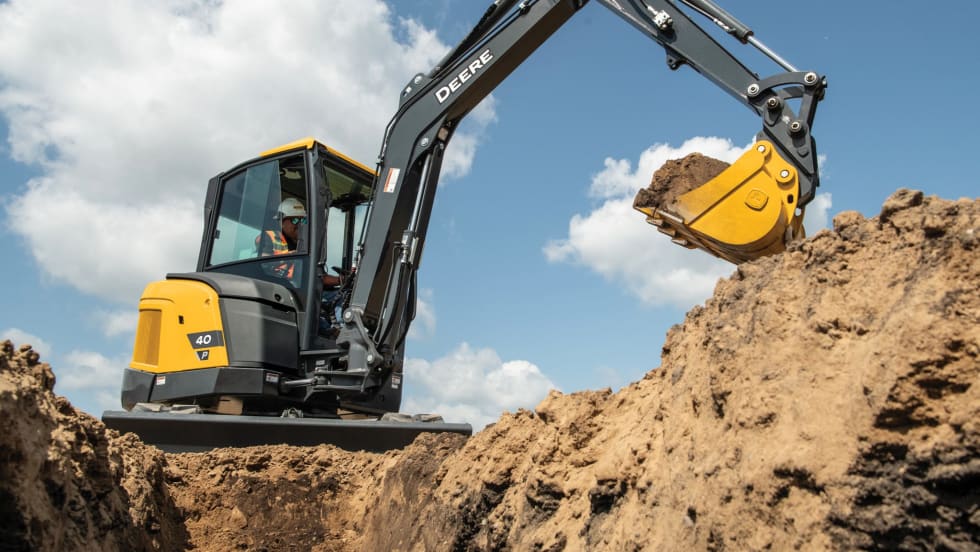
John Deere Introduces 40 P-Tier Compact Excavator
John Deere is adding a compact excavator designed for crews that need to move equipment between jobsites and handle multiple types of work with one machine. The 40 P-Tier weighs less than 10,000 pounds and offers configurable hydraulics, attachment options, and connected fleet-management capabilities.
Read More →
How Leading Fleets Improve and Why Business Plans Matter
This week, we look at what past Leading Fleet winners can teach us about making progress, plus how to build a business plan your fleet will actually use.
Read More →
Nominate a Fleet Leader for the 2027 Public Fleet Hall of Fame
Do you know a fleet leader who has made a lasting impact on the industry? Nominate this fleet professional for the 2027 Public Fleet Hall of Fame.
Read More →
Why Fleet Business Plans Need Three Perspectives
A fleet business plan should help agency leaders understand the fleet’s value, give the organization a clear direction, and establish shared expectations with customer departments.
Read More →