





More Green Content: Checking All the Boxes for an EV Future
North Carolina Code Enforcement Adds Electric Ford F-150s to Fleet
The city of Charlotte, North Carolina, has added five new Ford F-150 Lightning electric vehicles into its code enforcement fleet.
February 19, 2024
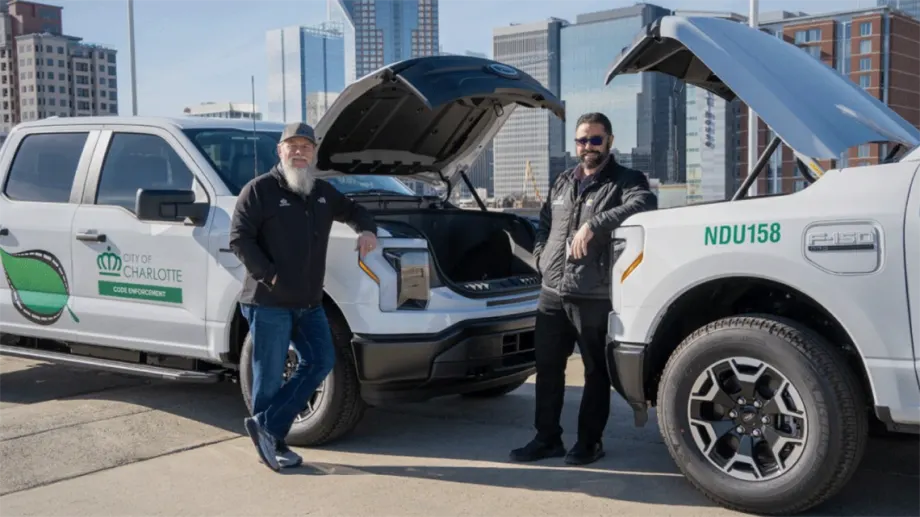
Looking ahead, the city aims to continue expanding its electric vehicle fleet, aiming to achieve a fully electric fleet by 2030.
Photo: City of Charlotte
2 min to read
The Charlotte, North Carolina, Code Enforcement Division is advancing sustainability goals by incorporating five new Ford F-150 Lightning electric vehicles into its fleet. This move is part of the city's commitment to the Sustainable and Resilient Charlotte by 2050 Resolution and the Strategic Energy Action Plan (SEAP), both of which aim to reduce greenhouse gas emissions and promote the use of sustainable energy.
Lowering Greenhouse Gas Emissions and Fleet Changes
In 2018, the city set a goal through these initiatives to significantly lower its greenhouse gas emissions, with a key strategy being to switch the city's vehicle fleet to zero-carbon energy sources by 2030.
The addition of the Ford F-150 Lightnings, which advertises a 220-mile range per charge, is a jump up from the division's initial electric vehicle, the 2012 Nissan Leaf, which had a reported 75-mile range.
“We began our journey towards sustainability in 2012 with the Nissan Leaf," said Code Enforcement Coordinator Scott Edwards. "Since then, we've added three propane trucks, two hybrid vehicles, and we're expecting more electric vehicles by fiscal year 2025.”
Continuing Sustainabilitiy Goals Throughout the Fleet
These new electric vehicles, designated for use by code enforcement trainers, will also provide a space for on-the-job training.
“Senior inspectors, responsible for training new hires, will be using these vehicles," said Edwards. "The trucks are spacious, especially with the crew cab, offering plenty of room for everyone involved. New employees will accompany the trainers in these vehicles for a period of time. This hands-on experience will continue until they are skilled enough to work independently.”
This enhancement is supported by the city’s development of electric vehicle charging infrastructure and use of the ChargePoint app, which helps users locate citywide chargers.
Looking ahead, the city plans to continue expanding its electric vehicle fleet, aiming to achieve a fully electric fleet by 2030.
More Operations
Who Deserves Fleet Recognition and What Could You Teach at GFX?
Who helped shape your fleet career, and what have you learned that could help someone else?
Read More →
What’s Haunting Public Sector Fleets?
Public sector fleet challenges rarely happen in isolation, and addressing one often means understanding how it connects to another.
Read More →
Is Keeping Older Fleet Vehicles Really Saving Money?
Is keeping vehicles longer saving money, and what happens when a diagnostic test points to the wrong fix?
Read More →
How Smart Fleet Strategy Can Help Local Government Agencies Do More with Less
Keeping a vehicle longer may ease this year’s budget, but what does it cost the next one? A closer look at fleet decisions can reveal opportunities to reduce spending while protecting essential services.
Read More →
Connect with Government Fleet on LinkedIn
From industry news and fleet management strategies to conversations with peers, Government Fleet's LinkedIn page offers public-sector fleet professionals another way to stay informed and connected.
Read More →
Town of Queen Creek Named Most Successful Fleet Award Winner of Inaugural RTA Fleet Success Awards
Five fleets were honored at RTA Connect 2026 in Chicago for excellence across resource efficiency, intentional culture, risk management, and stakeholder satisfaction.
Read More →
Sponsored•October 14, 2026
A buyer's guide to fleet management software in 2027
Buying fleet management software in 2027 means looking beyond features and price. As fleet operations, technology and expectations evolve, this guide explores what today’s fleet professionals should consider when choosing a system that can deliver value now and adapt to what comes next.
Read More →
Hazard Alerts, Fleet Car Sales Rise and a New Shuttle Concept
Fleet car sales doubled, but the bigger picture tells a different story in this week’s roundup.
Read More →
How St. Johns County Turned Fleet Data Into Better Replacement Decisions
St. Johns County, Florida, had fleet data, but turning it into reliable decision guidance was another matter. Instead of starting over with a new fleet management system, the county connected existing tools and built a scoring system that gives managers an objective look at fleet health.
Read More →
Fleet Forward Conference Introduces One-Day Passes for 2026
New one-day registration lets fleet professionals attend Tuesday, Wednesday, or Thursday, with passes available for $249.
Read More →