




N.C. State's $4.4M Grant to Develop Fleet Management Training
The Clean Fuel Advanced Technology (CFAT) project aims in part to develop a professional Smart Fleet management training program that will provide tools and information to increase fleet efficiency through the use of low carbon fuels, technologies, practices, and policies.
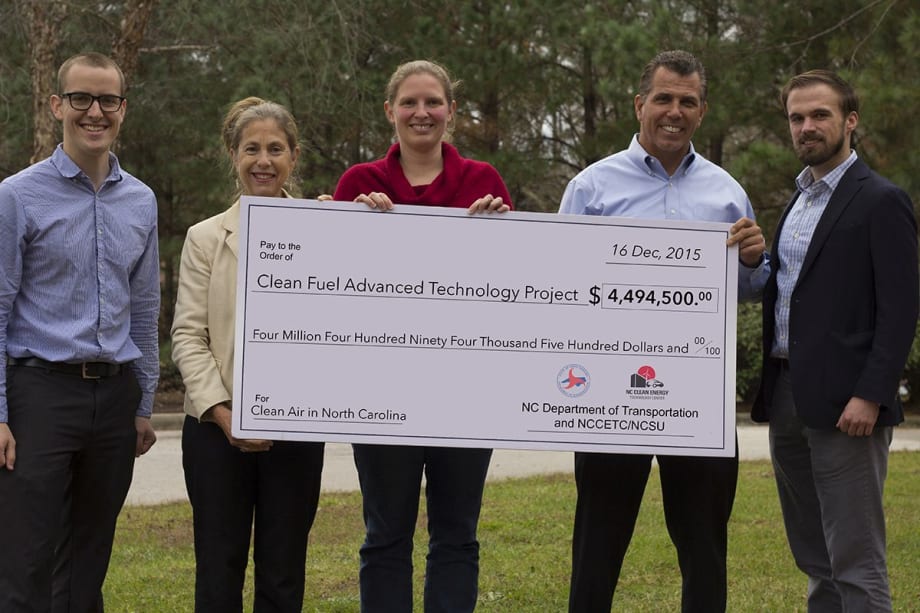
NC Clean Energy Technology Center Transportation Team (l to r): Matt Abele, Anne Tazewell, Heather Brutz, Rick Sapienza, and Mike Terreri
NC Clean Energy Technology Center Transportation Team (l to r): Matt Abele, Anne Tazewell, Heather Brutz, Rick Sapienza, and Mike Terreri
The North Carolina Department of Transportation (N.C. DOT) will provide the N.C. Clean Energy Technology Center (NCCETC) at North Carolina State University with a two-year $4.49 million award for the Clean Fuel Advanced Technology (CFAT) project, part of which will be used to develop a professional Smart Fleet management training program that will supply tools and information to increase fleet efficiency through the use of low carbon fuels, technologies, practices, and policies.
The CFAT project focuses on improving air quality in the 24 North Carolina counties that are in non-attainment or maintenance status with regards to National Ambient Air Quality Standards.
The project centers around three primary activities: education and outreach, emission reduction sub-awards, and recognition of exemplary efforts among fleets and organizations reducing their transportation-related emissions.
The award will also help fund the expansion of a public education campaign to increase awareness of cleaner transportation options through statewide television, radio, and billboard advertising directing users to the consumer-oriented website FuelWhatMatters.org.
The beginning of this new CFAT phase coincides with the announcement of a request for proposal period for $1.5 million in funding available to governments, businesses, and/or non-profit applicants for transportation technology emission reduction projects.
Eligible projects include biodiesel, E-85 ethanol, electric, hybrid electric, natural gas, propane vehicles, and refueling/recharging equipment. Vehicle telematics, diesel retrofits, and idle reduction technologies are also eligible for CFAT grant funding.
Funding assistance is allocated in the form of a reimbursement, which can cover up to 80% of the project cost. In order to be eligible, a project must reduce transportation-related emissions within the 24 eligible counties with the exception of natural gas refueling equipment and electric vehicle recharging infrastructure which, in accordance with federal guidelines, can be located anywhere within the state.
More Green Fleet
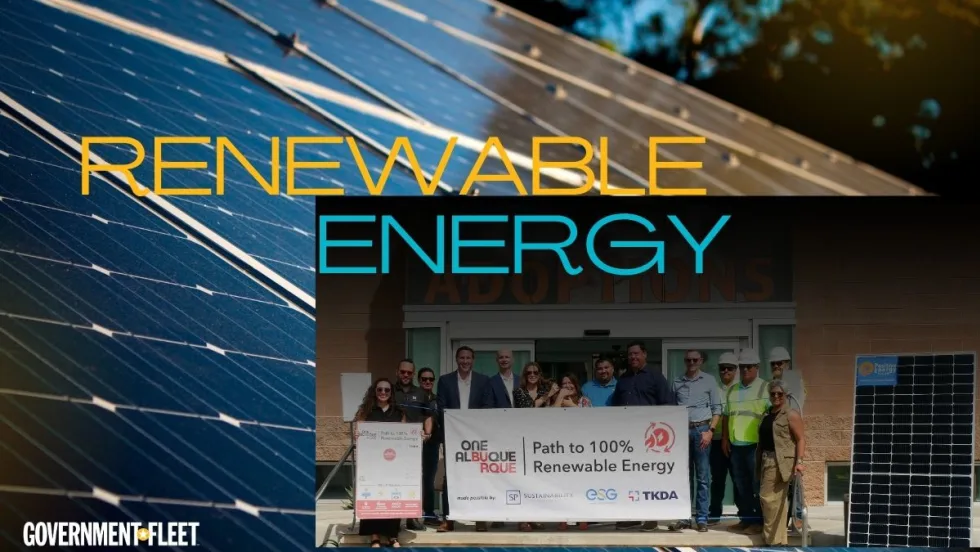
Sustainability Partners, Energy Systems Group Help Albuquerque Close the Gap on its 100% Renewable Energy Goal
The eight-site, 6 MW solar project has advanced the city toward 100% renewable energy for municipal operations.
Read More →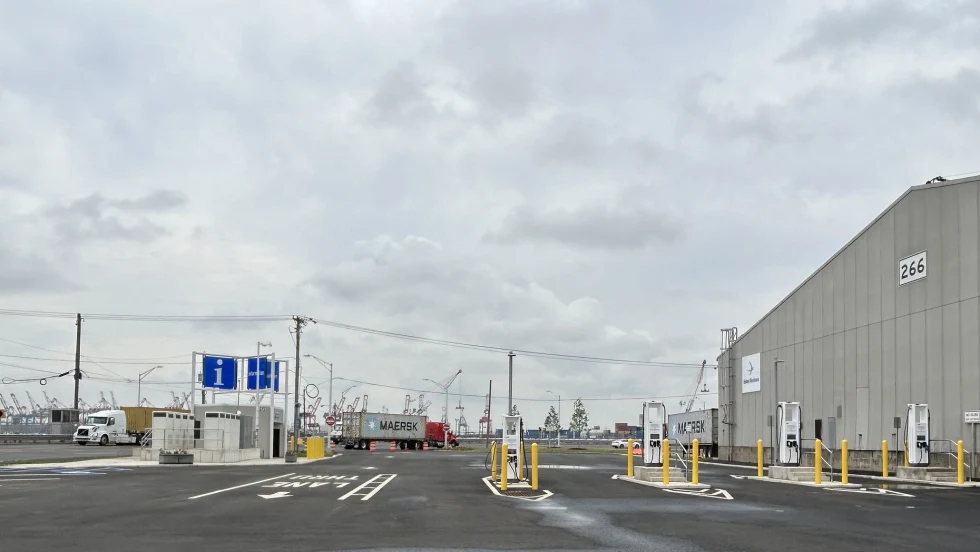
Port Authority and CALSTART Launch $45 Million Electric Truck and Charging Programs
The programs aim to boost sustainable operations across the East Coast's busiest seaport.
Read More →
Moving Government Fleets Beyond the Vehicle Purchase: EV as a Service
A discussion on how EVaaS is moving beyond pilot programs and what fleets should consider before beginning a larger deployment.
Read More →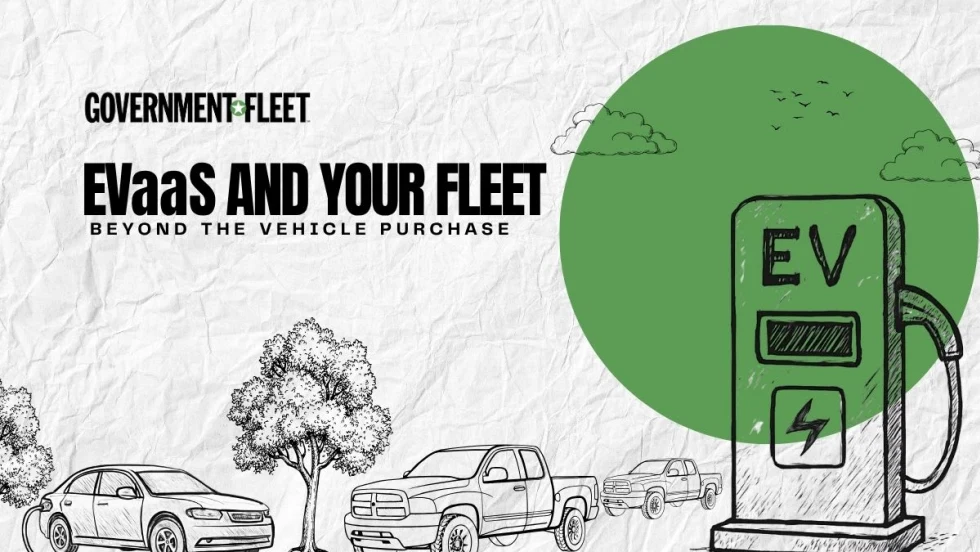
Moving Government Fleets Beyond the Vehicle Purchase: EV as a Service
As fleets move beyond small EV pilots, Sustainability Partners CEO Adam Cain explains how EVaaS can address the infrastructure and long-term planning required for larger deployments.
Read More →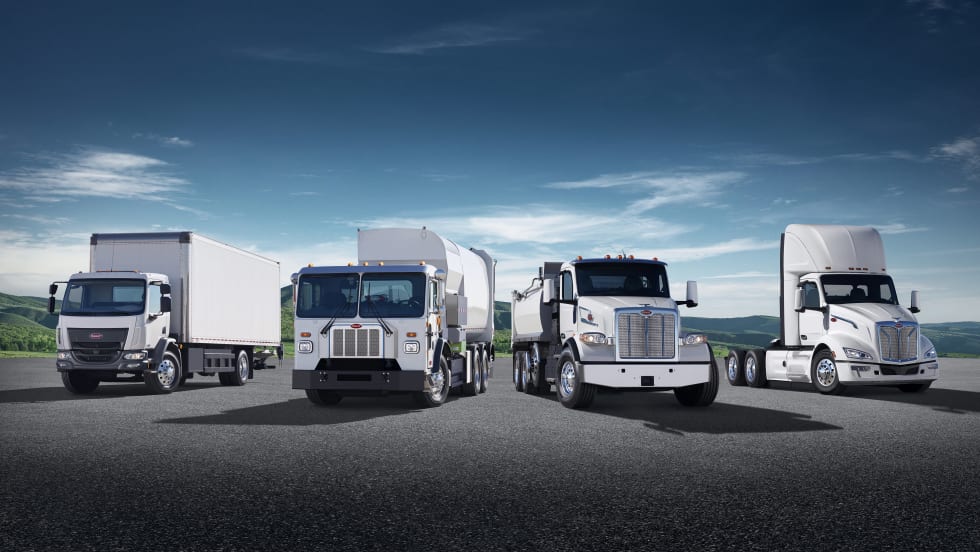
Peterbilt Expands Sourcewell Partnership with Electric Vehicle Lineup
The agreement aims to provide streamlined procurement of Peterbilt trucks for government, education, nonprofit and tribal organizations across the United States and Canada.
Read More →
EV Adoption & Charging Challenges
Where is your fleet in the journey of vehicle electrification? If you're still looking for answers to fleet electrification you've come to the right place.
Read More →
Hawaii Passes Clean Fuel Policy
Hawaii lawmakers passed clean fuel legislation that could support renewable natural gas production, biogas-powered transportation, and lower-carbon fueling options for public and commercial fleets.
Read More →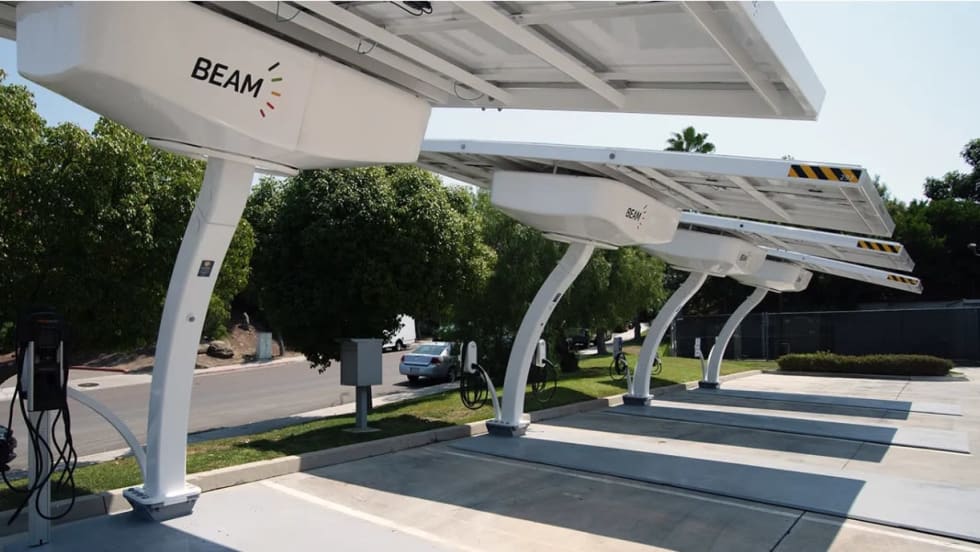
Stanislaus County Deploys Ten Beam Global EV ARC Systems to Support County Fleet Electrification
Stanislaus County deployed 10 off-grid solar-powered EV charging systems and a mobile charging trailer from Beam Global to support its electric fleet operations and emergency response flexibility.
Read More →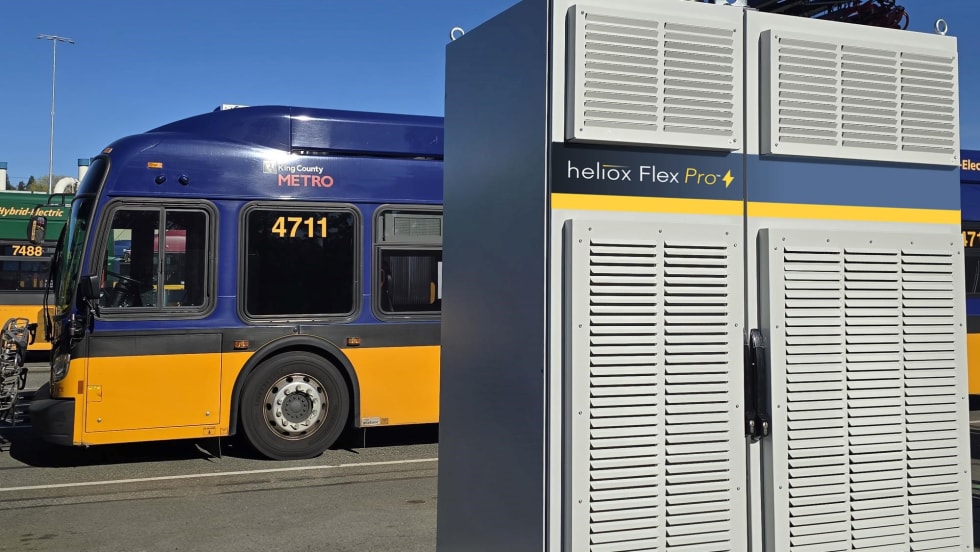
Heliox Pilots 480-kW Bus Charger with King County Metro
King County Metro is piloting Heliox’s new 480-kW Flex Pro charger to support expansion of its battery-electric bus fleet and depot charging infrastructure. The compact charging system supports pantograph and plug-in charging configurations for high-density transit operations.
Read More →