




Long Beach Debuts First Electric Refuse Trucks in Fleet Pilot
The City of Long Beach, California, has unveiled its first two all-electric garbage trucks, marking the start of a pilot program as the city evaluates a broader transition away from compressed natural gas.
April 24, 2026
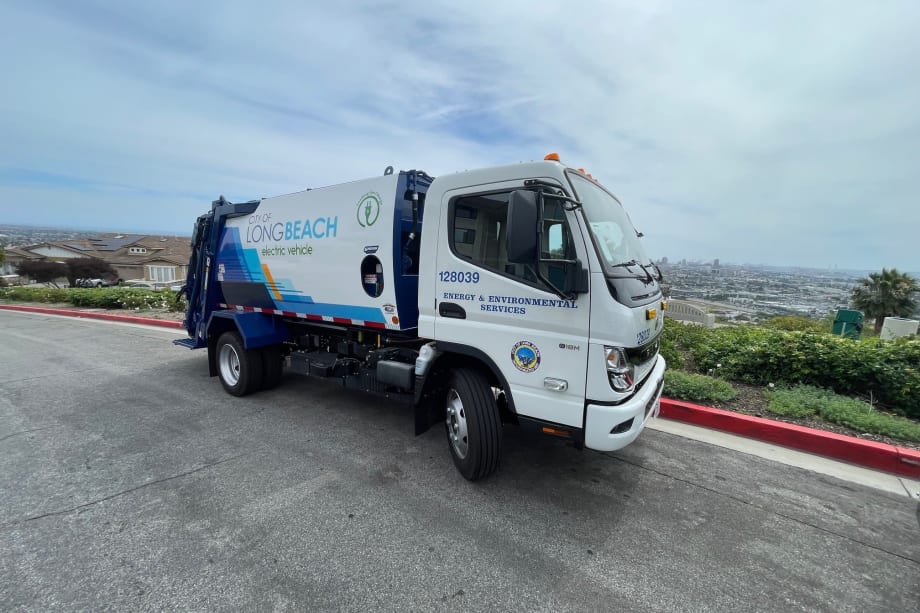
Long Beach unveiled its first two all-electric garbage trucks on April 22, 2026.
3 min to read
- Long Beach, California, has introduced its first two electric garbage trucks as part of a new pilot program.
- The initiative is designed to explore alternatives to the currently used compressed natural gas-powered vehicles.
- The pilot program marks the city's initial steps toward potentially adopting a fully electric refuse fleet.
*Summarized by AI
The City of Long Beach, California, has unveiled its first two all-electric garbage trucks, marking the start of a pilot program as the city evaluates a broader transition away from compressed natural gas.
According to Long Beach Fleet Services Manager Eric Winterset, the city procured the two electric rear-loader refuse trucks two years ago. Long Beach also has an electric side-loader on order that is expected to arrive in early September 2026. He said the goal of the pilot is to test the vehicles “for every route these units have in the city for evaluation, operational efficiency, and operational duty.”
Pilot Program Puts Trucks to the Test
The pilot will allow the city to study how the trucks perform on different routes before determining next steps. Long Beach’s refuse fleet currently includes 89 garbage trucks serving nearly 120,000 homes each week.
Winterset said the fleet will be watching closely to see whether the new trucks can meet daily operational demands and required duty cycles. The city plans to use telematics data to evaluate performance across routes and determine whether the electric trucks can match the capability of the current CNG units.
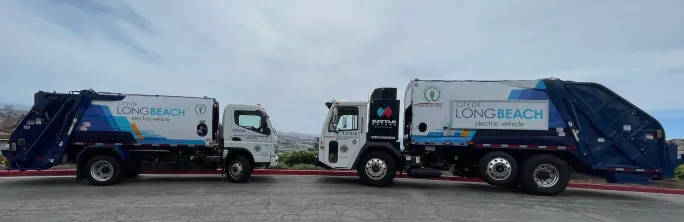
Long Beach’s refuse fleet has 89 garbage trucks that serve nearly 120,000 homes each week.
Credit:
City of Long Beach
Long Beach’s mild climate is not expected to be a major factor in performance, but Winterset said certain other operating conditions will provide a clearer test. Hills in some parts of the city, along with routes carrying heavier refuse tonnage, larger numbers of trash cans, and longer distances from the hub, will all be part of the evaluation. He said studying those conditions extensively will help the city better understand how to scale up its electric fleet in the future.
City Weighs Next Steps for Expansion
City officials aim to transition the full refuse fleet to electric vehicles, though the shift will depend on the life cycles of the city’s current CNG units. According to Winterset, the full fleet could be replaced with EVs by about 2034.
A June 2025 city memo said Long Beach had already ordered 42 new natural gas trucks and planned to begin ordering 47 electric trucks starting in 2027. The first order of 13 electric trucks is expected to enter service in 2029.
Each electric refuse truck is expected to cost about $750,000 to $850,000, depending on brand, model, and body configuration.
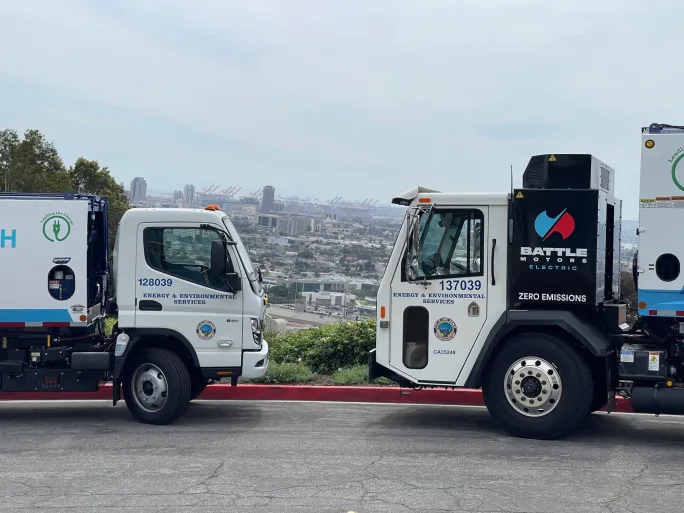
The goal is to transition the full refuse fleet to electric vehicles over a period of time
Credit:
City of Long Beach
To support the rollout, Long Beach currently has two Level 3 chargers on its campus where the new trucks are housed. According to Winterset, the 10-port chargers will be built at Fleet Services, where all refuse trucks are parked.
He said the city is breaking ground on 10 additional Level 3 chargers this summer, with another 16 planned for summer 2027. The city is aiming to have that infrastructure in place in time for the next 13 electric refuse trucks to enter service.
Reliability, Availability Key to Expansion
Winterset also said staff have already received training not only on basic EV safety, but also OEM-specific training tied to the vehicles the city is procuring. He noted that the new trucks use Battle Motors cab and chassis, and said Battle Motors has already conducted extensive training for the staff who will repair them.
Looking ahead, Winterset said the city will need to see both “reliability and availability” from the pilot in order to feel confident expanding the program. He added that the trucks also need to be consistently available for use. If they are out of service too often, he said, it undercuts their purpose because operators need the vehicles to perform their job duties each day.
“We need these to operate as close to how a CNG unit operates in our current conditions,” he said. “If we can get a one-for-one ratio and we have the infrastructure to charge them, it would be a win for everyone.”
More Green Fleet
Sustainability Partners, Energy Systems Group Help Albuquerque Close the Gap on its 100% Renewable Energy Goal
The eight-site, 6 MW solar project has advanced the city toward 100% renewable energy for municipal operations.
Read More →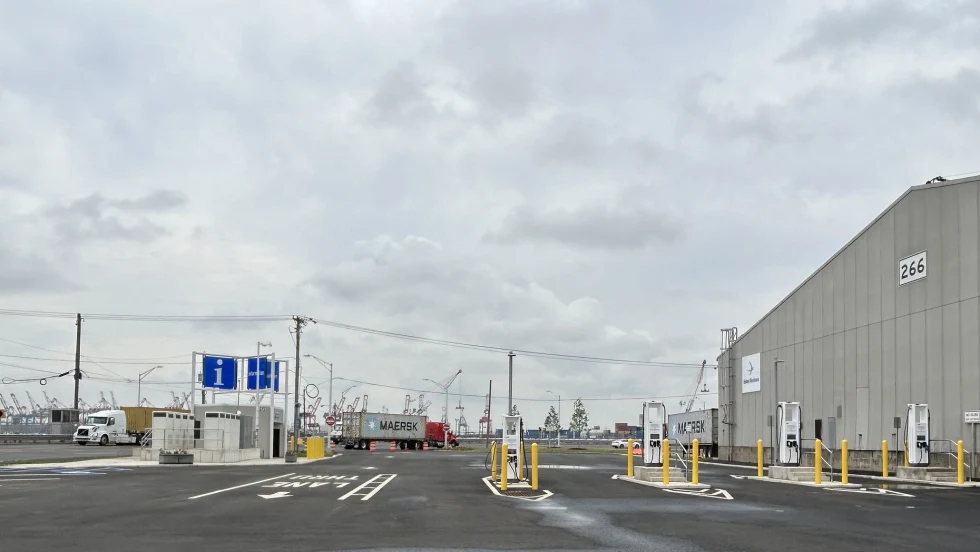
Port Authority and CALSTART Launch $45 Million Electric Truck and Charging Programs
The programs aim to boost sustainable operations across the East Coast's busiest seaport.
Read More →
Moving Government Fleets Beyond the Vehicle Purchase: EV as a Service
A discussion on how EVaaS is moving beyond pilot programs and what fleets should consider before beginning a larger deployment.
Read More →
Moving Government Fleets Beyond the Vehicle Purchase: EV as a Service
As fleets move beyond small EV pilots, Sustainability Partners CEO Adam Cain explains how EVaaS can address the infrastructure and long-term planning required for larger deployments.
Read More →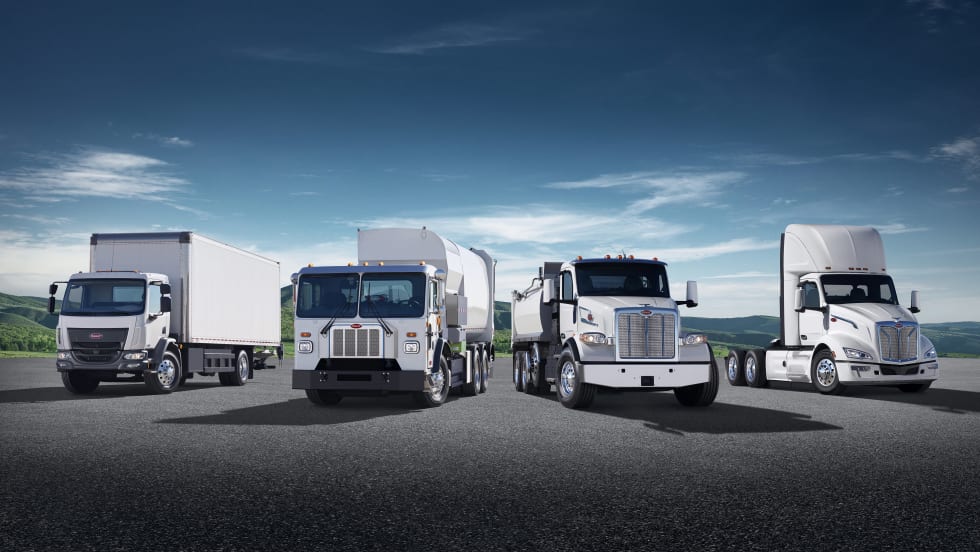
Peterbilt Expands Sourcewell Partnership with Electric Vehicle Lineup
The agreement aims to provide streamlined procurement of Peterbilt trucks for government, education, nonprofit and tribal organizations across the United States and Canada.
Read More →
EV Adoption & Charging Challenges
Where is your fleet in the journey of vehicle electrification? If you're still looking for answers to fleet electrification you've come to the right place.
Read More →
Hawaii Passes Clean Fuel Policy
Hawaii lawmakers passed clean fuel legislation that could support renewable natural gas production, biogas-powered transportation, and lower-carbon fueling options for public and commercial fleets.
Read More →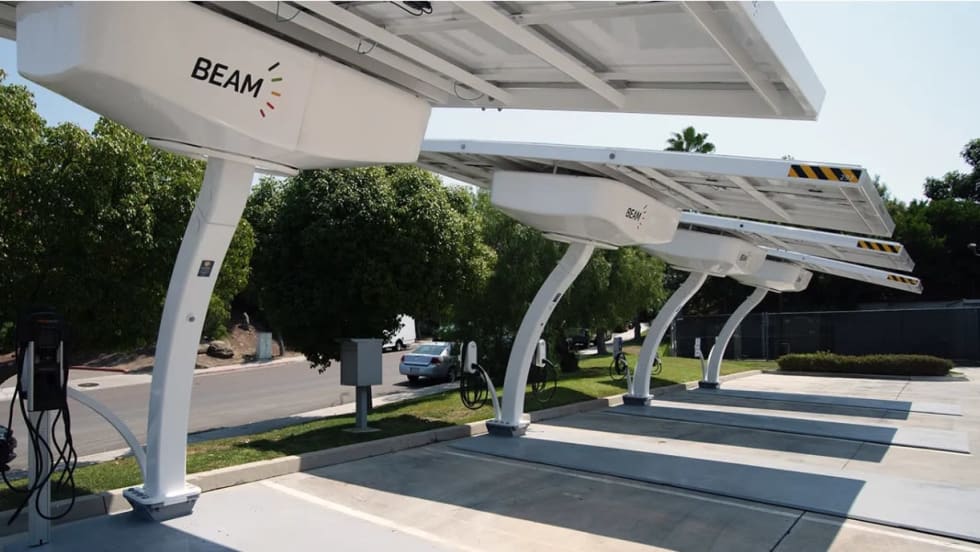
Stanislaus County Deploys Ten Beam Global EV ARC Systems to Support County Fleet Electrification
Stanislaus County deployed 10 off-grid solar-powered EV charging systems and a mobile charging trailer from Beam Global to support its electric fleet operations and emergency response flexibility.
Read More →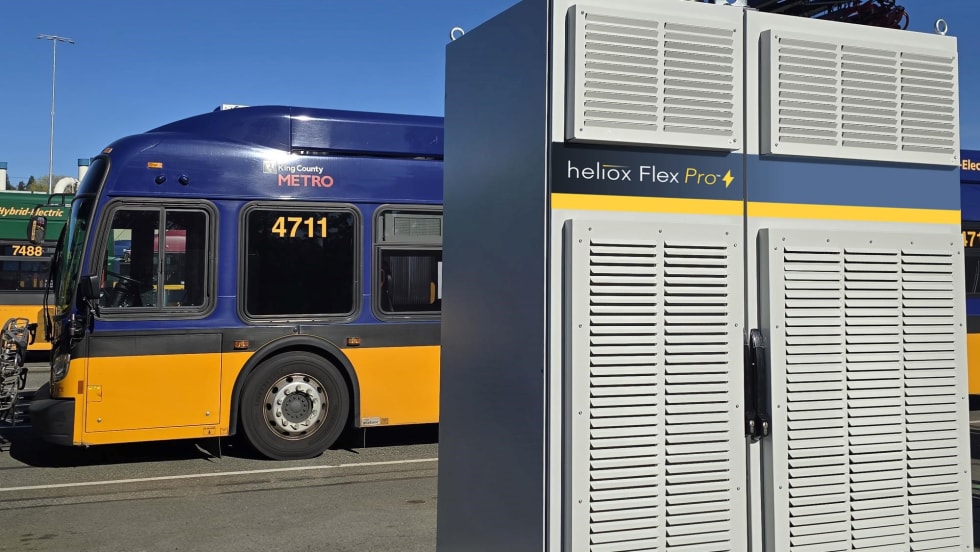
Heliox Pilots 480-kW Bus Charger with King County Metro
King County Metro is piloting Heliox’s new 480-kW Flex Pro charger to support expansion of its battery-electric bus fleet and depot charging infrastructure. The compact charging system supports pantograph and plug-in charging configurations for high-density transit operations.
Read More →