




Minn. County's Solar Array to Feed Fleet Facility’s Electricity Use
Minnesota's Dakota County will pay $130,000 for the $1.3 million installation by taking advantage of incentive programs for renewable energy, and it should make that money back in energy savings in 12 to 14 years
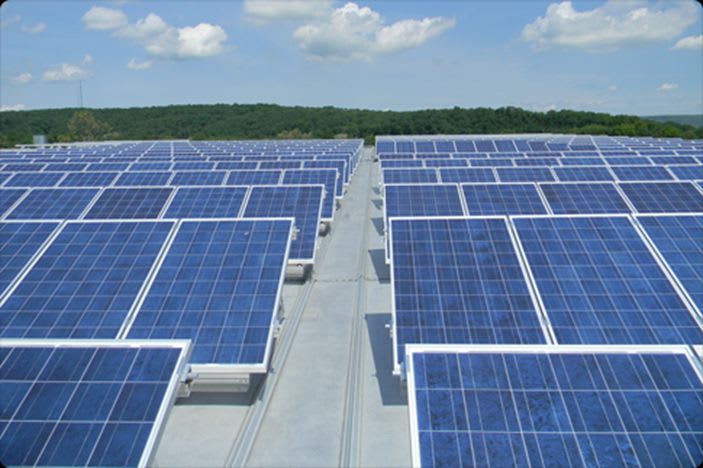
This example of a solar array shows how the array will be mounted on the roof of the fleet storage building.
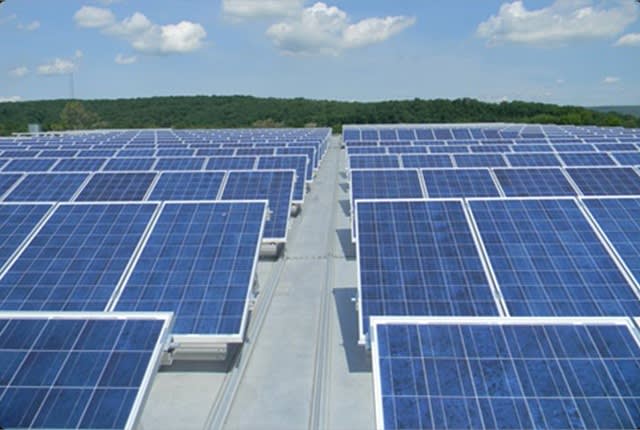
This example of a solar array shows how the array will be mounted on the roof of the fleet storage building.
Minnesota's Dakota County has approved the installation of four solar panel arrays that will be used to provide energy to county buildings, including the fleet maintenance building.
The county will pay $130,000 for the $1.3 million installation by taking advantage of incentive programs for renewable energy, and plans to recoup the money in energy savings within 12 to 14 years, said Taud Hoopingarner, the operations management director of the Physical Development Division.
It wasn't until the state changed its laws on third-party financing that Hoopingarner was able to make the case for purchasing the arrays based upon a reasonable return on investment.
Through its contact with Newport Partners, the county is leasing a portion of its facilities to construct and operate the system, but it will treat the agreement as a transfer of ownership for tax purposes. The project makes use of the Xcel Energy solar rewards program, which provides a rebate per kilowatt produced, and federal tax credits acquired by Newport Partners. The lease-purchase agreement gives the county an option to own the system after six years.
Newport will install three arrays on the roof of the fleet storage building and one ground-mounted array in the same campus. Each array provides 40 kWh of power each to fleet storage, a radio tower, the transportation facilities, and the communications center.
The four buildings use a cumulative total of 1.4 million kWh per year for an annual cost of approximately $143,402. With the 160 kWh of solar panels, Hoopingarner estimates the County will save $15,613 in the first six years and $1.2 million over 40 years.
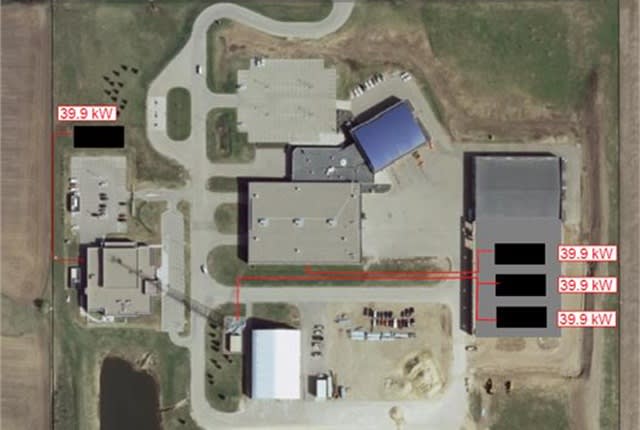
Three roof-mounted arrays will serve the fleet storage, radio tower, and transportation facilities. One ground-mounted array will serve the communications center.
The savings go back into the county's electricity budget rather than the budgets of individual departments.
"All expenses from our buildings are budgeted in the Facilities Management Department," Hoopingarner explained. "Electricity for all county buildings is paid for out of one line item."
The solar array will power buildings, as well as vehicles. The fleet owns two Chevrolet Volts and two Vantage EV 1000 electric pickups. The fleet department will charge two vehicles with the array.
By Thi Dao
More Operations

Is Keeping Older Fleet Vehicles Really Saving Money?
Is keeping vehicles longer saving money, and what happens when a diagnostic test points to the wrong fix?
Read More →
How Smart Fleet Strategy Can Help Local Government Agencies Do More with Less
Keeping a vehicle longer may ease this year’s budget, but what does it cost the next one? A closer look at fleet decisions can reveal opportunities to reduce spending while protecting essential services.
Read More →
Connect with Government Fleet on LinkedIn
From industry news and fleet management strategies to conversations with peers, Government Fleet's LinkedIn page offers public-sector fleet professionals another way to stay informed and connected.
Read More →
Town of Queen Creek Named Most Successful Fleet Award Winner of Inaugural RTA Fleet Success Awards
Five fleets were honored at RTA Connect 2026 in Chicago for excellence across resource efficiency, intentional culture, risk management, and stakeholder satisfaction.
Read More →
A buyer's guide to fleet management software in 2027
Buying fleet management software in 2027 means looking beyond features and price. As fleet operations, technology and expectations evolve, this guide explores what today’s fleet professionals should consider when choosing a system that can deliver value now and adapt to what comes next.
Read More →
Hazard Alerts, Fleet Car Sales Rise and a New Shuttle Concept
Fleet car sales doubled, but the bigger picture tells a different story in this week’s roundup.
Read More →
How St. Johns County Turned Fleet Data Into Better Replacement Decisions
St. Johns County, Florida, had fleet data, but turning it into reliable decision guidance was another matter. Instead of starting over with a new fleet management system, the county connected existing tools and built a scoring system that gives managers an objective look at fleet health.
Read More →
Fleet Forward Conference Introduces One-Day Passes for 2026
New one-day registration lets fleet professionals attend Tuesday, Wednesday, or Thursday, with passes available for $249.
Read More →
ENC Unveils its ZAVIR Medium-Duty Shuttle
Two variants of the concept shuttles were revealed: a low-floor configuration and a high-floor configuration.
Read More →
Could Your Next Fleet Technician Start as an Intern?
What if your next technician hasn’t worked in a fleet shop yet? What fleets are doing to free up time.
Read More →