




MEMA NorCal Holds First Meeting
The Northern California Chapter of the Municipal Equipment Maintenance Association (MEMA NorCal) held its first event at Sonoma Raceway in May.
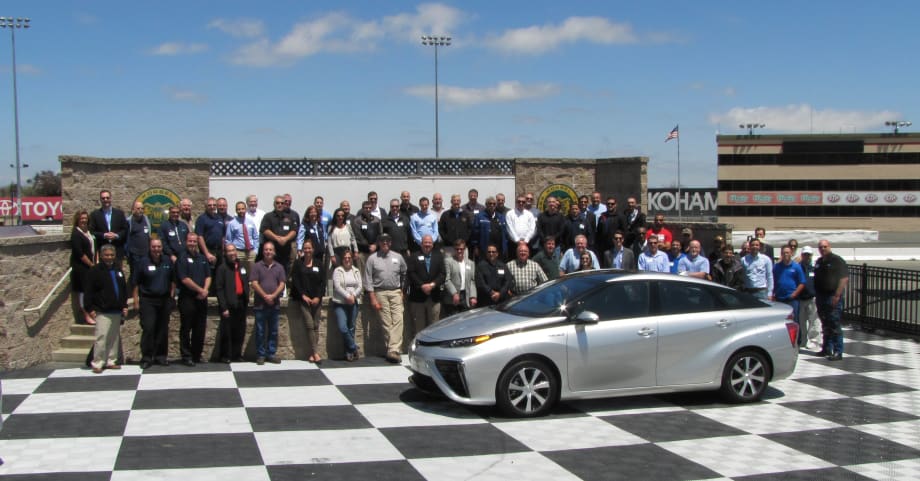
MEMA NorCal attendees awaiting their turn on the NASCAR course. Photo courtesy of David Worthington.
MEMA NorCal attendees awaiting their turn on the NASCAR course. Photo courtesy of David Worthington.
The newly created Northern California Chapter of the Municipal Equipment Maintenance Association (MEMA NorCal) held its first event at Sonoma Raceway on May 19.
More than 120 fleet professionals and industry vendor partners attended, and it had been sold out nearly a month in advance.
Paul Jontig and Bruce Derby from Toyota made a presentation on the soon-to-be-released hydrogen fuel cell vehicle, the Toyota Mirai, and the company’s commitment to fuel cell technology for the future. Attendees were also able to test drive the zero-emission Mirai.
Other presenters included: Dawn Saunders from Verizon, who spoke about the benefts of telematics in public fleets; Joe Keefe from AssetWorks, who spoke about the company's suite of software and hardware solutions for municipal fleets; Jon Littler from GovDeals.com about the benefits and ease of use of online auction services.
Additionally, Lisa Chiladakis from the California Air Resources Board and the Plug-in Electric Vehicle Collaborative gave a presentation on all-electric and plug-in electric hybrids and grant funding; Randy Wilde, from the Center for Sustainable Energy, gave a presentation on what incentives are available and how simple the process is to apply for funding; and Craig Weaver, a California Highway Patrol Motor Carrier specialist, spoke about the upcoming changes to the California Basic Inspection of Terminals (BIT) Program beginning in January 2016.
Professional motorsports drivers took attendees for a ride in stock Toyota Camry models around the same road course layout that NASCAR will compete on during the Toyota/Save Mart 350 race weekend.
More Operations

What Can Disappear After a Fleet Crash?
This week, we look at drone footage, what fleets should document before repairs begin, and share a quick poll.

Does Your Government Fleet Handle Refuse and Waste Operations? Take Our Poll
Government Fleet wants to hear from public-sector fleet professionals about their responsibilities for refuse collection and waste management equipment.

Fleet Replacement Decisions, Waste Fleet Technology and the GFX Deadline
Is your next vehicle the right fit, can your records settle a missed pickup dispute, and what could your fleet teach others at GFX 2027?

Is Delaying Fleet Replacement Really Saving Money?
Could delaying replacement cost your fleet more than it saves? This week’s recap takes a closer look, plus an update on GFX 2027.

What Government Fleets Are Missing About Their True Costs
What are fleet budgets missing, and how can agencies use the data they already collect to make a stronger case for change?

Rethinking Fleet Decisions From the Budget Office to the Shop
This October we looked back at how public fleets are reconsidering familiar processes and using what they learn to make better decisions.

Who Owns the Message on a Refuse Truck?
Refuse trucks can carry public messages into neighborhoods, but keeping those messages current takes planning and clear responsibility.

Who Deserves Fleet Recognition and What Could You Teach at GFX?
Who helped shape your fleet career, and what have you learned that could help someone else?

What’s Haunting Public Sector Fleets?
Public sector fleet challenges rarely happen in isolation, and addressing one often means understanding how it connects to another.

Is Keeping Older Fleet Vehicles Really Saving Money?
Is keeping vehicles longer saving money, and what happens when a diagnostic test points to the wrong fix?