




Marion County, Fla., Sheriff’s Dept. Buys Ford Interceptors for Fleet
OCALA, FL – The Marion County, Fla., Sheriff’s Office has received the first vehicle in an initial delivery of 36 new Ford Police Interceptor vehicles equipped with 3.5L EcoBoost V-6 engines.
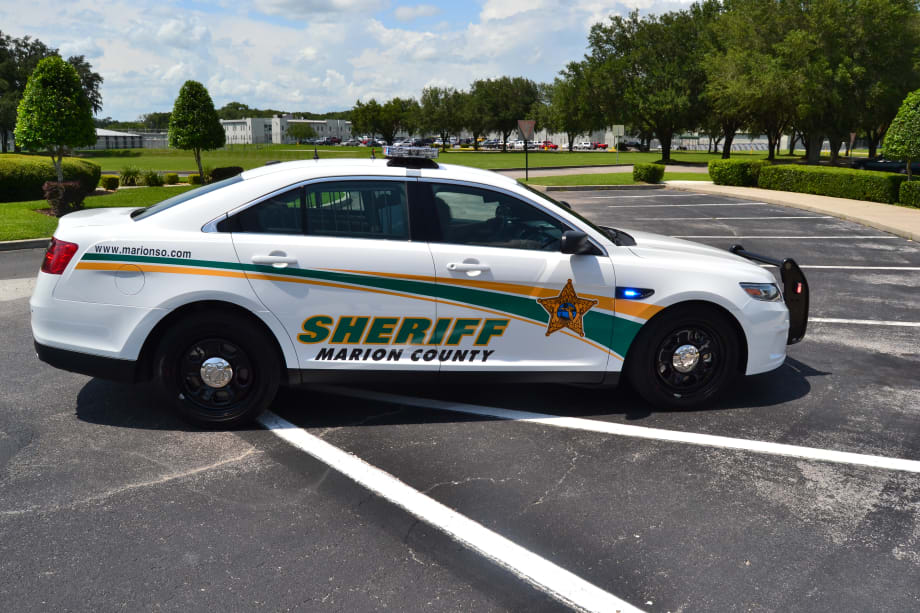
The Sheriff's Office's new Ford Police Interceptor sedan. Photos courtesy Marion County Sheriff's Office.
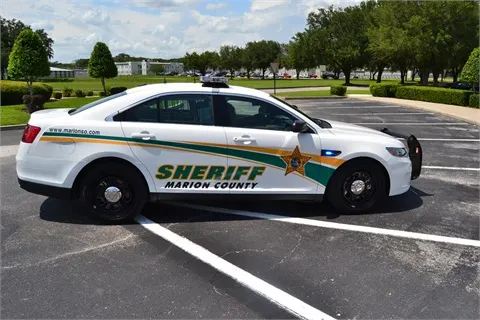
The Sheriff's Office's new Ford Police Interceptor sedan. Photos courtesy Marion County Sheriff's Office.
OCALA, FL – The Marion County, Fla., Sheriff’s Office has received the first vehicle in an initial delivery of 36 new Ford Police Interceptor vehicles equipped with 3.5L EcoBoost V-6 engines. The Sheriff’s Office stated it is receiving 4 to 5 new Police Interceptors each week and will have 60 to 70 new vehicles within a few months. Government Fleet magazine spoke with Judge Cochran, Marion County Sheriff’s Office public information officer, about why the agency went with the new version of the Ford Interceptor.
“Although this engine boasts 365 horsepower, it is estimated to provide at least a 20% increase in our current fuel mileage,” Cochran said.
The Sheriff’s Office stated that this improved fuel economy over previous vehicles in the Sheriff’s Office’s fleet could result in an estimated savings of $500,000 per year once the entire fleet is upgraded to the new models. The County will be upfitting the new vehicles, adding radios, computers, graphics, and other equipment.
“While being able to keep all of the options that are available on the current Crown Victoria Interceptor models, the committee decided to add a few more options that are now available with the new Police Interceptors,” Cochran said. “One option is a driver-side ballistic door panel. Another option ordered with the new vehicles is back-up sensors that will warn officers when they are near anything when the vehicle is in reverse.”
Government Fleet magazine wanted to know what the Sheriff’s patrol officers thought of the vehicle and whether they had a chance to test it. Cochran said the Sheriff’s Office test drove the Ford models in Orlando during the second week in December, 2011.
“Team members were able to put the Ford models through the rigors of a road course,” Cochran said. “A MCSO S.W.A.T. member drove his current patrol vehicle and was able to fit all of his patrol and S.W.A.T. equipment in the new sedan with space to spare. The vehicle they picked as the best for handling and performance was the Police Interceptor sedan all-wheel drive with the 3.5L V6 EcoBoost engine. It was described as being a ‘game-changer’ by one of the deputies.”
To pay for the vehicles, the County Commission earmarked $442,000 to replace patrol vehicles in FY 2009-2010. In FY 2010-2011, the Sheriff received approval that all returned funds, $2,154,107 in the MSTU (Municipal Service Taxing Unit) budget and $702,515 in County-wide funds, be earmarked for replacement vehicles. The $442,000 went to pay for 14 Ford Police Interceptors and two Ford Police Interceptor Utility models. One of each vehicle type will be used for the Sheriff’s K-9 unit and the Sheriff’s Office will test them to determine which best fits that fleet application.
By Greg Basich
Updated with additional quotes and photos on 6/15/2012, 3:36 pm.
More Operations

What’s Haunting Public Sector Fleets?
Public sector fleet challenges rarely happen in isolation, and addressing one often means understanding how it connects to another.
Read More →
Is Keeping Older Fleet Vehicles Really Saving Money?
Is keeping vehicles longer saving money, and what happens when a diagnostic test points to the wrong fix?
Read More →
How Smart Fleet Strategy Can Help Local Government Agencies Do More with Less
Keeping a vehicle longer may ease this year’s budget, but what does it cost the next one? A closer look at fleet decisions can reveal opportunities to reduce spending while protecting essential services.
Read More →
Connect with Government Fleet on LinkedIn
From industry news and fleet management strategies to conversations with peers, Government Fleet's LinkedIn page offers public-sector fleet professionals another way to stay informed and connected.
Read More →
Town of Queen Creek Named Most Successful Fleet Award Winner of Inaugural RTA Fleet Success Awards
Five fleets were honored at RTA Connect 2026 in Chicago for excellence across resource efficiency, intentional culture, risk management, and stakeholder satisfaction.
Read More →
A buyer's guide to fleet management software in 2027
Buying fleet management software in 2027 means looking beyond features and price. As fleet operations, technology and expectations evolve, this guide explores what today’s fleet professionals should consider when choosing a system that can deliver value now and adapt to what comes next.
Read More →
Hazard Alerts, Fleet Car Sales Rise and a New Shuttle Concept
Fleet car sales doubled, but the bigger picture tells a different story in this week’s roundup.
Read More →
How St. Johns County Turned Fleet Data Into Better Replacement Decisions
St. Johns County, Florida, had fleet data, but turning it into reliable decision guidance was another matter. Instead of starting over with a new fleet management system, the county connected existing tools and built a scoring system that gives managers an objective look at fleet health.
Read More →
Fleet Forward Conference Introduces One-Day Passes for 2026
New one-day registration lets fleet professionals attend Tuesday, Wednesday, or Thursday, with passes available for $249.
Read More →
ENC Unveils its ZAVIR Medium-Duty Shuttle
Two variants of the concept shuttles were revealed: a low-floor configuration and a high-floor configuration.
Read More →