




Loveland Reduces Fleet Through Car-Sharing Technology
LOVELAND, CO - The City of Loveland will soon be reducing its fleet of vehicles through the implementation of a car-sharing program, expected to save the City more than $300,000 annually.
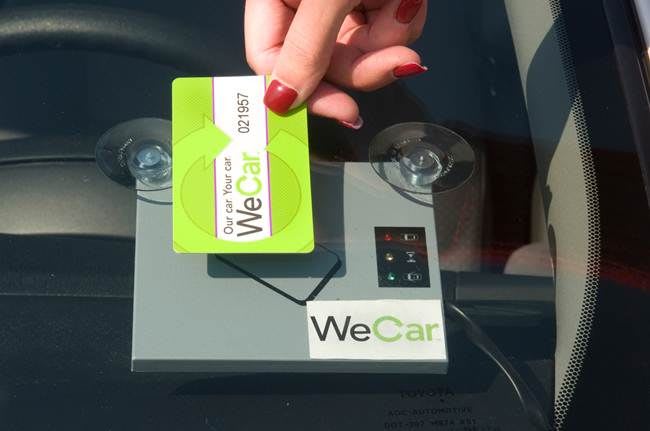
Drivers swipe a special WeCar card to access vehicles they've already reserved.
Drivers swipe a special WeCar card to access vehicles they've already reserved.
LOVELAND, CO - The City of Loveland will soon be reducing its fleet of vehicles through the implementation of a car-sharing program, expected to save the City more than $300,000 annually, according to a release from the City.
A total of about 40 aging sedans, pickups, and vans from the City fleet will be replaced by 15 shared vehicles leased from Enterprise Fleet Management and equipped with the same automated rental technology used in Enterprise Rent-A-Car’s popular car-sharing program, WeCar by Enterprise. The City’s Fleet Management division identified a number of low-use vehicles driven less than 5,000 miles per year.
Drivers reserve cars online for a few hours or a few days and access vehicles from a parking place adjacent to the employee’s building. The driver swipes a special membership identification card across the windshield. The sensor recognizes the card, records the day and time, opens the door, and allows access to the car’s ignition key in the car’s interior.
When the driver returns the vehicle, he or she places the key inside the car, exits, and again swipes the card in front of the sensor. The sensor locks the car and records the duration and mileage of the use.
The system automatically charges the employee’s budget for the vehicle’s use, based on time and/or mileage. The user’s departmental budget is charged accordingly and those monies are applied toward the car’s overall lease payment. The charge-back to the user will range from $25-60 per day depending on the type of vehicle used.
Enterprise Fleet Management is a full-service fleet management business for governmental entities and companies with medium-size fleets. The City of Loveland selected Enterprise because of its technical capability, experience, business and financial strength to establish, manage, develop and grow a shared motor pool program.
“The program will enable greater and more efficient use of fewer vehicles,” said Steve Kibler, fleet manager for the City of Loveland. “Our shared motor pool will enable us to reduce overhead, maintenance, and insurance expenses while providing safe, reliable, and fuel-efficient transportation for the City employees who use these vehicles. All maintenance and repairs are performed by Enterprise Fleet Management’s local independent contractors so no additional City personnel are needed to perform this overhead expense,” Kibler said. Future expansion of the program to add hybrid and zero emission plug-in vehicles is likely. Kibler said the City is also looking to expand the technology to redundant construction equipment such as air compressors, backhoes, loaders, dump trucks, etc.
“In addition to having the purchasing power to obtain vehicles at the best possible prices and terms, the leasing agreement with Enterprise offers maintenance management, risk management, and vehicle registration and reporting, as well as a fuel card program that automatically monitors fuel purchases and mileage for each vehicle,” Kibler said.
More Operations

Is Keeping Older Fleet Vehicles Really Saving Money?
Is keeping vehicles longer saving money, and what happens when a diagnostic test points to the wrong fix?
Read More →
How Smart Fleet Strategy Can Help Local Government Agencies Do More with Less
Keeping a vehicle longer may ease this year’s budget, but what does it cost the next one? A closer look at fleet decisions can reveal opportunities to reduce spending while protecting essential services.
Read More →
Connect with Government Fleet on LinkedIn
From industry news and fleet management strategies to conversations with peers, Government Fleet's LinkedIn page offers public-sector fleet professionals another way to stay informed and connected.
Read More →
Town of Queen Creek Named Most Successful Fleet Award Winner of Inaugural RTA Fleet Success Awards
Five fleets were honored at RTA Connect 2026 in Chicago for excellence across resource efficiency, intentional culture, risk management, and stakeholder satisfaction.
Read More →
A buyer's guide to fleet management software in 2027
Buying fleet management software in 2027 means looking beyond features and price. As fleet operations, technology and expectations evolve, this guide explores what today’s fleet professionals should consider when choosing a system that can deliver value now and adapt to what comes next.
Read More →
Hazard Alerts, Fleet Car Sales Rise and a New Shuttle Concept
Fleet car sales doubled, but the bigger picture tells a different story in this week’s roundup.
Read More →
How St. Johns County Turned Fleet Data Into Better Replacement Decisions
St. Johns County, Florida, had fleet data, but turning it into reliable decision guidance was another matter. Instead of starting over with a new fleet management system, the county connected existing tools and built a scoring system that gives managers an objective look at fleet health.
Read More →
Fleet Forward Conference Introduces One-Day Passes for 2026
New one-day registration lets fleet professionals attend Tuesday, Wednesday, or Thursday, with passes available for $249.
Read More →
ENC Unveils its ZAVIR Medium-Duty Shuttle
Two variants of the concept shuttles were revealed: a low-floor configuration and a high-floor configuration.
Read More →
Could Your Next Fleet Technician Start as an Intern?
What if your next technician hasn’t worked in a fleet shop yet? What fleets are doing to free up time.
Read More →