





Keep Reading: Georgia County’s CNG Trucks Increase Uptime
Indiana City Transitions to Compressed Natural Gas for Refuse Trucks
The CNG fuel system transfers high-pressure gas from the fuel tank through the fuel lines, where a pressure regulator reduces the pressure to a level compatible with the engine fuel injection system.
July 9, 2023
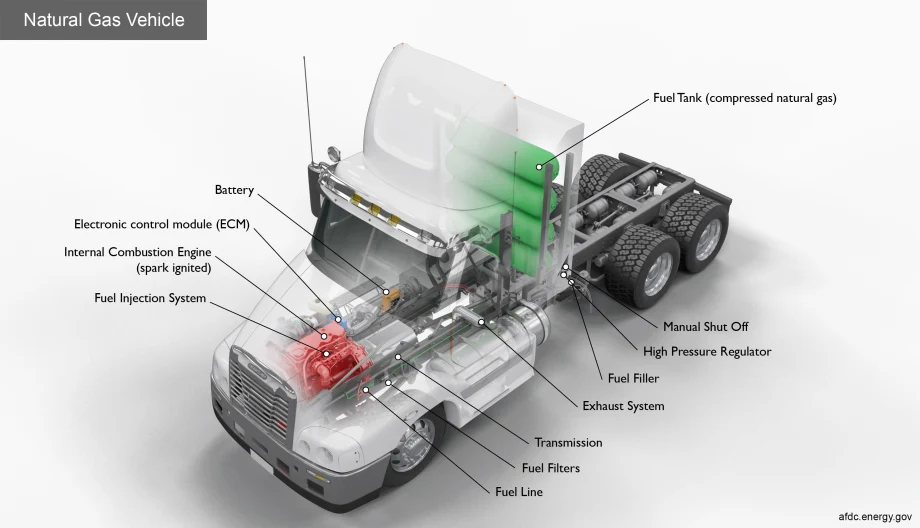
Heavy-duty compressed natural gas (CNG) vehicles work much like gasoline-powered vehicles with internal combustion engines.
Photo: US Department of Energy
2 min to read
The city of Portage is transitioning its fleet of refuse trucks to compressed natural gas (CNG). Thanks to a grant from the Indiana Volkswagen Environmental Mitigation Trust Fund, the city recently acquired seven CNG trucks.
To further support the transition to CNG trucks, an additional $4.55 million was allocated through the Northwestern Indiana Regional Planning Commission, according to a city council meeting. This funding enables the purchase of approximately four new CNG trucks in the coming year and the establishment of a CNG station later on. The allocation follows an 80/20 matching scheme.
Grants for Fueling Stations and Further Development
The CNG refuse trucks are already in service, with the sanitation department finalizing the process of receiving about $550,000 from the Volkswagen grants. The fleet has received two rear loaders, one mini rear loader, two grapple trucks, and two automation trucks.
A breakdown of the funds being spent includes: In 2024, roughly $1.3 million will be available for about four CNG trucks; in 2025 the CNG station will be built, estimated at about $770,000. About $180,000 is set for 2026 and in the year 2028 the remainder of the $2.2 million to be spent on CNG equipment for the city.
"That's a great revenue fund there that we've taken advantage of," Street Superintendent Randy Reeder said during the meeting.
How Do Compressed Natural Gas Class 8 Trucks Work?
Heavy-duty vehicles powered by compressed natural gas (CNG) operate in a manner similar to gasoline-powered vehicles equipped with internal combustion engines, according to The U.S. Department of Transportation. While many of these vehicles utilize spark-ignited natural gas systems, some employ compression injection systems resembling those found in diesel engines. In a spark-ignited system, the engine functions similarly to a gasoline engine.
To store natural gas, multiple fuel tanks or cylinders are typically located behind the cab of the vehicle. The CNG fuel system facilitates the transfer of high-pressure gas from the fuel tank through the fuel lines. A pressure regulator is employed to reduce the pressure to a level suitable for the engine's fuel injection system. Ultimately, the fuel is introduced into the intake manifold or combustion chamber, where it combines with air. Subsequently, it undergoes compression and ignition, facilitated by a spark plug.
More Operations

Could Your Next Fleet Technician Start as an Intern?
What if your next technician hasn’t worked in a fleet shop yet? What fleets are doing to free up time.
Read More →
What’s Slowing Your Fleet Down?
Could a change in how work gets done help your fleet return vehicles to service sooner?
Read More →
Can Public Fleets Trust the Data Driving Their Decisions?
Public fleets have more data than ever, but inconsistent records and missing information can still undermine maintenance, replacement, and cost decisions.
Read More →
How Phoenix Is Building Its Next Generation of Fleet Technicians
With more than 8,000 vehicles and pieces of equipment to maintain, the City of Phoenix could not afford to wait for fully trained technicians to walk through the door. Instead, they revamped their entire workforce strategy and showed how public fleets can create their own talent pipeline while preparing existing employees for increasingly complex vehicles.
Read More →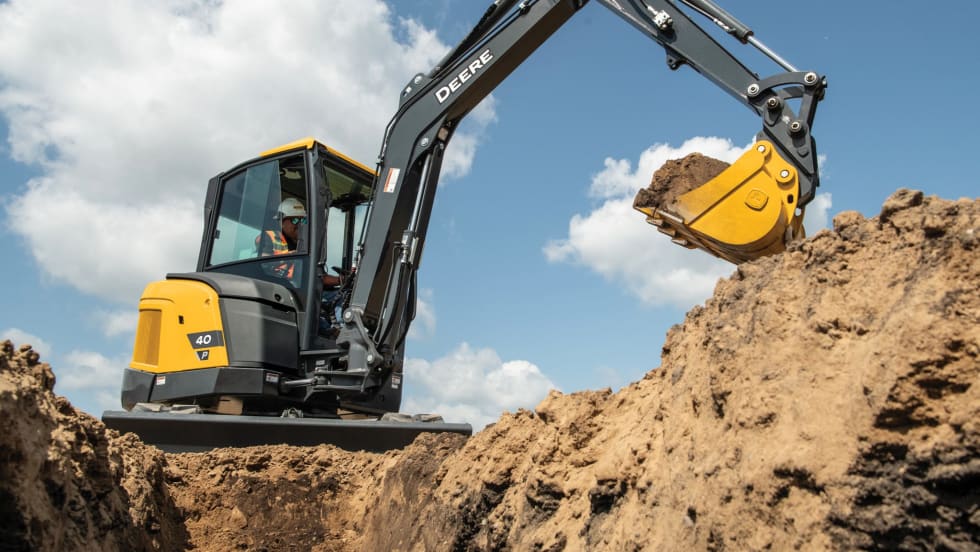
John Deere Introduces 40 P-Tier Compact Excavator
John Deere is adding a compact excavator designed for crews that need to move equipment between jobsites and handle multiple types of work with one machine. The 40 P-Tier weighs less than 10,000 pounds and offers configurable hydraulics, attachment options, and connected fleet-management capabilities.
Read More →
How Leading Fleets Improve and Why Business Plans Matter
This week, we look at what past Leading Fleet winners can teach us about making progress, plus how to build a business plan your fleet will actually use.
Read More →
Nominate a Fleet Leader for the 2027 Public Fleet Hall of Fame
Do you know a fleet leader who has made a lasting impact on the industry? Nominate this fleet professional for the 2027 Public Fleet Hall of Fame.
Read More →
Why Fleet Business Plans Need Three Perspectives
A fleet business plan should help agency leaders understand the fleet’s value, give the organization a clear direction, and establish shared expectations with customer departments.
Read More →
How Oil Analysis, Safety Technology, and Fleet Awards Drive Improvement
What happens when fleets let measured results guide their next decision?
Read More →
Emergency Response, Fleet Sales and New Technology
This week’s fleet news covers emergency preparedness, shifting vehicle sales, electric truck investments, and new tools for monitoring road conditions.
Read More →