




Gov’t Fleet Managers Work Together to Find Solutions
AUSTIN, TX - Public sector fleet managers had the opportunity to get feedback from peers on how to handle some of the biggest challenges they face today during a roundtable discussion at the Government Fleet & Expo.

Fleet managers shared their challenges with their peers, who were able to provide possible solutions.

AUSTIN, TX - Public sector fleet managers had the opportunity to get feedback from peers on how to handle some of the biggest challenges they face today during a roundtable discussion at the Government Fleet & Expo (GFX) in Austin, Texas.
More than 60 professionals gathered for the "Big Challenges and Big Solutions Networking Roundtable," the last session on day two of GFX.
Mike Antich, editor of Government Fleet magazine, moderated the session. Participants were split into approximately 10 tables, categorized by "industry suppliers" and "fleet personnel." With each table seating four to seven people, the roundtable provided an intimate setting for small group discussions. Antich instructed attendees to spend the first 15 minutes introducing themselves to the rest of the table, then share the biggest challenges each currently faces in their organization.
After the initial sharing, participants had a chance to briefly identify possible solutions and helpful practices among the group members at the table. Each group selected one representative to act as spokesperson in front of the entire room.
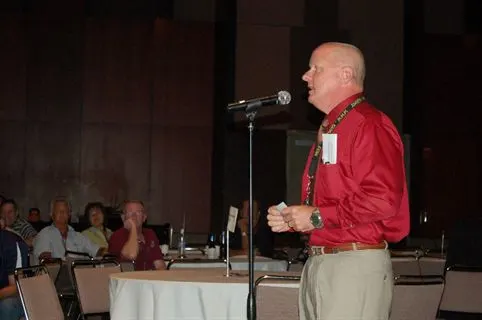
Challenges and solutions identified included:
• Managed competition and privatization. Fleet managers can never get too comfortable; fleets must prepare for this by ensuring operations run as efficiently and cost-effectively as possible.
• Underutilization of vehicles. One suggestion was to cooperate with other departments.
• Training. Fleets should work with OEMs and try to get as much free training as possible done on-site.
• Fuel prices and contingency supply. A possible solution to explore is underground storage of fuel purchased in bulk and working with community vendors for emergencies.
• Budget. With fleet replacement funds a lucrative target for cost-cutting, fleets must educate politicians about the impact of such cuts.
• Support from stakeholders. Hold an education session to justify the existence of fleet services to politicians, etc.
• Replacing technician tools. One shop has invested in owning its tools.
• Entitlement by employees. Overcome these attitudes and promote team identity. Talk to HR and have performance measurement included in job description.
• Skill sets. Keep technician skills up through skill assessment, job performance review, and other incentives. Let employees know how much they are valued.
• Compliance with alternative-fuel use mandates. Monitor through fuel cards.
• Take-home vehicles. Explain pros and cons to decision makers.
In addition to challenges on the fleet manager side, suppliers also identified challenges in the industry. Suppliers indicated the resistance fleets have to new technology on the market and introducing technology to an organization that hasn't used the product/program before.
"It's challenging to get fleets to accept new technology," said one group spokesperson for the industry suppliers. Taking time to educate would help, he said, noting examples such as participating as a guest speaker at industry events. Validation and proving the technology has worked in a real environment is important. Suppliers asked fleets keep an open-mind to these solutions.
Overall, the session was well-received by attendees, with several requesting more time be added to next year's roundtable so all participants have an opportunity to share their own proven solutions and best practices for each challenge identified.
Click here for additional GFX conference coverage.
More Operations

Is Keeping Older Fleet Vehicles Really Saving Money?
Is keeping vehicles longer saving money, and what happens when a diagnostic test points to the wrong fix?
Read More →
How Smart Fleet Strategy Can Help Local Government Agencies Do More with Less
Keeping a vehicle longer may ease this year’s budget, but what does it cost the next one? A closer look at fleet decisions can reveal opportunities to reduce spending while protecting essential services.
Read More →
Connect with Government Fleet on LinkedIn
From industry news and fleet management strategies to conversations with peers, Government Fleet's LinkedIn page offers public-sector fleet professionals another way to stay informed and connected.
Read More →
Town of Queen Creek Named Most Successful Fleet Award Winner of Inaugural RTA Fleet Success Awards
Five fleets were honored at RTA Connect 2026 in Chicago for excellence across resource efficiency, intentional culture, risk management, and stakeholder satisfaction.
Read More →
A buyer's guide to fleet management software in 2027
Buying fleet management software in 2027 means looking beyond features and price. As fleet operations, technology and expectations evolve, this guide explores what today’s fleet professionals should consider when choosing a system that can deliver value now and adapt to what comes next.
Read More →
Hazard Alerts, Fleet Car Sales Rise and a New Shuttle Concept
Fleet car sales doubled, but the bigger picture tells a different story in this week’s roundup.
Read More →
How St. Johns County Turned Fleet Data Into Better Replacement Decisions
St. Johns County, Florida, had fleet data, but turning it into reliable decision guidance was another matter. Instead of starting over with a new fleet management system, the county connected existing tools and built a scoring system that gives managers an objective look at fleet health.
Read More →
Fleet Forward Conference Introduces One-Day Passes for 2026
New one-day registration lets fleet professionals attend Tuesday, Wednesday, or Thursday, with passes available for $249.
Read More →
ENC Unveils its ZAVIR Medium-Duty Shuttle
Two variants of the concept shuttles were revealed: a low-floor configuration and a high-floor configuration.
Read More →
Could Your Next Fleet Technician Start as an Intern?
What if your next technician hasn’t worked in a fleet shop yet? What fleets are doing to free up time.
Read More →