




Keep Reading: 10 Do's and Don'ts of Fleet Management for Operational Success
Ethical Standards in Fleet Management
A closer look at the high ethical standards fleet management professionals must uphold.
by Staff
June 21, 2012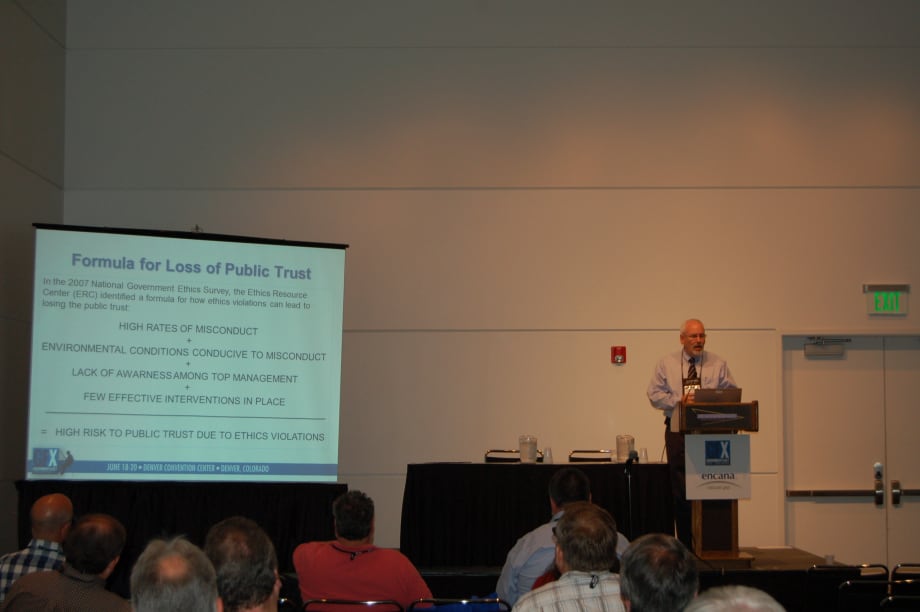
2 min to read

The subject of ethics in fleet management can be a tricky yet important subject that needs to be discussed. During a 2012 GFX session, Dave Head, former fleet manager for the County of Sonoma, Calif., spoke about the high ethical standards fleet management professionals must uphold.
One theme running throughout the presentation was that even borderline ("gray area") ethical slips can cost a fleet manager his or her job in the current political environment in the U.S., as fleet managers are responsible for managing taxpayer dollars.
Head provided a short list of types of unethical behavior to look out for in a fleet organization:
Abusive behavior (verbal abuse, for example).
Putting one’s own interest ahead of the organization’s interests.
Abusing Internet use privileges (i.e. using the organization’s Internet for non-business purposes).
Lying to employees, Head said this is a cardinal sin in his book.
Misreporting of hours worked.
Improper hiring practices (Head used nepotism as an example).
Safety violations.
Lying to stakeholders.
Discrimination
Environmental violations
Providing low-quality goods and services.
Theft.
Sexual harassment.
Alteration of documents.
Alteration of financial records (Head said he can’t think of a single document he’s worked on with the County that is worth his job).
Hunt described the factors that can lead to misconduct in the workplace, specifically the following: an opportunity for it to occur; an environment conducive to it (for example where money is managed and purchasing takes place); a lack of managerial awareness; and a lack of guidelines for intervention in place.
Head agreed with an attendee who described a basic rule for ethical conduct with regard to use of services available in a government organization: if a taxpayer doesn’t have access to a given service, then government employees can’t make personal use of that service.
For fleet management professionals, Head said that to avoid misconduct it’s imperative to encourage ethical behavior among staff and to personally adhere the ethical standards you and the organization sets.
He said fleet managers should give employees positive feedback for ethical conduct and prepare them to handle situations that invite misconduct. He also said they should feel like they can question management’s decisions (respectfully) without reprisal. He also said it’s crucial to recognize them for following ethical standards. Employees need to feel positive about the organization’s efforts to encourage ethical conduct and feel that their organization is an ethical workplace.
As a final point, Head said that it’s always a good idea to do a “gut check” in situations where the ethical choice is not a cut-and-dried one to make. Basically, if your gut starts to churn when you’re thinking about a given choice, that’s probably the wrong choice.
More Operations
What’s Haunting Public Sector Fleets?
Public sector fleet challenges rarely happen in isolation, and addressing one often means understanding how it connects to another.
Read More →
Is Keeping Older Fleet Vehicles Really Saving Money?
Is keeping vehicles longer saving money, and what happens when a diagnostic test points to the wrong fix?
Read More →
How Smart Fleet Strategy Can Help Local Government Agencies Do More with Less
Keeping a vehicle longer may ease this year’s budget, but what does it cost the next one? A closer look at fleet decisions can reveal opportunities to reduce spending while protecting essential services.
Read More →
Connect with Government Fleet on LinkedIn
From industry news and fleet management strategies to conversations with peers, Government Fleet's LinkedIn page offers public-sector fleet professionals another way to stay informed and connected.
Read More →
Town of Queen Creek Named Most Successful Fleet Award Winner of Inaugural RTA Fleet Success Awards
Five fleets were honored at RTA Connect 2026 in Chicago for excellence across resource efficiency, intentional culture, risk management, and stakeholder satisfaction.
Read More →
Sponsored•October 14, 2026
A buyer's guide to fleet management software in 2027
Buying fleet management software in 2027 means looking beyond features and price. As fleet operations, technology and expectations evolve, this guide explores what today’s fleet professionals should consider when choosing a system that can deliver value now and adapt to what comes next.
Read More →
Hazard Alerts, Fleet Car Sales Rise and a New Shuttle Concept
Fleet car sales doubled, but the bigger picture tells a different story in this week’s roundup.
Read More →
How St. Johns County Turned Fleet Data Into Better Replacement Decisions
St. Johns County, Florida, had fleet data, but turning it into reliable decision guidance was another matter. Instead of starting over with a new fleet management system, the county connected existing tools and built a scoring system that gives managers an objective look at fleet health.
Read More →
Fleet Forward Conference Introduces One-Day Passes for 2026
New one-day registration lets fleet professionals attend Tuesday, Wednesday, or Thursday, with passes available for $249.
Read More →
ENC Unveils its ZAVIR Medium-Duty Shuttle
Two variants of the concept shuttles were revealed: a low-floor configuration and a high-floor configuration.
Read More →