




Learn More: How Telematics Can Help Monitor Vehicle Health, Save Money
Geotab, California Bureau of Automotive Repair Team Up for Contactless Smog Test Pilot
Here’s everything you need to know about how the telematics company is looking to reduce in-person testing and increase uptime.

Lexi Tucker・Senior Editor
3 min to read
Geotab announced Nov. 17 it has joined the California Bureau of Automotive Repair’s (BAR) Continuous Testing Program (CTP) pilot, a program designed to help alleviate the effort of in-person Smog Checks for government fleet vehicles in California.
Photo: Geotab
Geotab announced Nov. 17 it has joined the California Bureau of Automotive Repair’s (BAR) Continuous Testing Program (CTP) pilot, a program designed to help alleviate the effort of in-person Smog Checks for government fleet vehicles in California. Leveraging near real-time engine information processed through Geotab’s telematics device, BAR will receive Smog Check information for government fleet vehicles enrolled in the CTP without the vehicles ever needing to be manually inspected.
Government Fleet spoke with Neil Garrett, associate vice president of business development, government for Geotab, to find out more about how the new program works.
Easing the Path to Results
Government agencies that own and/or operate vehicles in California are subject to Smog Check Program requirements. The law requires every vehicle affected by program requirements be smog tested and the results reported to the Bureau of Automotive Repair (BAR).
To help ease this process, BAR’s Continuous Testing Program (CTP) pilot was designed to use telematics technology to retrieve results almost instantaneously. These vehicles will be able to skip Smog Check manual inspections if vehicle data is proven to meet the BAR Smog Check requirements.
“Through Geotab’s membership in BAR’s CTP pilot, eligible vehicles are equipped with Geotab’s GO9 telematics technology and set up in a MyGeotab database. The GO9 device supports the integration with BAR by gathering the necessary information from the vehicle’s OBD-II port and sending that information to MyGeotab. From there, the automotive data is securely sent to BAR to satisfy the vehicle’s Smog Check requirements. The data is processed and a pass or fail mark is determined for each vehicle. If a vehicle requires maintenance, BAR will notify the organization that a Smog Check is necessary. However, if the vehicle data shows it is healthy and requires no maintenance, the vehicle can skip the in-person Smog Check, helping to reduce unnecessary fleet downtime,” Garrett explains.
This program will help ease the effort of in-person Smog Checks by utilizing telematics technology to process engine data information and send it to a secured cloud environment, thus helping to ensure vehicles are running as cleanly and efficiently as possible while reducing unnecessary fleet downtime.
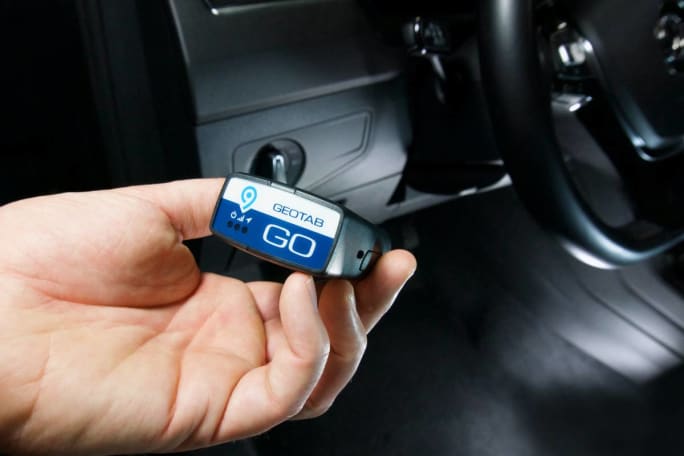
Through Geotab’s membership in BAR’s CTP pilot, eligible vehicles are equipped with Geotab’s GO9 telematics technology and set up in a MyGeotab database.
Photo: Geotab
Eligibility
Eligible vehicles are government fleet vehicles subject to Smog Check requirements. These include:
Smog Checks are required every two years on vehicles more than eight model-years old.
Smog Checks are also required when selling a vehicle more than four model-years old and when registering an out-of-state vehicle for the first time.
Under California law, every vehicle that meets these program requirements must be smog tested and the results be reported to the California Bureau of Automotive Repair (BAR).
Benefits
Smog Checks can be a challenging task for government fleets, especially if they are large. The Smog Checks themselves can take up to 20 to 30 minutes per vehicle, but the timing it takes to drive vehicles to and from test sites must also be considered.
“In large fleets, this requirement can drain a lot of resources, time, and money. With BAR’s CTP, utilizing telematics to automatically send the engine data to BAR, there is no downtime for the fleet,” says Garrett.
In a time when reducing contact as much as possible is vital to everyone’s health and safety due to COVID-19, this isn’t the only perk.
“Geotab’s participation in BAR’s CTP has been in the works for quite some time and was not driven by COVID-19; however, the reduction of manual inspections results in less in-person contact and can be seen as an added benefit of the program.”
More Maintenance

Freeing Technicians for Higher-Priority Repairs
Could paid interns help public fleets free up experienced technicians for more complex repairs?
Read More →
Sponsored•September 18, 2026
Stay ready, set and safer with verified fleet inspections
When fleet inspections aren’t verifiable, missed defects can quickly become downtime, safety risks, and service delays. This white paper shows government and municipal fleet leaders how digital inspections can improve accountability, catch issues earlier, and keep vehicles ready when they’re needed most.
Read More →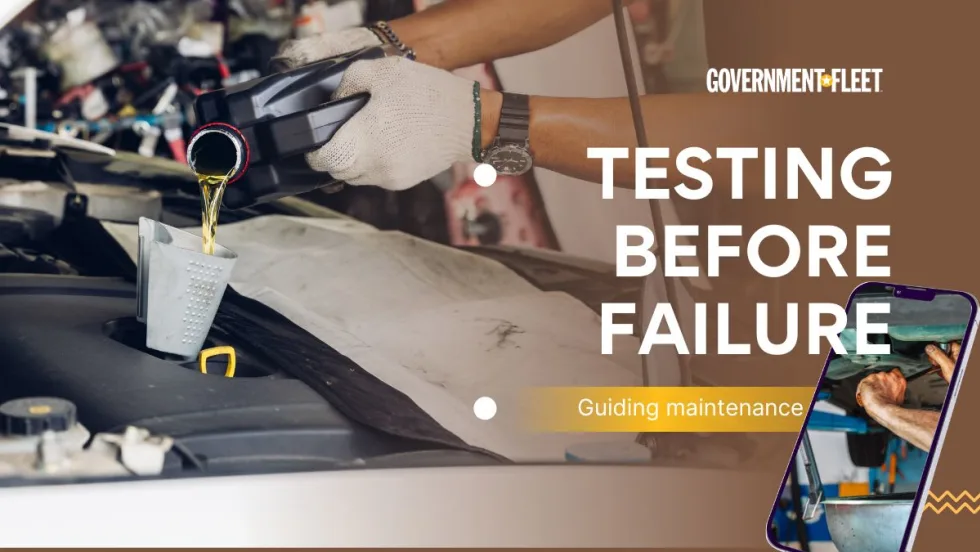
Using Oil Analysis to Help with Engine Losses
How a Texas city changed its lubrication practices and began tailoring preventive maintenance intervals after test results showed oil degradation and fuel dilution.
Read More →
Sponsored•August 10, 2026
Hidden in Plain Sight: Fleet Compliance Risks
Fleet compliance isn't just about having policies — it's about consistently enforcing them. This practical guide reveals six hidden compliance risks common in public sector and shared fleet operations and outlines proven strategies to improve visibility, accountability, and audit readiness.
Read More →
Is Your Fleet Garage Holding Back Your Operation? | The Fleet Breakroom
Norman Barrientos of Barrientos Design & Consulting explains how agencies can use operational data to show decision-makers why a replacement or major renovation is needed.
Read More →
Reducing Long-Term Maintenance Costs and Downtime
Downtime is rarely caused by a single surprise failure but rather by an issue that builds over time through setbacks ranging from deferred maintenance to poor replacement planning. So what's the fix?
Read More →
The Future of Government Fleet Technicians with Mike Cleary
Insight on preparing for hybrid and electric vehicle service, what fleets need to know about recruiting technicians in a competitive market, and how to make the most of limited training budgets.
Read More →
Work Orders Are More Than Records. They're a Roadmap to Fleet Availability
What if your work orders could predict failures, uncover hidden costs, and boost fleet availability? Here's how leading fleets are using the data.
Read More →
Drive More Profit with Greater Fleet Uptime
Fleet downtime costs money. JASPER helps keep vehicles on the road with quality remanufactured components, fast nationwide delivery, and reliable solutions that boost uptime and profitability.
Read More →
Smart Seasonal Maintenance Tips for Government Fleets
Government fleets carry extra weight, and routes, schedules, and public trust depend on reliability. A systematic spring checklist keeps vehicles in service when agencies need them most.
Read More →