




Gas Price Run Up Has Government Fleet Managers Reeling
SALEM, OR — Daniel Clem's gasoline bill was more than $905,000 last year. Clem is the fleet manager for Oregon's Department of Administrative Services, which is responsible for more than 3,000 vehicles assigned to various state agencies, according to the News-Register.
SALEM, OR — Daniel Clem's gasoline bill was more than $905,000 last year. Clem is the fleet manager for Oregon's Department of Administrative Services, which is responsible for more than 3,000 vehicles assigned to various state agencies, according to the News-Register. But that's not even half the state fleet. Counting the sedans, vans, pickups, and SUVs in separate fleets, including those of ODOT and the Department of Forestry, the state of Oregon owns about 7,000 light-duty vehicles. The Department of Administrative Services sees only part of the state’s gasoline bill. Nonetheless, that part offers a useful snapshot of out-of-control oil prices. During the 2003-04 fiscal year, the department billed state agencies $709,000 for all types of fuel: unleaded, biodiesel, diesel, and compressed natural gas. So the increase to $905,000 for the fiscal year ending June 30 marked a 28 percent rise in a single year. Prices have soared since then. By the time the current fiscal year ends in mid-2006, the total may run well into seven figures. There's no magic formula for estimating future fuel costs, especially when the state budgets on a two-year rather than one-year cycle, Clem said. The best officials can do is take into account historical mileage and pricing trends. Yamhill County's task isn't quite as daunting, as it budgets one year at a time. Still, it means venturing into the realm of the unknown and unknowable. “We began working on the budget in early February, and at that time contacted several fuel vendors to ask them what their predictions would be,” said Russ Heath, fleet manager for Yamhill County's 218 vehicles. “All of them thought if we based our fuel cost projections at $2 per gallon for regular unleaded gasoline and diesel, we would be okay for another year or so.” That's $2 wholesale, not retail. And it sounded high, as the county was only paying $1.28 for diesel and $1.39 for unleaded at the time. But when the county replenished supplies earlier this month, diesel was wholesaling for $2.13 and unleaded for $2.08. And fuel prices have skyrocketed ever since.
More Operations

How St. Johns County Turned Fleet Data Into Better Replacement Decisions
St. Johns County, Florida, had fleet data, but turning it into reliable decision guidance was another matter. Instead of starting over with a new fleet management system, the county connected existing tools and built a scoring system that gives managers an objective look at fleet health.
Read More →
Fleet Forward Conference Introduces One-Day Passes for 2026
New one-day registration lets fleet professionals attend Tuesday, Wednesday, or Thursday, with passes available for $249.
Read More →
ENC Unveils its ZAVIR Medium-Duty Shuttle
Two variants of the concept shuttles were revealed: a low-floor configuration and a high-floor configuration.
Read More →
Could Your Next Fleet Technician Start as an Intern?
What if your next technician hasn’t worked in a fleet shop yet? What fleets are doing to free up time.
Read More →
How Phoenix Is Building Its Next Generation of Fleet Technicians
With more than 8,000 vehicles and pieces of equipment to maintain, the City of Phoenix could not afford to wait for fully trained technicians to walk through the door. Instead, they revamped their entire workforce strategy and showed how public fleets can create their own talent pipeline while preparing existing employees for increasingly complex vehicles.
Read More →
What’s Slowing Your Fleet Down?
Could a change in how work gets done help your fleet return vehicles to service sooner?
Read More →
Can Public Fleets Trust the Data Driving Their Decisions?
Public fleets have more data than ever, but inconsistent records and missing information can still undermine maintenance, replacement, and cost decisions.
Read More →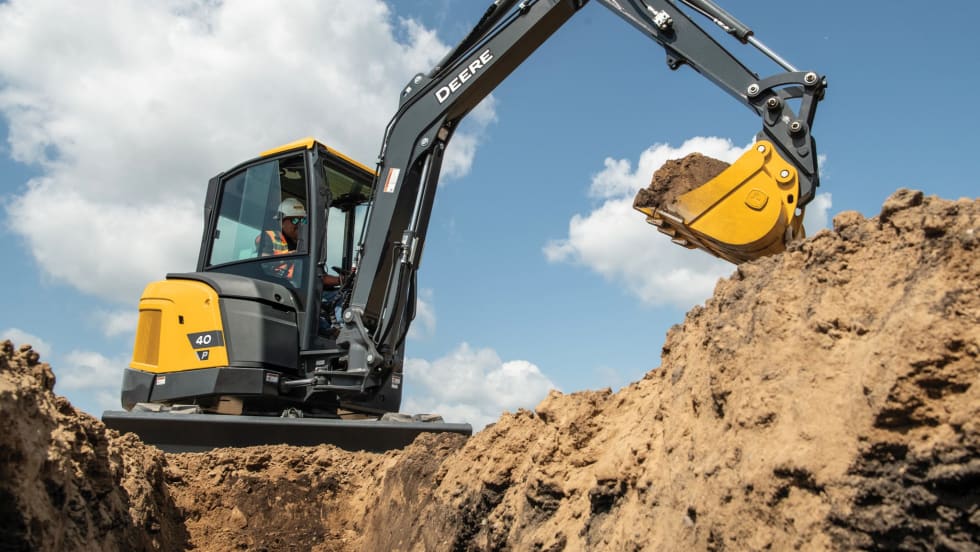
John Deere Introduces 40 P-Tier Compact Excavator
John Deere is adding a compact excavator designed for crews that need to move equipment between jobsites and handle multiple types of work with one machine. The 40 P-Tier weighs less than 10,000 pounds and offers configurable hydraulics, attachment options, and connected fleet-management capabilities.
Read More →
How Leading Fleets Improve and Why Business Plans Matter
This week, we look at what past Leading Fleet winners can teach us about making progress, plus how to build a business plan your fleet will actually use.
Read More →
Nominate a Fleet Leader for the 2027 Public Fleet Hall of Fame
Do you know a fleet leader who has made a lasting impact on the industry? Nominate this fleet professional for the 2027 Public Fleet Hall of Fame.
Read More →