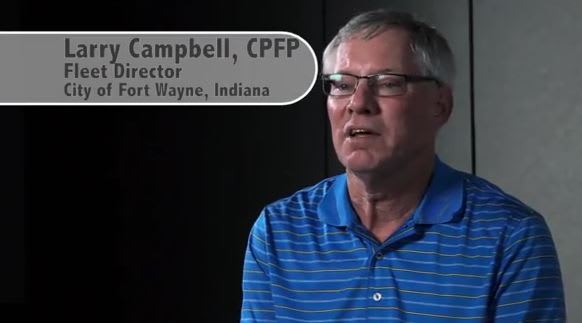
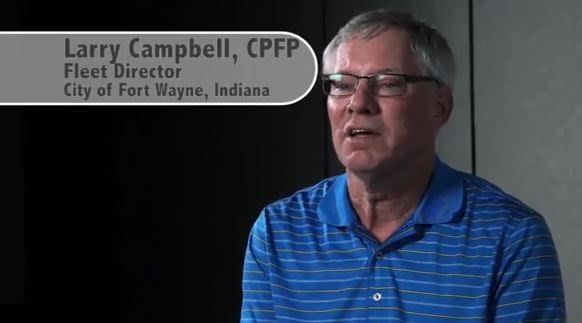
In Government Fleet's Knowledge Sharing video series, Larry Campbell, CPFP, fleet management director for the City of Fort Wayne, Ind., discusses the computerization of fleet management, keeping a good professional reputation, and thinking before speaking.
by Staff
March 10, 2015
1 min to read
In Government Fleet's Knowledge Sharing video series, Larry Campbell, CPFP, fleet management director for the City of Fort Wayne, Ind., discusses the computerization of fleet management, non-technical fleet managers, keeping a good professional reputation, and thinking before speaking.
Campbell started in fleet 36 years ago as a mechanic’s helper and has risen to become one of the most respected public-sector fleet managers in the industry. During his time at Fort Wayne, Campbell has been a champion for alternative fuels, upgraded the city’s fleet facility to modern standards, and developed a point system for procurement to better explain to elected officials why the lowest bid may not be the best bid. Campbell was the 2012 Public Sector Fleet Manager of the Year and is on the Board of Directors for the Greater Indiana Clean Cities Coalition.Campbell manages a fleet of about 1,800 units and two maintenance facilities.
Government Fleet has launched the Knowledge Sharing video series featuring veteran fleet managers sharing advice and tips for new fleet managers. This series was created to address the “graying” of the industry and to allow experienced fleet managers to pass along their industry knowledge.
Keeping a vehicle longer may ease this year’s budget, but what does it cost the next one? A closer look at fleet decisions can reveal opportunities to reduce spending while protecting essential services.
From industry news and fleet management strategies to conversations with peers, Government Fleet's LinkedIn page offers public-sector fleet professionals another way to stay informed and connected.
Five fleets were honored at RTA Connect 2026 in Chicago for excellence across resource efficiency, intentional culture, risk management, and stakeholder satisfaction.
Buying fleet management software in 2027 means looking beyond features and price. As fleet operations, technology and expectations evolve, this guide explores what today’s fleet professionals should consider when choosing a system that can deliver value now and adapt to what comes next.
St. Johns County, Florida, had fleet data, but turning it into reliable decision guidance was another matter. Instead of starting over with a new fleet management system, the county connected existing tools and built a scoring system that gives managers an objective look at fleet health.