





Related: New Florida Association Officers Announced at Fall Conference
Florida Groups Hold Their Largest Fleet Conference
A keynote presentation on liability was one of the hottest topics at a conference of the Florida Association of Governmental Fleet Administrators (FLAGFA) last week.
September 21, 2016
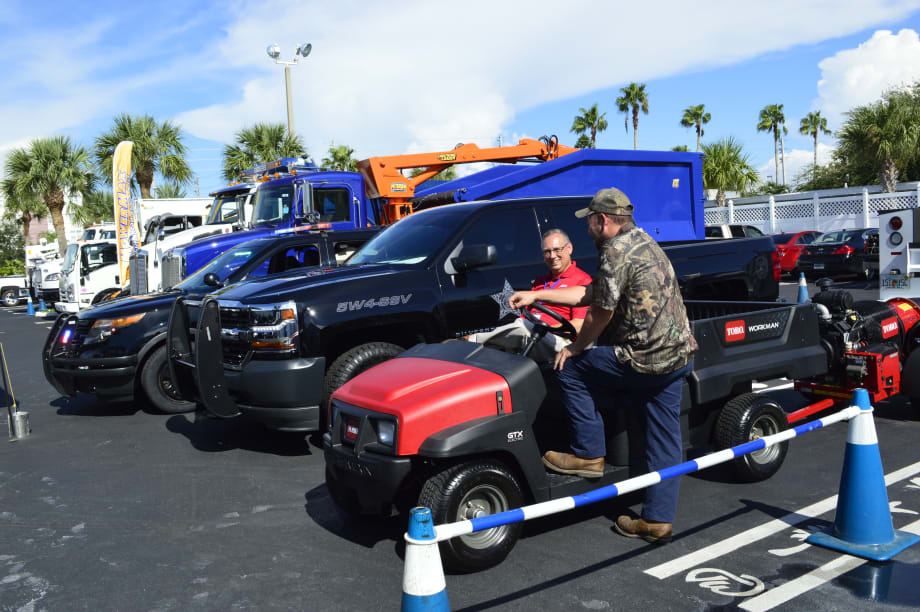
In addition to educational sessions, attedees were able to view vehicles and equipment. Photo by Thi Dao
2 min to read
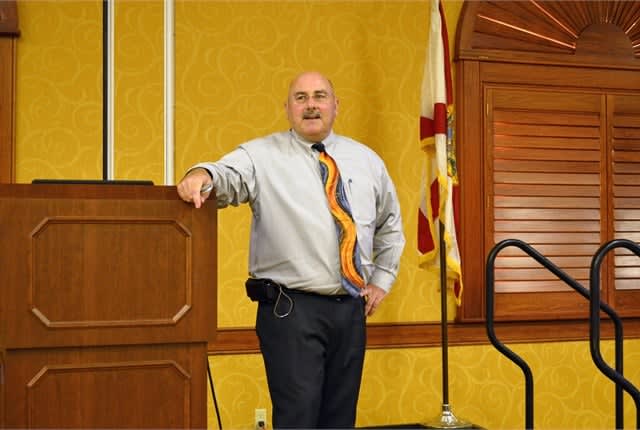
James Juneau delivered a keynote speech about fleet liability. Photo by Thi Dao
A keynote presentation on liability was one of the hottest topics at a conference of the Florida Association of Governmental Fleet Administrators (FLAGFA), NAFA Sunshine State Chapter, and Florida Utility Fleet Managers Association (FUFMA). The conference took place Sept. 14-16 at St. Pete Beach, Fla.
This was the biggest conference the associations have hosted, bringing in about 300 regular and affiliate members, said Tim Calhoun, FLAGFA president and fleet director of Palm Beach County Fire Rescue. He attributes the conference’s success to a strong keynote speaker and sessions that address issues fleets are interested in, including fuel quality, technician recruitment and retention, and parts outsourcing.
James Juneau, a personal injury attorney with experience in cases involving first response vehicles, reminded attendees that fleet managers can be held responsible for negligence if it’s determined that a fleet vehicle was not well maintained or repaired during a collision. He added that fleets should be aware of who receives recall notices within their agency, especially for specialty equipment such as fire apparatus.
“I think risk is something that we are aware of but we don’t think a lot about although we deal with it every day in managing fleets. [It’s helpful to have] that information in front of you just to heighten your awareness of the impact that not managing your business properly exposes your entity to — as well as how to avoid any pitfall if litigation occurs,” said Paul Starling, transit maintenance manager for the City of Gainesville and a long-time FLAGFA member, board member, and conference attendee.
Attendee Don Moore, fleet manager for the City of Largo, agreed.
Fleets have “high level responsibilities that have grave consequences when things don’t go right,” he said. “It hit home with everybody and is something that’s easy to overlook.”
Calhoun announced at the conference that Sean Williams, CAFM, fleet manager for Collier County Sheriff’s Office, would succeed him as president.
Calhoun has been able to accomplish numerous goals for FLAGFA, including starting a scholarship program, growing the organization, and making positive changes to the conference. Williams will continue to build on these changes and make further improvements.
“We’d like to finish rolling out our regional scholarships for our state colleges, for our technicians. We have three currently up and running — we’d like to add our fourth,” Williams said. The board will also work to expand training opportunities in each region and add a breakout session to future conferences to train the next generation of fleet managers.
Additional new board members are: Daryl Greenlee, fleet manager, City of Orlando, as vice president; Gary McLean, fleet manager, City of Lakeland, as treasurer; and Brianne Hayes, fleet acquisition supervisor, as secretary.
In addition to educational sessions, attedees were able to view vehicles and equipment. Photo by Thi Dao
More Operations

Is Keeping Older Fleet Vehicles Really Saving Money?
Is keeping vehicles longer saving money, and what happens when a diagnostic test points to the wrong fix?
Read More →
How Smart Fleet Strategy Can Help Local Government Agencies Do More with Less
Keeping a vehicle longer may ease this year’s budget, but what does it cost the next one? A closer look at fleet decisions can reveal opportunities to reduce spending while protecting essential services.
Read More →
Connect with Government Fleet on LinkedIn
From industry news and fleet management strategies to conversations with peers, Government Fleet's LinkedIn page offers public-sector fleet professionals another way to stay informed and connected.
Read More →
Town of Queen Creek Named Most Successful Fleet Award Winner of Inaugural RTA Fleet Success Awards
Five fleets were honored at RTA Connect 2026 in Chicago for excellence across resource efficiency, intentional culture, risk management, and stakeholder satisfaction.
Read More →
Sponsored•October 14, 2026
A buyer's guide to fleet management software in 2027
Buying fleet management software in 2027 means looking beyond features and price. As fleet operations, technology and expectations evolve, this guide explores what today’s fleet professionals should consider when choosing a system that can deliver value now and adapt to what comes next.
Read More →
Hazard Alerts, Fleet Car Sales Rise and a New Shuttle Concept
Fleet car sales doubled, but the bigger picture tells a different story in this week’s roundup.
Read More →
How St. Johns County Turned Fleet Data Into Better Replacement Decisions
St. Johns County, Florida, had fleet data, but turning it into reliable decision guidance was another matter. Instead of starting over with a new fleet management system, the county connected existing tools and built a scoring system that gives managers an objective look at fleet health.
Read More →
Fleet Forward Conference Introduces One-Day Passes for 2026
New one-day registration lets fleet professionals attend Tuesday, Wednesday, or Thursday, with passes available for $249.
Read More →
ENC Unveils its ZAVIR Medium-Duty Shuttle
Two variants of the concept shuttles were revealed: a low-floor configuration and a high-floor configuration.
Read More →
Could Your Next Fleet Technician Start as an Intern?
What if your next technician hasn’t worked in a fleet shop yet? What fleets are doing to free up time.
Read More →