




August Fire Fleet New Roundup
Catch up on the latest fire fleet developments with a snapshot of recent news in the government fleet sector.

Catch up on fire fleet news from across North America.
Photo: Government Fleet
In the fire fleet sector, developments are always unfolding, from new vehicle additions to significant operational updates. To keep you in the loop, we’ve gathered the latest news impacting fire fleets across the country. Here’s a look at some of these recent updates and what they mean for fire departments and their operations.
Georgia Fire Department Unveils New Fire Ladder Truck
Macon-Bibb County Fire Department, Georgia, introduced its latest ladder truck with a traditional push-in ceremony on August 1. The ceremony, a nod to 19th-century traditions, marked the arrival of the $1.3 million truck, funded largely by a local sales tax.
Fire Chief Shane Edwards emphasized the importance of aerial ladders in rescue operations, especially in high-rise emergencies. The county now has eight aerial units positioned to respond to emergencies across the area.
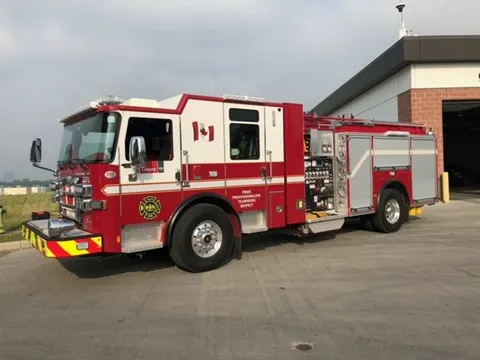
This Pierce Volterra EV is the first of its kind in Canada and will operate out of the Mount Pleasant Fire Station, which has been outfitted with the necessary charging infrastructure.
Photo: Calgary Fire Department
Calgary Fire Department First in Canada to Receive Pierce Volterra Electric Pumper
The Calgary Fire Department, Alberta, Canada, received Canada’s first Pierce Volterra Electric Pumper, joining a fleet that already includes units in Madison, Wisconsin; Gilbert, Arizona; and Portland, Oregon. This addition supports Calgary's Green Fleet Strategy, which aims to cut greenhouse gas emissions by 60% by 2030.
The truck will be tested in Calgary’s winter conditions to assess its performance in cold weather. The vehicle is now in service, and Pierce dealer Commercial Emergency Equipment will provide ongoing support.
Audit Uncovers Critical Gaps in Atlanta's Fire Vehicle Fleet
A recent city audit revealed that the Atlanta Public Works department faced significant challenges with its fire vehicle fleet. The audit found that nearly one-third of fire apparatus were beyond their expected lifecycles, with some vehicles having major mechanical issues. The shortage was so severe that the city had only three reserve fire engines and no ladder trucks, well below international standards, according to the report.
The audit showed that the city’s primary financing source, the Georgia Municipal Association's revolving loan fund, was inadequate, leading to the purchase of only 30 out of 58 approved fire apparatus between 2017 and 2024. Additionally, the report found that preventive maintenance was not consistently performed, with about 18% of vehicles missing service for over a year.
To address these issues, the audit recommended establishing a dedicated funding source for future vehicle acquisitions, improving maintenance protocols, and organizing inventory processes. It also urged collaboration between the fire chief and public works commissioner to implement a vehicle replacement plan and update policies to ensure the fleet's reliability.
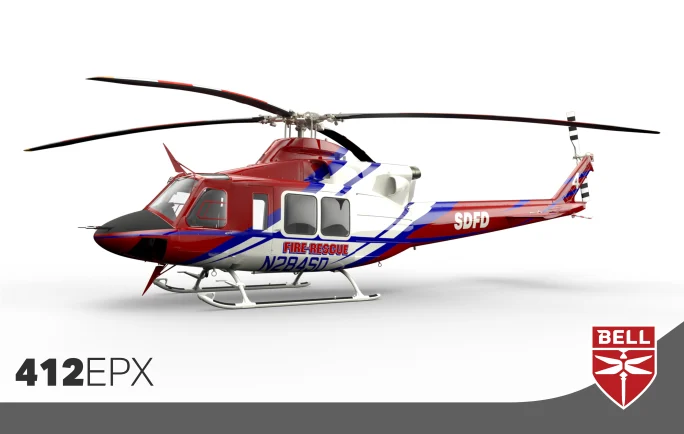
San Diego Fire-Rescue’s Air Operations Unit handles over 400 emergencies annually. The new SUBARU Bell 412EPX is expected to boost its response capabilities across the region.
Photo: Bell Textron
San Diego Fire-Rescue Boosts Fleet with New SUBARU Bell 412EPX
Bell Textron announced that the San Diego Fire-Rescue Department, California, has signed an agreement to purchase a SUBARU Bell 412EPX helicopter. This addition aims to enhance the department's firefighting and rescue operations, particularly in high-altitude and high-risk scenarios.
The aircraft, known for its increased weight capacity and spacious interior, is expected to significantly improve the Air Operations Unit's ability to respond to emergencies, including wildfires and high-rise fires. This purchase follows recent deliveries of the same model to other southern California law enforcement agencies.
More Operations

Is Keeping Older Fleet Vehicles Really Saving Money?
Is keeping vehicles longer saving money, and what happens when a diagnostic test points to the wrong fix?
Read More →
How Smart Fleet Strategy Can Help Local Government Agencies Do More with Less
Keeping a vehicle longer may ease this year’s budget, but what does it cost the next one? A closer look at fleet decisions can reveal opportunities to reduce spending while protecting essential services.
Read More →
Connect with Government Fleet on LinkedIn
From industry news and fleet management strategies to conversations with peers, Government Fleet's LinkedIn page offers public-sector fleet professionals another way to stay informed and connected.
Read More →
Town of Queen Creek Named Most Successful Fleet Award Winner of Inaugural RTA Fleet Success Awards
Five fleets were honored at RTA Connect 2026 in Chicago for excellence across resource efficiency, intentional culture, risk management, and stakeholder satisfaction.
Read More →
A buyer's guide to fleet management software in 2027
Buying fleet management software in 2027 means looking beyond features and price. As fleet operations, technology and expectations evolve, this guide explores what today’s fleet professionals should consider when choosing a system that can deliver value now and adapt to what comes next.
Read More →
Hazard Alerts, Fleet Car Sales Rise and a New Shuttle Concept
Fleet car sales doubled, but the bigger picture tells a different story in this week’s roundup.
Read More →
How St. Johns County Turned Fleet Data Into Better Replacement Decisions
St. Johns County, Florida, had fleet data, but turning it into reliable decision guidance was another matter. Instead of starting over with a new fleet management system, the county connected existing tools and built a scoring system that gives managers an objective look at fleet health.
Read More →
Fleet Forward Conference Introduces One-Day Passes for 2026
New one-day registration lets fleet professionals attend Tuesday, Wednesday, or Thursday, with passes available for $249.
Read More →
ENC Unveils its ZAVIR Medium-Duty Shuttle
Two variants of the concept shuttles were revealed: a low-floor configuration and a high-floor configuration.
Read More →
Could Your Next Fleet Technician Start as an Intern?
What if your next technician hasn’t worked in a fleet shop yet? What fleets are doing to free up time.
Read More →