




DOT Fleets Cope with East Coast Polar Vortex
State transportation fleets worked to clear heavy snowfall dumped on roadways by Winter Storm Pax in a coordinated effort with law enforcement authorities to address the wintery havoc leading into Presidents' Day weekend.
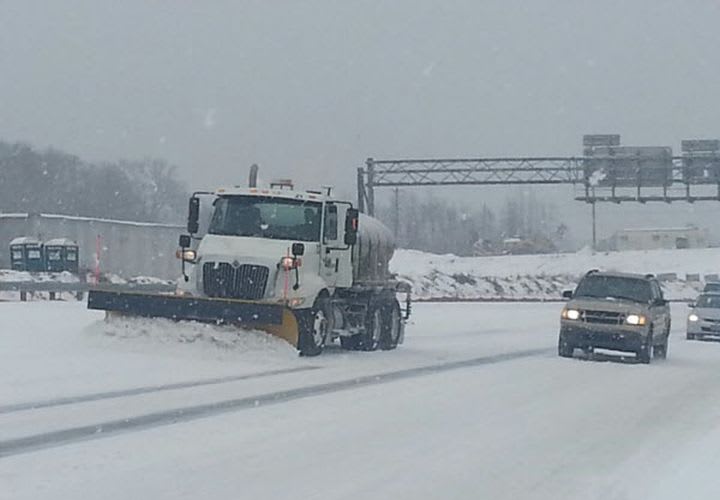
Photo courtesy of NCDOT.
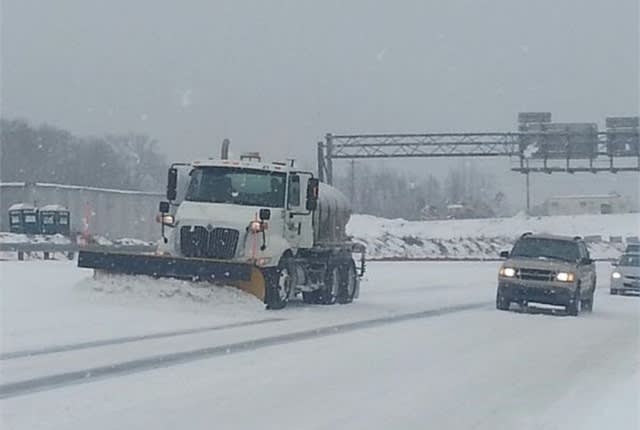
Photo courtesy of NCDOT.
State transportation fleets worked to clear heavy snowfall dumped on roadways by Winter Storm Pax in a coordinated effort with law enforcement authorities to address the wintery havoc leading into Presidents' Day weekend.
In preparation for the storm, the North Carolina Department of Transportation sent 25 trucks carrying 71,000 gallons of brine to pour onto roads in Charlotte starting Feb. 10, reports WSOC. Like salt, brine helps melt falling snow.
A round of snow and ice smacked the state on Wednesday, causing motorists to abandon their vehicles. By Thursday, NCDOT snowplows and trucks had spread more than 21,000 tons of salt on state roads, along with 6,300 tons of salt-sand mix. The NCDOT used 100 pieces of equipment, including 70 snow plows, in The Triangle region that includes Durham and Raleigh, reports WRAL.
After South Carolina Gov. Nikki Haley declared a state of emergency on Wednesday — activating emergency operations efforts — the South Carolina Department of Transportation deployed its fleet of plows and dump trucks. By midday Thursday, there were 713 pieces of SCDOT equipment in use, reports The State.
The Georgia Department of Transportation deployed a fleet of 705 vehicles and pieces of equipment, including trucks, snow plows, and salt spreaders. The GDOT concentrated 125 spreaders and snow plows in Atlanta, reports WCTV.
As the winter storm began to swing north, DOT fleets in Maryland, Virginia, and Connecticut went into snow-fighting mode. The Virginia Department of Transportation deployed more than 12,000 plows and other equipment. In Maryland, more than 2,700 trucks and pieces of equipment were in use on Thursday by the Maryland State Highway Administration, reports WJLA.
More Operations

Is Keeping Older Fleet Vehicles Really Saving Money?
Is keeping vehicles longer saving money, and what happens when a diagnostic test points to the wrong fix?
Read More →
How Smart Fleet Strategy Can Help Local Government Agencies Do More with Less
Keeping a vehicle longer may ease this year’s budget, but what does it cost the next one? A closer look at fleet decisions can reveal opportunities to reduce spending while protecting essential services.
Read More →
Connect with Government Fleet on LinkedIn
From industry news and fleet management strategies to conversations with peers, Government Fleet's LinkedIn page offers public-sector fleet professionals another way to stay informed and connected.
Read More →
Town of Queen Creek Named Most Successful Fleet Award Winner of Inaugural RTA Fleet Success Awards
Five fleets were honored at RTA Connect 2026 in Chicago for excellence across resource efficiency, intentional culture, risk management, and stakeholder satisfaction.
Read More →
A buyer's guide to fleet management software in 2027
Buying fleet management software in 2027 means looking beyond features and price. As fleet operations, technology and expectations evolve, this guide explores what today’s fleet professionals should consider when choosing a system that can deliver value now and adapt to what comes next.
Read More →
Hazard Alerts, Fleet Car Sales Rise and a New Shuttle Concept
Fleet car sales doubled, but the bigger picture tells a different story in this week’s roundup.
Read More →
How St. Johns County Turned Fleet Data Into Better Replacement Decisions
St. Johns County, Florida, had fleet data, but turning it into reliable decision guidance was another matter. Instead of starting over with a new fleet management system, the county connected existing tools and built a scoring system that gives managers an objective look at fleet health.
Read More →
Fleet Forward Conference Introduces One-Day Passes for 2026
New one-day registration lets fleet professionals attend Tuesday, Wednesday, or Thursday, with passes available for $249.
Read More →
ENC Unveils its ZAVIR Medium-Duty Shuttle
Two variants of the concept shuttles were revealed: a low-floor configuration and a high-floor configuration.
Read More →
Could Your Next Fleet Technician Start as an Intern?
What if your next technician hasn’t worked in a fleet shop yet? What fleets are doing to free up time.
Read More →